
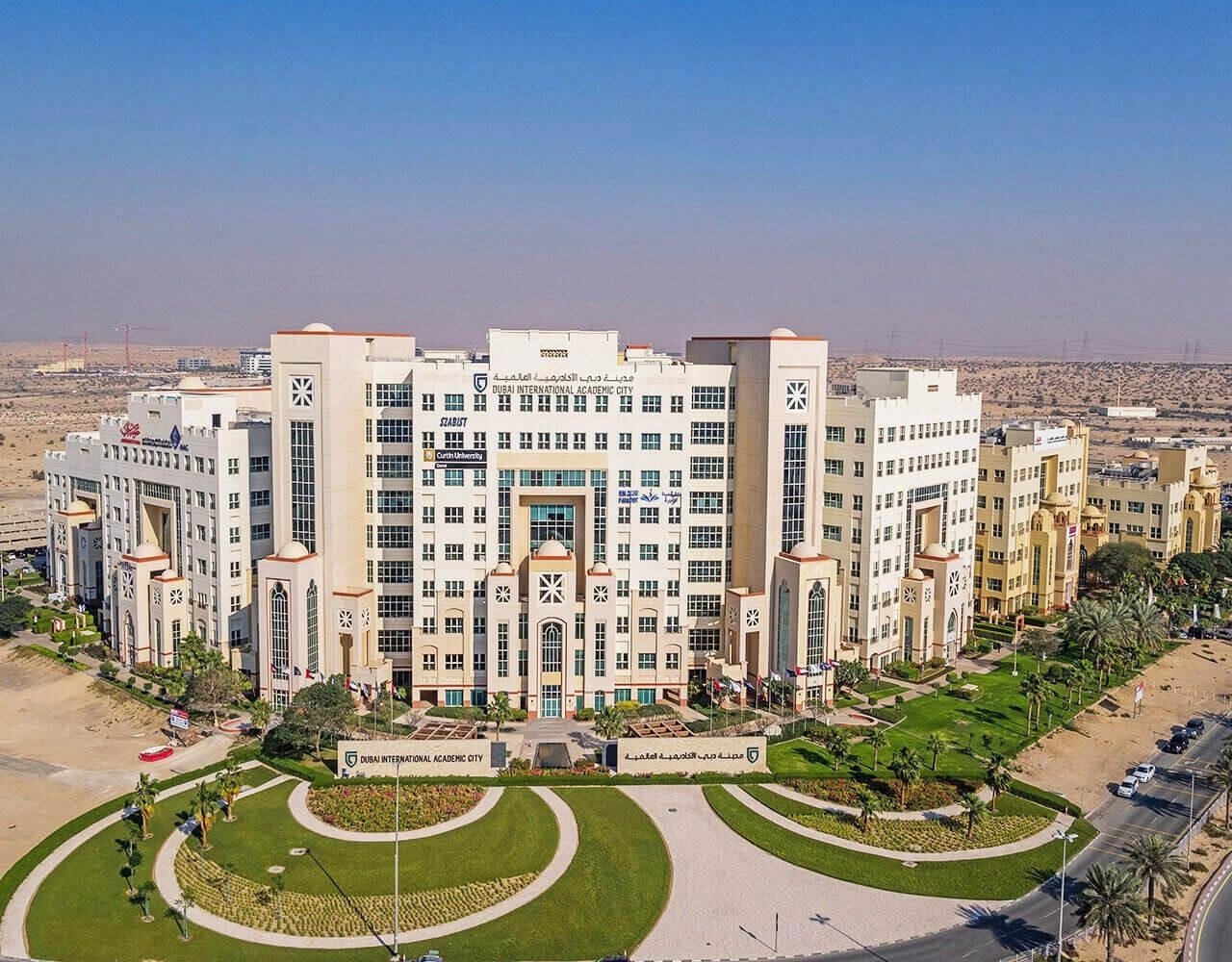
Dubai: Dubai is strengthening cooperation between universities, government and major employers through a new higher education leadership network designed to keep academic programmes and research closer to the needs of the economy.
The Knowledge and Human Development Authority (KHDA), Dubai International Academic City and Dubai Knowledge Park have announced the founding committee and co-chairs of the Higher Education Leadership Network (HELN). Dr Saeed Mubarak Kharbash, CEO of Policies, Research and Programmes at KHDA, and Marwan Abdulaziz Janahi, Senior Vice President of Dubai International Academic City and Dubai Knowledge Park, will serve as founding co-chairs.
HELN was jointly developed in 2025 by KHDA and TECOM Group’s Education Cluster. Its purpose is to create a structured forum where higher education institutions, businesses and government organisations can discuss workforce requirements, skills development, research and innovation.
The network comes as Dubai continues to expand its higher education ecosystem and attract international institutions. The initiative is aligned with the objectives of the Dubai Economic Agenda D33 and the Education 33 Strategy, which place knowledge, talent and innovation among the foundations of Dubai’s longer-term development.
Four priorities for Dubai’s higher education sector
HELN will concentrate on four broad areas:
- Education and upskilling
- Entrepreneurship and innovation
- Future economies
- Research and development
The network is expected to examine how universities can respond to changing labour-market requirements and emerging industries, while also encouraging research that can be translated into practical applications. During its first year, the focus will include dialogue between universities, businesses and government bodies, alongside research and innovation projects.
The founding committee includes senior figures from organisations spanning several parts of Dubai’s economy. Members include representatives from Dubai Electricity and Water Authority, Dubai Health, DP World GCC, Dubai International Financial Centre, Emirates Group, Hewlett Packard Enterprise, Dubai Future Foundation and Dubai Economy and Tourism, as well as leaders from universities operating in Dubai.
That cross-sector structure is significant because the network is intended to connect academic planning with the skills and capabilities employers require. Rather than operating as a university-only forum, HELN brings education leaders into regular discussions with organisations working in sectors that are undergoing technological and economic change.
Dubai’s higher education ecosystem is expanding
The network is being established alongside continued growth in Dubai’s education sector.
Data released by TECOM Group in January showed that the combined student population at Dubai International Academic City and Dubai Knowledge Park exceeded 38,500 students at the end of the 2024-25 academic year, a 15 per cent increase from the previous academic year. Students at the two districts represented more than 170 countries and had access to more than 600 programmes.
Dubai has also continued adding education providers. KHDA said in August that 26 new private education institutions were set to open during the 2026-27 academic year, including 17 early childhood centres, seven schools and two international higher education institutions. The seven new schools are expected to provide nearly 17,000 additional places.
At the higher education level, the American University of Beirut’s Dubai campus is opening in September 2026, while Peking University HSBC Business School is scheduled to introduce MBA and EMBA programmes in January 2027. KHDA said 11 higher education institutions had opened in Dubai over the previous three years, accompanied by 29 per cent enrolment growth during that period.
Focus shifts towards future skills and innovation
The creation of HELN also fits into Dubai’s wider effort to prepare education systems for changing technology and employment patterns.
KHDA’s future-foresight programme identifies data, digital tools and emerging technologies as part of its approach to understanding the skills learners will need in the future. The authority says future-readiness is being incorporated into how it regulates, develops policy and works with Dubai’s education community.
At the UAE level, the government has also moved to introduce an artificial intelligence curriculum across public and private schools. The UAE Cabinet approved the curriculum in September 2026 following a pilot and evaluation programme in public schools.
For higher education, HELN provides a separate platform focused on connecting those broader priorities with employers, universities and research institutions. Its first-year agenda is therefore centred on collaboration rather than the announcement of a single new academic programme or qualification.
As Dubai expands its role as an international education hub, the network is intended to give universities, employers and government a formal channel to discuss what students need to learn, where research can create practical value and how education can keep pace with the economy’s changing requirements.
What is Dubai’s Higher Education Leadership Network?
The Higher Education Leadership Network (HELN) is a platform connecting higher education institutions, government and industry leaders to discuss skills, workforce requirements, research and innovation.
Who established the Higher Education Leadership Network?
HELN was jointly developed by KHDA, Dubai International Academic City and Dubai Knowledge Park. The network was launched through their collaboration in 2025.
Who are the founding co-chairs of HELN?
Dr Saeed Mubarak Kharbash of KHDA and Marwan Abdulaziz Janahi of Dubai International Academic City and Dubai Knowledge Park are the founding co-chairs.
What will HELN focus on?
Its four focus areas are education and upskilling, entrepreneurship and innovation, future economies, and research and development.
Why is Dubai creating closer links between universities and industry?
The network is intended to help higher education respond more closely to changing workforce requirements while supporting research, innovation and the development of future skills.
Which Dubai strategies are linked to HELN?
The initiative supports the goals of the Dubai Economic Agenda D33 and the Education 33 Strategy.
How large is Dubai’s higher education ecosystem?
Dubai International Academic City and Dubai Knowledge Park had more than 38,500 students at the end of the 2024-25 academic year and offered access to more than 600 programmes.
