
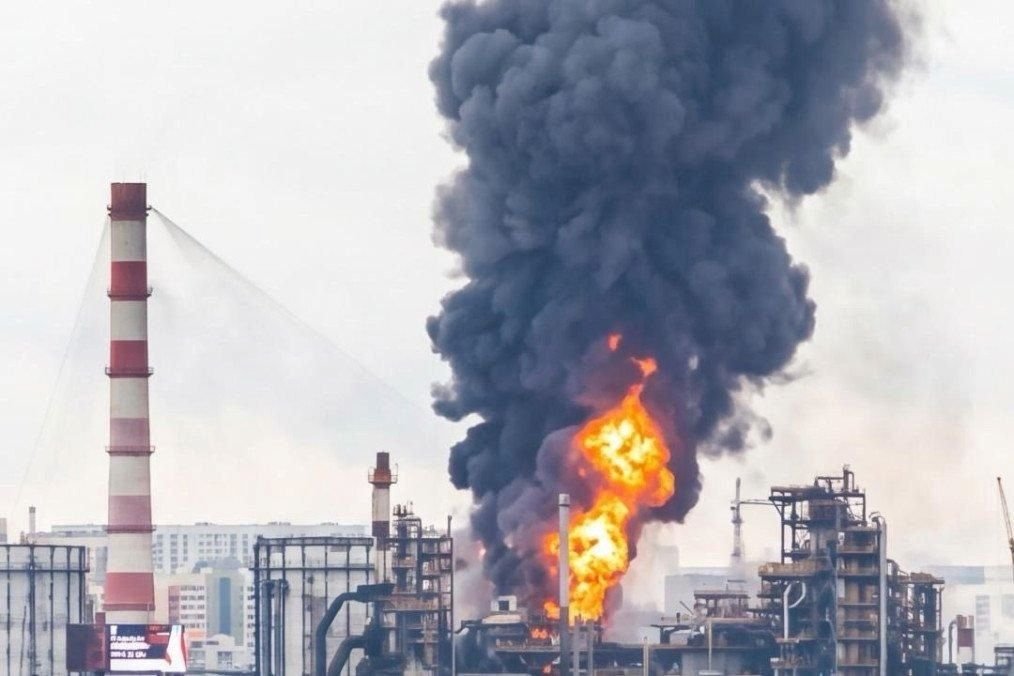
US President Donald Trump has condemned Ukraine’s renewed attacks on Russian oil refineries, arguing that the strikes are putting additional pressure on global energy prices as efforts to halt attacks on energy infrastructure falter.
In an interview with US broadcaster Newsmax published on Thursday, October 15, Trump described Ukraine’s actions as a “disgrace” and criticised Ukrainian President Volodymyr Zelensky over his approach to ending the war with Russia. The remarks were reported by AFP on October 16.
The dispute follows Ukraine’s resumption of attacks on Russian energy facilities after a proposed pause in strikes failed to hold. Kyiv has said Moscow continued targeting Ukrainian energy infrastructure, undermining the arrangement announced by Trump.
Why Trump is objecting to Ukraine’s refinery strikes
Trump has linked Ukrainian attacks on Russian refineries to pressure on global fuel markets, particularly diesel supplies. His administration has been seeking ways to increase available fuel supplies as energy prices remain a political and economic concern for Washington.
Oil refineries process crude oil into products including petrol, diesel and jet fuel. Damage to refining facilities can disrupt production and distribution, although the effect on international prices depends on the scale of the disruption, available supplies and wider market conditions.
Trump also questioned Zelensky’s willingness to compromise with Russian President Vladimir Putin. According to AFP’s account of the Newsmax interview, Trump said he believed both leaders wanted the war to end but considered Zelensky more difficult to negotiate with than Putin.
His comments add to an increasingly public disagreement between Washington and Kyiv over the conduct of the war and the conditions needed to stop the fighting.
Ukraine says the energy truce has failed
Ukraine resumed strikes against Russian energy infrastructure on Thursday, October 15, after Zelensky indicated that Kyiv would no longer maintain its pause in attacks while Russian strikes continued.
Reuters reported that Ukraine had targeted a Russian oil refinery in the Ryazan region. The action followed Russian missile and drone attacks on Ukrainian infrastructure, including energy facilities, which disrupted electricity supplies for large numbers of people.
The sequence of events has exposed a central problem with the proposed energy truce: the two sides have not maintained a reciprocal halt to attacks.
Trump announced on October 11 that Russia and Ukraine had agreed to stop attacks on energy infrastructure. However, the arrangement’s terms and implementation remained contested, with Kyiv reporting continued Russian attacks after the announcement.
Ukraine’s position is that a pause cannot operate effectively if Russia continues striking its energy system. Moscow, meanwhile, has disputed aspects of Ukraine’s account of the impact of its long-range attacks and has continued to face Ukrainian strikes on facilities inside Russia.
What the dispute means for US-Ukraine relations
Trump’s criticism places further strain on relations between the US administration and Ukraine’s leadership. Washington has been trying to push both sides towards an end to the war, but Kyiv’s security concerns and its demand for reciprocal action remain major obstacles.
The disagreement is also unfolding as Zelensky seeks support from European leaders. In Brussels, the Ukrainian president met NATO Secretary-General Mark Rutte and held discussions with European counterparts ahead of a European Union summit.
European backing is important to Kyiv as it navigates uncertainty over the level and conditions of future US support. The refinery dispute has become another point of friction between Ukraine’s military strategy and Washington’s emphasis on ending the conflict and easing energy-market pressures.
For Ukraine, attacks on Russian energy facilities form part of its effort to impose costs on Moscow’s war effort. For the Trump administration, however, the potential disruption to fuel supplies is an additional reason to press Kyiv to stop those operations.
Could refinery attacks affect global fuel prices?
The impact on global fuel prices is not automatic. A refinery strike can reduce processing capacity or interrupt exports, but the effect depends on the facility involved, the extent of damage, repair times and the availability of alternative supplies.
Diesel markets are particularly sensitive to changes in refining capacity because diesel is widely used in freight transport, agriculture, industry and other economic activities. A sustained reduction in supply could place upward pressure on prices, although other market factors also play a role.
Trump has blamed Ukraine’s renewed attacks for adding to energy-price pressures. That assessment should be distinguished from a verified measurement of how much the latest strikes have changed global prices.
For UAE readers, the wider issue is the possibility of continued volatility in international oil and refined-fuel markets. The UAE is an energy-producing country, but international crude prices, refining conditions and regional supply developments can influence market conditions across the Gulf. The latest reports do not establish a specific price impact on UAE petrol or diesel.
For now, the immediate challenge remains the absence of a sustained, mutually observed halt to attacks on energy infrastructure. Further developments will depend on whether Moscow and Kyiv can agree on reciprocal restrictions and whether diplomatic efforts can secure compliance.
Q1. Why did Donald Trump criticise Ukraine’s refinery attacks?
Trump argued that Ukraine’s renewed attacks on Russian oil refineries could put upward pressure on global energy prices, particularly diesel prices.
Q2. When did Trump make his remarks?
Trump’s comments were reported on October 16, 2026, following an interview with Newsmax aired on Thursday, October 15.
Reuters reported that Ukraine struck a Rosneft refinery southeast of Moscow. The Associated Press reported a drone strike and fire at a refinery in Russia’s Ryazan region.
Ukraine said Russia continued attacking Ukrainian energy infrastructure despite the proposed pause. Kyiv argued that the arrangement could not be maintained without reciprocal restraint.
Trump announced on October 11 that the two sides had agreed to stop attacks on energy infrastructure. However, implementation and compliance were disputed, and the reporting does not establish a sustained, mutually observed ceasefire.
Disruption to refining capacity can put pressure on diesel supplies and prices, but the actual effect depends on the damage, duration of the disruption and availability of alternative supplies. A specific price increase caused by these strikes has not been established.
Q7. Does this development directly affect UAE residents?
The reports do not establish a direct impact on UAE fuel prices. However, developments affecting international energy supply and prices are relevant to the wider Gulf energy market.
Q8. What happens next in the Russia-Ukraine energy dispute?
The immediate question is whether Russia and Ukraine can agree to reciprocal limits on attacks against energy infrastructure. Further diplomatic discussions and developments on the battlefield will determine whether another pause is possible.
