
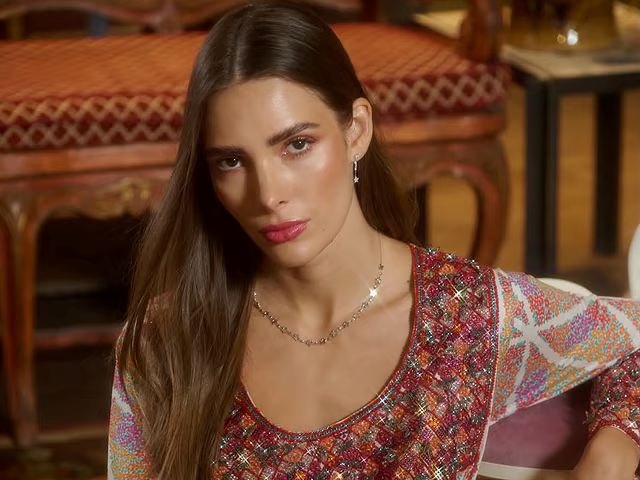
The traditional Emirati mkhawer dress is being reinterpreted through contemporary fashion, with designers exploring new silhouettes, fabrics, colours and decorative details while retaining the garment’s connection to cultural heritage.
The flowing, full-length dress remains part of Emirati women’s wardrobes, from everyday wear to family gatherings and festive occasions. Its continuing appeal lies in its ability to accommodate changing tastes without losing the characteristics that make it recognisable.
For designers working with traditional Emirati clothing, the challenge is not simply to introduce new trends. It is to offer women more choices while respecting the modesty, craftsmanship and cultural associations of the garment.
A traditional dress with room for new ideas
The mkhawer, also known as the mukhawar or mukhawara, is a traditional Emirati women’s dress distinguished by its loose shape, long sleeves and decorative detailing. Depending on the design and occasion, it can feature intricate embroidery, rich colours and embellished fabrics.
Its place in Emirati culture reflects a wider relationship between clothing and identity. Traditional garments are not only expressions of personal style; they can also carry family memories, regional influences and techniques passed down through generations.
Contemporary designers are finding ways to work within this tradition. Adjustments to cuts, fabric combinations and ornamentation can create a different appearance without abandoning the dress’s characteristic flowing silhouette.
The result is a broader range of styles for women who want traditional clothing that also reflects their individual preferences.
Embellishments bring a contemporary finish
Decorative elements remain central to the appearance of many mkhawer designs. Embroidery, metallic details, beads and crystals can give a garment a more elaborate finish, particularly for celebrations and formal gatherings.
Traditional Emirati clothing also has a long association with textile craftsmanship. Abu Dhabi’s Department of Culture and Tourism documents talli, a traditional braiding technique used to create decorative textile strips for women’s clothing, including formal dresses and everyday garments. The craft involves combining threads into intricate patterns and has been passed down through generations.
Modern embellishments and established textile techniques can therefore occupy the same design space. The distinction lies in how designers combine them and how closely the finished garment follows the wearer’s preferred style.
For some women, subtle detailing and understated colours are the priority. Others may prefer more prominent embroidery, richer fabrics or decorative accents for special occasions.
Fabric choices shape the look and feel
Fabric selection is another important part of the mkhawer’s evolution. The material influences how the dress drapes, how comfortable it feels and how well its colour and embellishments stand out.
In reporting published by Gulf News on October 12, 2026, fabric specialist Somaya Alqubaisi, founder of Hafeez, identified chiffon, silk, satin, tulle and lightweight cotton among the materials attracting customer interest.
Alqubaisi also described demand for fabrics featuring embroidery, metallic details and a subtle sheen. Her approach includes travelling to India to select distinctive fabrics for the UAE market.
These choices reflect the range of possibilities available within a traditional garment. Lightweight materials can create a softer, flowing appearance, while silk and embellished textiles can lend themselves to more formal designs.
Comfort, fabric quality, colour and the way a material falls when worn remain practical considerations alongside appearance.
Colour trends offer more variety
Traditional dress does not have to mean a limited colour palette. Contemporary mkhawer designs can incorporate pastel shades, brighter colours and combinations that differ from more familiar styles.
According to Alqubaisi’s comments to Gulf News, customers are exploring a wider variety of colours and combinations, alongside delicate patterns and subtle shimmer.
Such choices allow the same basic garment to look markedly different from one design to another. Colour and embellishment can also be adapted to personal taste and the occasion for which the dress is intended.
The shift is best understood as an expansion of choice rather than the disappearance of traditional styles. Familiar designs can continue to appeal to women who prefer a classic look, while newer interpretations provide alternatives for those seeking something different.
Why cultural craftsmanship still matters
The evolution of Emirati clothing takes place alongside efforts to document and preserve traditional crafts.
The UAE’s heritage textile practices include techniques such as talli, whose intricate patterns are used to decorate garments and whose skills have been transmitted between generations. These methods provide a cultural reference point for designers working with traditional clothing today.
Preserving that connection does not require every new garment to look identical to older versions. Instead, designers can draw on established forms, decorative traditions and the values associated with the clothing while exploring contemporary materials and finishes.
The mkhawer offers a clear example of how this balance can work. Its appearance may vary according to fabric, colour, embroidery and cut, but its cultural associations remain an important part of its identity.
For Emirati women, the dress can continue to serve as both traditional attire and a means of personal expression. Its future will depend on how designers, craftspeople and wearers carry those traditions forward while making room for new interpretations.
Q1. What is an Emirati mkhawer dress?
An Emirati mkhawer is a traditional women’s dress known for its flowing silhouette, long sleeves and decorative details. It can be worn for everyday occasions, family gatherings and celebrations.
Q2. How are modern mkhawer dresses different from traditional designs?
Contemporary designs may introduce different cuts, colour combinations, fabrics and embellishments. Traditional silhouettes and cultural references can remain central to the design.
Q3. Which fabrics are used for mkhawer dresses?
Materials include cotton, chiffon, silk, satin and tulle. The choice depends on the desired drape, comfort, appearance and occasion.
Q4. What embellishments are used on Emirati mkhawer dresses?
Depending on the design, embellishments can include embroidery, beads, crystals and metallic details. Traditional textile crafts such as talli also contribute to Emirati clothing decoration.
Q5. Why is the mkhawer important in Emirati culture?
The dress is associated with Emirati women’s traditional clothing and cultural identity. Its designs and decorative details also reflect established textile skills and changing fashion preferences.
Q6. What colours are used in modern mkhawer designs?
Designs can feature traditional colours as well as pastel shades, bright colours and contrasting combinations. Preferences vary according to personal taste and the design.
Q7. Is the mkhawer worn only for special occasions?
No. The dress can be worn for everyday activities as well as family gatherings and special occasions. More elaborate fabrics and embellishments may be selected for celebrations.
