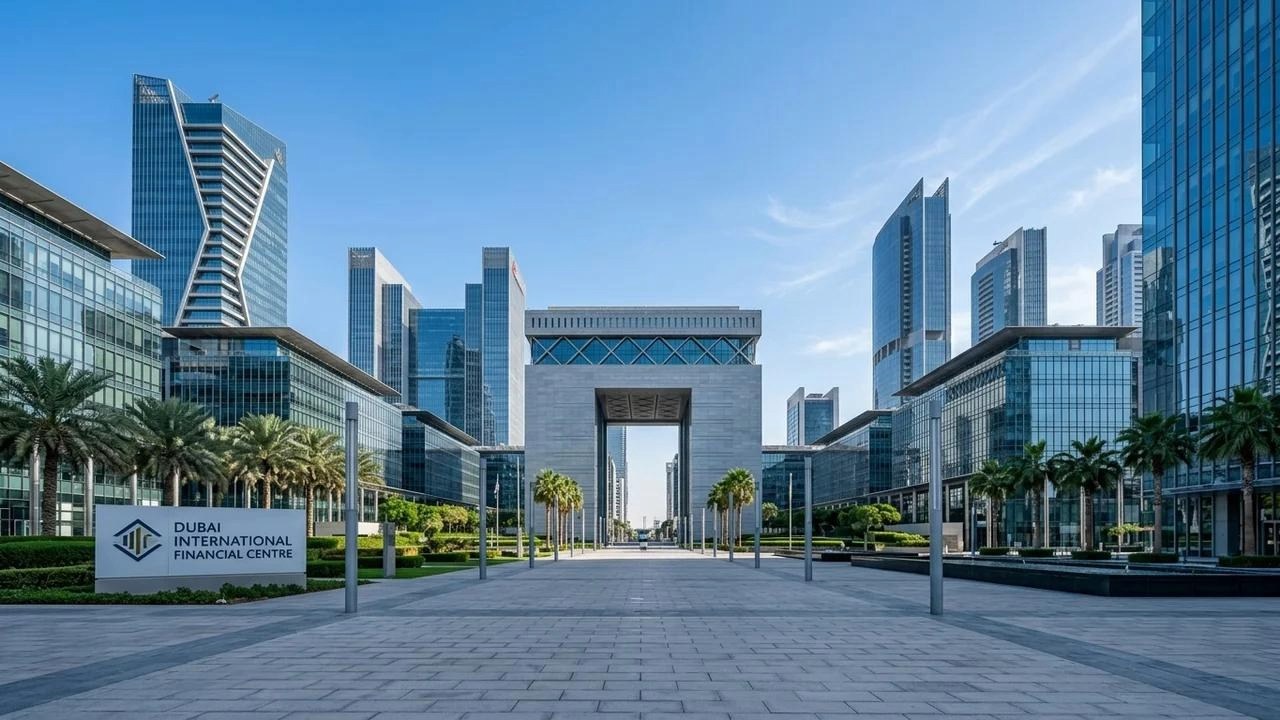
Dubai International Financial Centre (DIFC) now hosts more than 600 wealth and asset management companies, adding to the emirate’s growing presence in international private banking and investment services.
The milestone was announced on November 4, 2026, during the inaugural Dubai Future Finance Week, which is running from November 2 to 6. DIFC said its wealth and asset management community is now three times larger than that of comparable financial centres in the market, according to its own comparison.
The development comes as Dubai continues to attract international financial institutions, investment managers and family offices seeking access to markets across the Middle East, Africa and South Asia (MEASA).
For Dubai, the expansion is about more than the number of companies operating within its financial district. It adds depth to an ecosystem that supports private banking, investment management, alternative assets and services for wealthy families.
DIFC’s growing role in international wealth management
The latest figure builds on the financial centre’s expansion over the past year.
In its February 2026 report on 2025 performance, DIFC recorded more than 500 wealth and asset management companies, representing 22% growth during 2025. Reuters separately reported that 557 such firms were operating at the centre at the end of December 2025.
The new figure of more than 600, announced in November, indicates that the sector has continued expanding.
DIFC’s wider business ecosystem has also been growing. Its 2025 annual results recorded 8,844 active companies, alongside 1,052 regulated firms and a workforce of 50,200.
These figures provide a broader picture of the financial centre’s development. Wealth managers operate alongside banks, financial advisers, investment businesses, technology companies and other professional service providers.
The concentration of these businesses gives international institutions access to a range of financial and professional services within one established business district.
International banks and investment firms expand their Dubai presence
The growth of DIFC’s wealth management sector is accompanied by activity from established international financial institutions.
J.P. Morgan Private Bank opened a branch in DIFC on November 2, 2026, following regulatory authorisation from the Dubai Financial Services Authority (DFSA). The bank also expanded its Dubai-based private banking team in preparation for the opening.
Other international names with a presence in the centre include Julius Baer, UBS and Pictet.
Swiss wealth manager Julius Baer has operated in DIFC since 2004. Its presence reflects the longer-term development of Dubai as a location for international private banking rather than simply a destination for newly established financial businesses.
Pictet has also strengthened its operations by moving from a representative office to a full DIFC branch.
Meanwhile, investment management businesses including Janus Henderson Investors, Prospera Wealth Management and RV Capital Management were among the companies establishing operations during the first quarter of 2026.
DIFC also recorded 775 new company registrations during the first three months of 2026, a 62% increase compared with the same period a year earlier, according to figures reported by Gulf News.
Dubai’s ambitions under the D33 economic agenda
The expansion supports the objectives of the Dubai Economic Agenda D33, which seeks to establish Dubai among the world’s four leading global financial centres.
DIFC is an important part of that strategy because it provides an established environment for financial institutions serving international clients and regional markets.
The centre operates within a dedicated financial free-zone framework, with the DFSA serving as its independent financial services regulator.
This regulatory structure is particularly relevant to businesses handling investment activities, private banking and other financial services. International firms entering the market must meet the applicable licensing and regulatory requirements.
Dubai’s location also gives financial businesses access to clients and commercial opportunities across several regions. Its position between major markets in Europe, Asia and Africa makes it a practical base for institutions with international operations.
However, attracting companies is only one part of building a competitive financial centre. Maintaining regulatory confidence, developing skilled professionals and providing the infrastructure required by investment businesses will remain important as the sector expands.
Islamic finance adds another dimension to Dubai’s financial growth
Dubai Future Finance Week also placed considerable attention on Islamic finance and the development of Sharia-compliant financial services.
The Future Islamic Finance Forum brought together more than 1,000 senior stakeholders from over 50 countries. Discussions covered cross-border liquidity, regulatory coordination and investment approaches aligned with Islamic financial principles.
DIFC highlighted the global Islamic finance industry, which it said is projected to reach $9.31 trillion by 2030. It also pointed to the Islamic fintech market, which is expected to approach $180 billion in 2026.
Alongside the discussions, DIFC announced plans to establish an Islamic Finance Innovation Centre through its Innovation Hub.
The initiative is intended to support the development of financial technology and innovation within the Islamic finance sector.
DIFC Academy also introduced specialised learning pathways through its Centre for Global Islamic Finance. The programmes are designed for participants at different levels of experience, with a target of reaching more than 3,000 learners by 2031.
These initiatives connect the financial centre’s business expansion with two other priorities: developing specialist talent and supporting new financial products and technologies.
What the 600-firm milestone means for Dubai
The increase in wealth and asset management companies strengthens Dubai’s position as a destination for financial institutions managing investments and advising private clients.
A larger concentration of firms can support the development of specialist services, professional employment and business relationships across the financial sector. It can also make the city more attractive to international institutions considering where to establish or expand their regional operations.
For family offices and wealthy individuals, the presence of established wealth managers, private banks and related professional services adds to the range of financial expertise available in Dubai.
Nevertheless, the 600-plus figure represents companies operating within DIFC’s ecosystem. It should not be confused with the number of individual investors, clients or assets under management.
The next test will be whether Dubai can sustain this growth while continuing to develop its regulatory environment, infrastructure and financial talent.
For now, the milestone gives DIFC another indicator of the scale it has reached in a sector that has become central to Dubai’s ambitions as an international financial centre.
Q1. How many wealth and asset management firms are based in DIFC?
More than 600 wealth and asset management companies operate within Dubai International Financial Centre, according to figures announced on November 4, 2026.
Q2. When did DIFC announce the 600-firm milestone?
DIFC announced the milestone during the third day of Dubai Future Finance Week on November 4, 2026.
Q3. Why are international wealth management firms choosing Dubai?
Dubai offers access to regional and international markets, an established financial services ecosystem and a dedicated regulatory framework for financial businesses operating in DIFC.
Q4. Which international banks and wealth managers operate in DIFC?
The financial centre hosts international institutions including J.P. Morgan Private Bank, Julius Baer, UBS and Pictet.
Q5. What is Dubai’s D33 economic agenda?
The Dubai Economic Agenda D33 is a long-term economic strategy that aims to strengthen Dubai’s international competitiveness and establish it among the world’s four leading global financial centres.
Q6. What is the role of DFSA in DIFC?
The Dubai Financial Services Authority regulates financial services conducted in or from DIFC. It oversees relevant firms and activities under the centre’s financial regulatory framework.
Q7. What is Dubai Future Finance Week 2026?
Dubai Future Finance Week is an international financial industry event running from November 2 to 6, 2026. It brings together financial institutions, investors, regulators and industry leaders.
Q8. Does the 600-firm figure represent assets under management?
No. It represents the number of wealth and asset management companies operating within DIFC’s ecosystem. It does not represent the total value of assets managed by those companies.
