
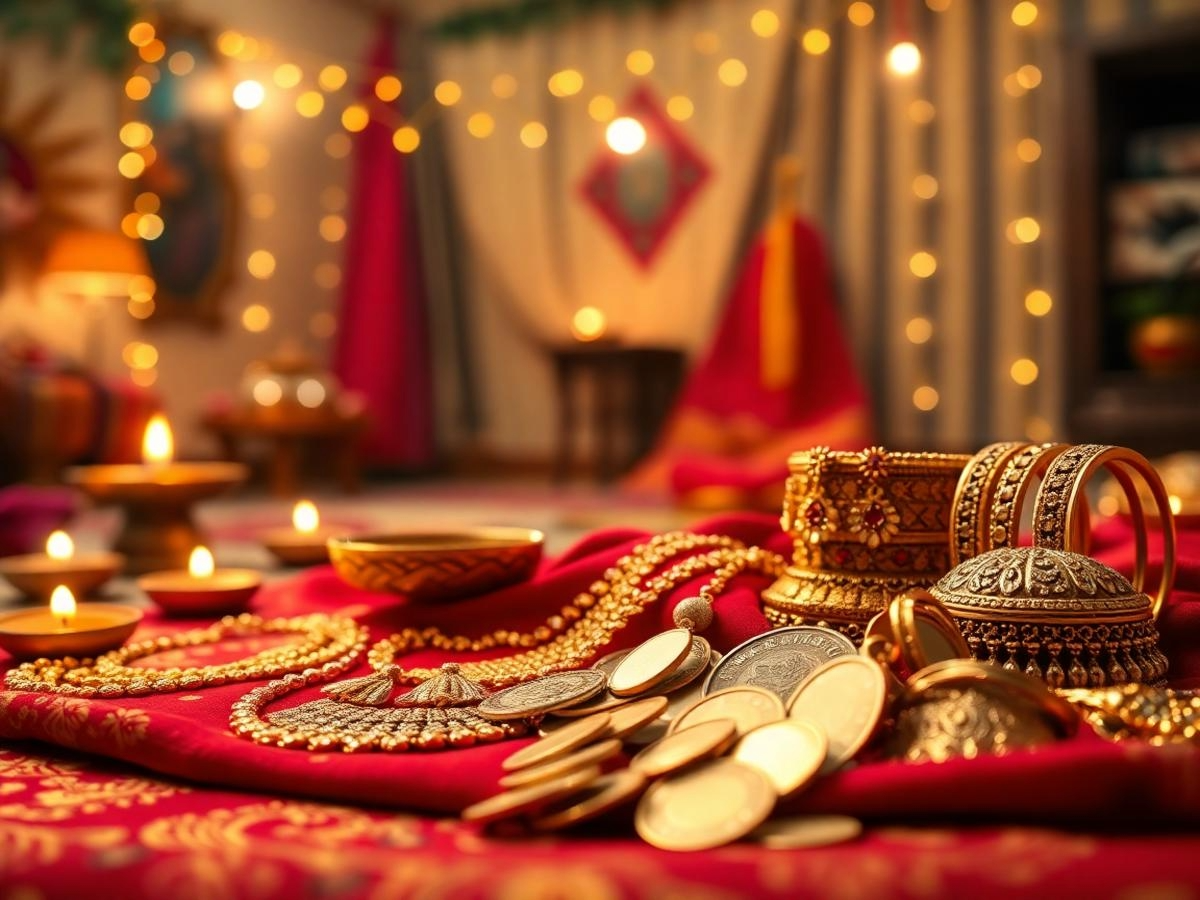
UAE jewellery shoppers are approaching Dhanteras 2026 with a greater focus on affordability, everyday wear and design, as gold prices and changing consumer preferences influence festive purchases.
Retailers across the UAE are reporting interest in lightweight gold chains, smaller bangles, diamond pendants and coloured gemstones alongside traditional 22-karat jewellery. Gold coins and exchange offers are also among the options being considered by consumers preparing for the festival.
Dhanteras falls on Friday, November 6, while Diwali will be celebrated on Sunday, November 8. For many Indian families living in Dubai, Abu Dhabi and other emirates, purchasing gold remains an important part of the festive season. However, shoppers are increasingly considering how much they spend and whether their purchases can be worn throughout the year.
Lightweight jewellery gains attention among UAE shoppers
The preference for lighter jewellery is becoming increasingly visible in the UAE retail market. Rather than concentrating exclusively on heavier traditional sets, customers are showing interest in pieces that suit both festive occasions and regular use.
Jewellery retailers report demand for lightweight chains, stackable bangles, diamond pendants and contemporary designs. These options allow shoppers to maintain the tradition of purchasing precious jewellery without necessarily committing to a large gold purchase.
John Paul Alukkas, CEO of Joyalukkas Jewellery, described a change in the composition of festive purchases, with everyday jewellery becoming more prominent alongside conventional bridal designs.
Malabar Gold & Diamonds has also reported interest in natural diamond jewellery, precious gemstones and contemporary gold collections, according to Shamlal Ahamed, the company’s managing director of international operations.
Traditional gold has not disappeared from shopping lists. Bafleh Jewellers continues to see interest in 22-karat necklaces, bangles and chains, while contemporary designs are attracting attention as well.
Gold prices remain an important part of buying decisions
Dubai’s gold rates on November 3 provide some context for this year’s festive shopping.
According to the rates reported by Gulf News:
-
24-karat gold: AED 474 per gram.
-
22-karat gold: AED 439.25 per gram.
On October 20, 2025, the corresponding rates were AED 512.25 and AED 474.25 per gram.
The comparison shows that 22-karat gold was approximately AED 35 cheaper per gram than on the previous year’s Diwali date. The 24-karat rate was down AED 38.25 per gram.
These figures refer to the gold rate and do not represent the final price of finished jewellery. Making charges, gemstone costs and applicable taxes can increase the amount paid at the counter.
The wider gold market has also experienced substantial fluctuations during 2026. International bullion prices respond to factors including US interest-rate expectations, currency movements, bond yields and geopolitical developments.
The World Gold Council’s July 2026 outlook noted that elevated prices were expected to continue putting pressure on jewellery volumes, even as investment demand remained an important source of support for the gold market.
For UAE shoppers, a lower rate compared with last year’s festival does not automatically mean a return to buying heavier jewellery. The amount allocated to a purchase, the design and the intended use of the piece remain important considerations.
Diamonds and coloured gemstones broaden festive choices
Gold is sharing attention with other forms of jewellery as consumers explore different designs.
Natural diamonds and coloured gemstones are becoming part of the festive shopping conversation, particularly for customers seeking distinctive pieces that can be worn on different occasions.
Emeralds, diamonds and other precious stones offer alternatives to conventional gold-only designs. Some shoppers may prefer jewellery where the stone is the main visual feature, supported by a smaller amount of gold.
This does not necessarily represent a complete move away from traditional jewellery. Instead, it reflects the variety of choices available in a market serving customers with different cultural backgrounds, preferences and spending capacities.
The UAE’s jewellery market includes shoppers with different preferences for gold purity. Retailers cited by Gulf News report continued interest among Indian customers in 22-karat jewellery, while 18-karat designs also have a place among other customer groups.
Old-gold exchanges and payment plans offer alternatives
Consumers who want to purchase new jewellery without paying the entire amount from their current savings may consider retailer exchange programmes and advance-payment arrangements.
Exchanging previously purchased jewellery can help reduce the additional cash required for a new design. However, the value offered depends on the original piece’s weight, purity, condition, stone content and the retailer’s valuation policy.
Malabar Gold & Diamonds has reported interest in a payment arrangement under which customers can pay a 25 per cent advance to lock in the prevailing gold rate.
Such arrangements require careful consideration. Before making a payment, customers should establish:
-
Whether the gold rate is genuinely locked for the agreed period.
-
Whether the advance payment is refundable.
-
What happens if the customer cancels the purchase.
-
Whether making charges and gemstone costs are included.
-
What deductions apply when exchanging old jewellery.
A lower advertised gold rate does not necessarily mean a lower final jewellery bill. Comparing the complete price, rather than only the per-gram rate, gives shoppers a clearer picture of the purchase cost.
Festive traditions continue to support jewellery demand
For many Indian households in the UAE, Dhanteras purchases carry cultural and family significance beyond the market value of gold.
The festival is traditionally associated with purchasing gold, silver and other valuable household items as a symbol of prosperity. Families may buy jewellery for personal use, gifting or to mark an annual tradition.
Retailers remain optimistic about festive shopping, with the approaching wedding season providing another potential source of demand.
However, the final level of spending will depend on gold-price movements, household budgets and consumer confidence. A shopper purchasing a small gold coin, a lightweight chain or a gemstone pendant is still participating in the festive market, even if the purchase differs from previous years.
For UAE jewellers, this year’s Dhanteras season is therefore about serving a wider range of purchasing preferences. Traditional gold remains relevant, but versatility, design and affordability are playing a larger role in what customers take home.
Q1. When is Dhanteras 2026 in the UAE?
Dhanteras falls on Friday, November 6, 2026. Diwali will be celebrated on Sunday, November 8, 2026.
Drikpanchang
Q2. What jewellery are UAE shoppers choosing for Dhanteras 2026?
Shoppers are showing interest in lightweight gold chains, smaller bangles, diamond pendants, stackable jewellery and coloured gemstones, alongside traditional gold pieces.
Q3. What is the Dubai gold rate on November 3, 2026?
The rates reported on November 3 were AED 474 per gram for 24-karat gold and AED 439.25 per gram for 22-karat gold. Rates can change throughout the day.
Q4. Is gold cheaper in the UAE compared with Diwali 2025?
Yes. The November 3, 2026 reference rates were lower than the October 20, 2025 rates by approximately AED 38.25 per gram for 24-karat gold and AED 35 per gram for 22-karat gold.
Q5. Are UAE shoppers still buying 22-karat gold?
Yes. Traditional 22-karat necklaces, bangles and chains continue to attract customers, particularly for festivals, weddings and gifting.
Q6. Are diamonds and gemstones becoming popular for Dhanteras?
Retailers report growing interest in natural diamond jewellery, precious gemstones and contemporary designs alongside traditional gold jewellery.
Q7. Can UAE customers exchange old gold for new jewellery?
Yes. Some retailers offer exchange programmes. The final exchange value depends on the gold’s purity, weight, deductions and the retailer’s terms.
Q8. Will gold prices increase before Dhanteras 2026?
There is no certainty about short-term gold-price movements. International bullion prices are influenced by interest rates, currency movements, economic conditions and geopolitical developments.
