
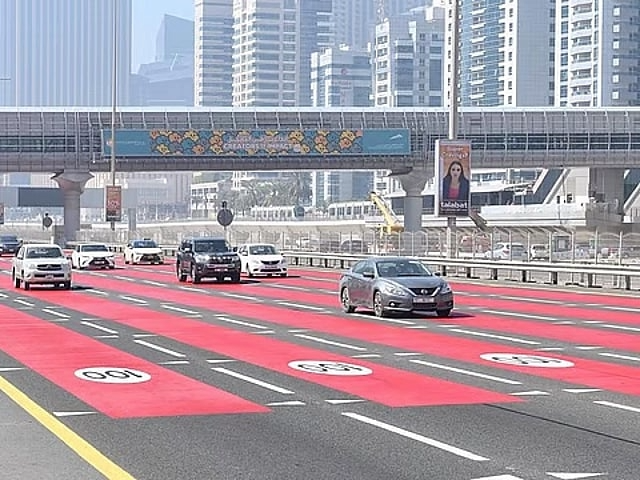
The UAE has established specific conditions under which authorised doctors and selected essential-service drivers can receive priority on public roads, including limited exemptions from speed restrictions and permission to use certain restricted lanes.
Under the rules reported on November 3, 2026, eligible drivers may travel up to 40km/h above the posted speed limit on roads outside built-up areas. They may also use road shoulders, emergency-vehicle lanes and designated bus lanes in specified traffic situations.
The provisions are not available to ordinary motorists or all healthcare workers. Drivers must receive the necessary authorisation, complete approved training and follow strict safety requirements when exercising road priority.
The framework covers four essential services: emergency medical response by doctors, public road services, vehicle recovery operations and traffic accident scene mapping.
Which essential services qualify for road priority?
The rules identify four categories of vehicles that may receive permission to exercise road priority:
-
Emergency medical response: Authorised doctors travelling to hospitals or approved healthcare facilities when their rapid attendance is required.
-
Public road services: Vehicles operated by relevant government departments or contractors carrying out road-related services.
-
Vehicle recovery: Recovery vehicles travelling to accident locations or responding to vehicle breakdowns.
-
Traffic accident mapping: Vehicles involved in documenting and mapping road accidents.
The provisions also identify four circumstances in which road priority may be granted: partial or general movement restrictions, traffic congestion or obstruction, emergencies and adverse weather conditions, and road accidents.
For doctors, the provision applies to urgent medical situations requiring a rapid response at an approved hospital or healthcare facility. It also covers situations where a doctor is called to another emirate to attend an emergency.
What traffic exemptions are permitted?
Authorised drivers exercising road priority can receive exemptions covering three specific types of traffic violations.
1. Exceeding the speed limit
Eligible drivers may exceed the posted speed limit by up to 40km/h on roads outside built-up areas. This is a conditional exemption, not permission to drive at any speed or disregard road conditions.
2. Using road shoulders and emergency lanes
Authorised vehicles may use road shoulders and lanes reserved for emergency vehicles when traffic is stationary or congested, subject to the applicable conditions.
3. Using designated bus lanes
The rules also permit authorised vehicles to use designated bus lanes when exercising road priority.
These exemptions are linked to approved service operations. They should not be interpreted as general privileges for private vehicles, ordinary commuters or employees who have not received the required authorisation.
Six responsibilities drivers must follow
Receiving permission to exercise road priority does not remove a driver’s responsibility to protect other road users.
The framework sets out six obligations:
1. Complete approved training: Drivers must successfully complete a training programme approved by the traffic enforcement or licensing authority before obtaining a road-priority permit.
2. Obtain permission for warning signs: Approved warning signs cannot be used without the required authorisation.
3. Follow traffic regulations: Drivers must continue to comply with applicable road rules.
4. Never cross a red light: Authorised drivers must exercise caution and cannot use road-priority permission as justification for crossing a red traffic signal.
5. Give way to higher-priority emergency vehicles: They must give priority to fire emergency vehicles, vehicles transporting patients and injured people, police, civil defence, ambulances and official motorcades travelling on duty.
6. Respect speed restrictions in sensitive areas: Posted speed limits near schools, hospitals and residential neighbourhoods must be observed.
These requirements make clear that road priority is intended to facilitate essential services without creating additional risks for motorists, pedestrians and other road users.
Doctors must meet four eligibility conditions
Doctors cannot automatically claim these privileges simply because they work in the healthcare sector.
To qualify for emergency-response authorisation, they must satisfy four conditions:
-
Work in an essential medical specialty included in the approved service.
-
Complete the training programme recognised by the traffic enforcement or licensing authority.
-
Obtain formal approval to use the emergency-response service.
-
Hold a valid medical licence in the UAE.
The specialty requirement is particularly important because the service is intended for medical situations where a doctor’s rapid attendance is necessary.
The UAE already has an established emergency medical-response initiative known as the Bin Wariqa service. In May 2025, Gulf News reported on the Ministry of Interior’s programme for doctors in 13 critical medical specialties. The earlier coverage described traffic privileges and operational support for registered doctors responding to emergency hospital calls.
How are authorised vehicles coordinated?
Road priority is subject to an operational approval process.
The reported provisions require authorised essential-service vehicle drivers to notify the relevant operations room when carrying out their duties. They must also obtain road priority through the competent traffic enforcement authority.
This coordination is important because the exemptions are linked to a specific service requirement rather than the driver’s occupation alone.
The rules also restrict the use of warning signs to authorised vehicles. This helps distinguish approved emergency-response operations from ordinary journeys and unauthorised attempts to use restricted road facilities.
What UAE motorists should understand
For everyday motorists in Dubai, Abu Dhabi, Sharjah and other emirates, the key point is that these exemptions do not change the normal speed limits for private vehicles.
The federal traffic framework continues to establish road-safety obligations for all road users. Federal Decree-Law No. 14 of 2024 on Traffic Regulation also identifies the priority given to official processions, civil defence vehicles on duty, vehicles transporting patients and injured people, military convoys, police vehicles using warning signals and designated essential-service vehicles.
Motorists should therefore continue to follow posted speed limits, traffic signals and lane restrictions. They should also remain alert to authorised emergency and essential-service vehicles operating on the roads.
The distinction is important: the 40km/h allowance is a controlled exemption for approved operations, not a new speed-limit allowance for UAE drivers generally.
For healthcare professionals and essential-service operators, the requirements place emphasis on eligibility, training, official approval and communication with the relevant operations room before using road-priority privileges.
Q1. Can doctors in the UAE drive 40km/h above the speed limit?
Yes. Authorised doctors responding to qualifying medical emergencies may exceed the posted speed limit by up to 40km/h on roads outside built-up areas, subject to the applicable conditions.
Q2. Can all doctors use the speed-limit exemption?
No. Doctors must belong to an approved essential medical specialty, hold a valid UAE medical licence, complete approved training and receive authorisation.
Q3. Which essential workers can receive road priority?
The framework covers authorised emergency medical response, government or contracted public road services, vehicle recovery services and traffic accident mapping services.
Q4. Can authorised drivers use bus lanes in the UAE?
Yes. Approved vehicles exercising road priority may use designated bus lanes under the specified conditions.
Q5. Can authorised drivers cross red traffic lights?
No. The rules specifically require authorised drivers to obey traffic signals and prohibit crossing red lights.
Q6. Can authorised drivers use the road shoulder during traffic jams?
Yes. They may use road shoulders and designated emergency-vehicle lanes when traffic is stationary or congested, subject to authorisation and applicable requirements.
Q7. Do these exemptions apply to ordinary UAE motorists?
No. The exemptions apply only to eligible and authorised essential-service operations. Ordinary motorists must follow the posted speed limits and normal traffic regulations.
Q8. Where must authorised drivers report their operations?
They must notify the relevant operations room when providing the essential service and obtain road priority through the competent traffic enforcement authority.
