
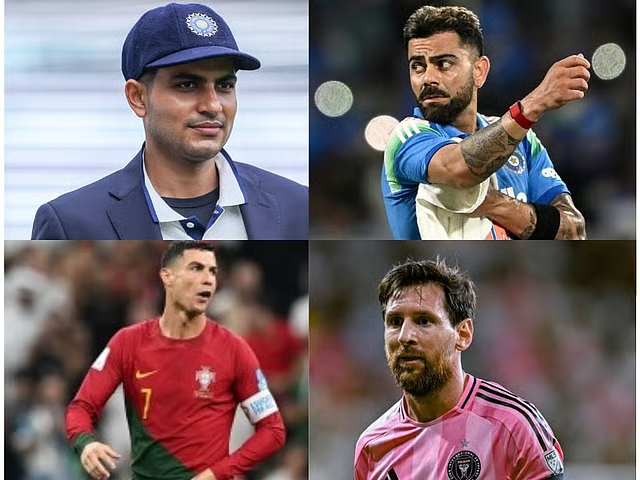
India captain Shubman Gill has emerged as one of the world’s most marketable sporting figures, ranking 13th in SportsPro’s 2026 Most Marketable Athletes list and finishing ahead of football icons Cristiano Ronaldo and Lionel Messi.
The rankings place Portugal’s Ronaldo 14th and Argentina’s Messi 27th. India’s Virat Kohli, one of cricket’s most recognisable international stars, sits at 85th, outside the top 50. The results underline an important distinction in global sports marketing: an athlete’s commercial appeal is not necessarily reflected by their long-established fame or achievements.
Published in October 2026, the annual assessment considers athletes across different sports, evaluating factors associated with their brand strength, current momentum and future commercial prospects. Gill’s position puts him among the leading names in a ranking that brings cricket, football, basketball, tennis and other sports into the same commercial comparison.
What puts Gill ahead of established global stars?
The ranking is not a straightforward popularity contest. SportsPro’s assessment, developed with NorthStar Solutions Group, considers several dimensions of an athlete’s appeal to brands rather than relying on a single measure such as social media followers or sporting results.
For the 2026 edition, the assessment examined 1,202 athletes across 70 sports before narrowing the field for detailed evaluation. The methodology considers three main areas: brand equity, momentum and commercial trajectory. Audience reach, search interest, media sentiment and commercial partnerships also inform the assessment.
That approach helps explain why athletes with very different careers can appear close together in the rankings. A global football superstar may have extraordinary name recognition, while another athlete may score strongly on the momentum of their public profile or their potential to attract commercial partnerships.
Gill’s 13th-place finish should therefore be understood as a measure of marketability within SportsPro’s framework, rather than evidence that he is more famous than Ronaldo or Messi in every market.
Virat Kohli’s position tells a different story
The rankings also offer a striking comparison within Indian cricket.
Kohli is placed 85th, while former India captain MS Dhoni ranks 83rd and Rohit Sharma 90th. Their positions contrast with their established reputations and extensive followings, but they do not establish that these players have lost their popularity or commercial value across all markets.
The list measures a particular combination of factors at a particular point in time. It should not be confused with rankings of the world’s best cricketers, the highest-paid athletes or the most-followed sports personalities.
For brands, the distinction matters. Sponsorship decisions can depend on audience demographics, engagement, reputation, the relevance of an athlete’s image to a campaign and the scope for future growth. A ranking that weighs these elements can produce a different order from one based on career records or earnings alone.
Who leads the 2026 rankings?
Tennis star Aryna Sabalenka tops the 2026 list, followed by freestyle skier Eileen Gu and basketball player Giannis Antetokounmpo. Footballer Erling Haaland ranks fourth, ahead of tennis player Carlos Alcaraz in fifth.
The leading positions show that the list extends beyond the biggest names in men’s football. Athletes from women’s sport, basketball, tennis and other disciplines feature prominently, reflecting the range of audiences and commercial opportunities considered in the assessment.
For cricket, Gill’s position makes him the highest-ranked Indian cricketer in the top 50. The broader list also includes Indian players Rishabh Pant, Jemimah Rodrigues, Smriti Mandhana and Jasprit Bumrah, according to reporting on the 2026 rankings.
Their presence demonstrates that the commercial profile of Indian cricket extends beyond a small group of long-established male stars.
Why the rankings matter to sports marketing
Athlete marketability can influence how brands assess sponsorship opportunities, promotional partnerships and access to specific audiences. Rankings such as SportsPro’s provide one framework for comparing athletes, although individual brands will still need to consider their own campaign objectives and target markets.
The findings may also interest sports audiences in the UAE, where international cricket and football attract substantial attention. However, Gill’s position in the global list does not, by itself, establish how much he earns from endorsements in the UAE or how much local companies spend on athlete sponsorships.
For advertisers, the useful question is not simply which athlete ranks highest. It is whether an athlete’s audience, reputation and public profile align with the brand’s intended market.
Gill’s ranking places him ahead of two of football’s most recognisable figures and of Kohli in this particular assessment. What it does not do is settle the broader debate over sporting greatness, fame or endorsement income. Those are separate measures, and each tells a different story about an athlete’s influence.
1. Where does Shubman Gill rank among the world’s most marketable athletes in 2026?
Shubman Gill ranks 13th in SportsPro’s 2026 Most Marketable Athletes list, according to reporting published on October 29–30, 2026.
2. Is Shubman Gill ranked above Cristiano Ronaldo?
Yes. Gill is 13th, while Cristiano Ronaldo is 14th in the 2026 rankings. The comparison concerns marketability, not their respective sporting achievements.
3. What is Lionel Messi’s position in the 2026 marketability rankings?
Lionel Messi ranks 27th, 14 places below Gill.
4. What is Virat Kohli’s position in the list?
Virat Kohli ranks 85th in the 2026 assessment, outside the top 50. MS Dhoni ranks 83rd, while Rohit Sharma ranks 90th.
5. Who is the world’s most marketable athlete in 2026?
Aryna Sabalenka tops SportsPro’s 2026 list. Freestyle skier Eileen Gu ranks second, followed by basketball player Giannis Antetokounmpo.
6. How does SportsPro determine athlete marketability?
The 2026 assessment considers brand equity, momentum and commercial trajectory. Its evaluation includes factors such as audience reach, search interest, media sentiment and commercial partnerships.
7. Does Gill’s ranking mean he is more famous than Ronaldo or Messi?
No. The ranking measures marketability using SportsPro’s assessment framework. It is not a universal measure of fame, sporting ability, career achievements, earnings or social media popularity.
8. Why is Shubman Gill’s ranking relevant to the UAE?
The ranking provides a talking point for UAE sports audiences interested in international cricket, football and sports sponsorship. However, the global ranking alone does not establish Gill’s endorsement earnings or commercial value specifically within the UAE.
