
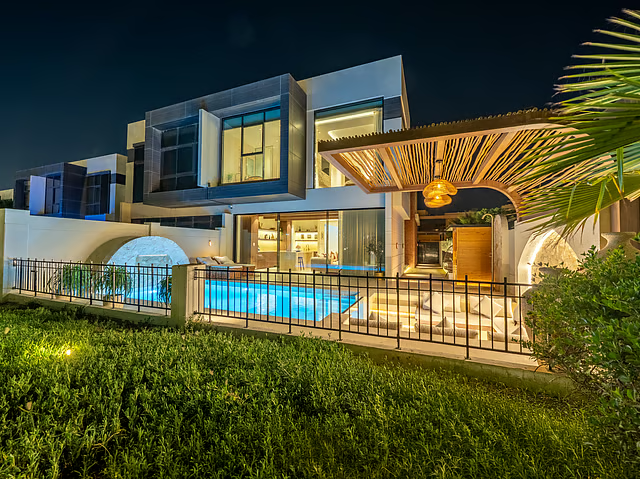
DUBAI: Choosing a family home in the UAE involves more than comparing bedrooms, floor plans and property prices. Access to parks, children’s recreation, sports facilities and everyday services can also shape how residents experience life in a neighbourhood.
The subject has gained added relevance as UAE authorities put greater emphasis on family wellbeing and the design of residential areas. Abu Dhabi launched its Cities for Families Framework on October 1, 2026, setting out a planning approach intended to make homes, public spaces, neighbourhoods and services more responsive to the needs of families.
The framework, developed by Abu Dhabi’s Early Childhood Authority, Department of Community Development and Department of Municipalities and Transport, contains five goals, 15 strategies and 63 actions. It addresses the needs of children, parents, caregivers, older people and People of Determination.
For residents weighing where to settle, the wider question is how a neighbourhood functions after the move is complete. A nearby playground, a practical layout for visiting relatives, accessible walking routes and places to meet neighbours can all influence everyday routines.
What families look for in residential communities
A residential development may offer a range of facilities, but their usefulness depends on how well they fit the needs of the people living there.
Families with young children may prioritise safe places to play and convenient access to schools. Households that regularly host older relatives may place greater value on ground-floor bedrooms, accessible entrances and layouts that allow several generations to live comfortably under one roof.
Outdoor amenities can also shape how residents spend their time. Parks, swimming pools, landscaped walking routes and sports facilities provide options for recreation without requiring every activity to involve a journey elsewhere.
These considerations feature in a Gulf News article published on October 30, 2026, which profiles residents living in DAMAC Hills and DAMAC Hills 2 in Dubai. The feature, published in association with DAMAC Properties, describes households that value outdoor space, children’s activities, community facilities and opportunities to socialise.
The accounts offer individual examples of residential preferences, rather than a representative survey of homebuyers across Dubai or the UAE. They nevertheless illustrate the range of practical considerations that can influence a family’s choice of home.
Why community facilities matter after moving in
Amenities are most useful when residents can incorporate them into their ordinary routines.
A playground close to home can make an afternoon outing easier to organise. A sports facility can provide opportunities for regular exercise, while a community gathering space can give neighbours a reason to meet beyond chance encounters in lifts or car parks.
Indoor recreation also has a role, particularly during periods when outdoor activities are less comfortable. Facilities for play, arts and crafts, and other supervised or family-oriented activities can offer additional options, although their availability and suitability vary by development.
The Gulf News feature includes comments from Ahmad Turani, founder and chief executive of Mabany Holding, about an indoor play area serving residents of DAMAC Hills 2. His account describes repeat visits to the facility and plans discussed with DAMAC to update the space.
That example illustrates a potential business opportunity within a growing residential area, but it does not establish the scale of demand for indoor play facilities across Dubai. Independent, representative data would be needed to determine how widely that preference is shared.
For households, the practical test is whether advertised amenities are accessible, maintained and suitable for the intended users. Families comparing developments may also want to establish whether facilities are included in their residential community, whether additional charges apply and whether access is restricted to particular residents or membership categories.
Abu Dhabi puts family needs into city planning
Abu Dhabi’s Cities for Families Framework provides a broader policy context for these questions.
According to the Abu Dhabi Early Childhood Authority, the framework is intended to connect family needs with urban planning, transport, public spaces and service provision. Its stated priorities include shorter journeys, services closer to residential areas, shaded and accessible routes, and public spaces designed to accommodate different ages and abilities. Implementation is expected to follow a phased roadmap developed with government entities and other stakeholders.
The approach goes beyond providing recreational facilities within individual developments. It considers how neighbourhoods connect to the services and infrastructure residents need to use regularly.
The UAE’s National Policy on Vital Residential Communities similarly identifies accessibility, integrated facilities, social connections and liveability as important elements of residential community development. The policy’s stated objectives include encouraging healthy lifestyles, improving social relationships and bringing essential facilities closer to residents. UAE Legislation
These policy objectives provide a useful benchmark for assessing residential areas, although they should not be mistaken for evidence that every neighbourhood currently meets those standards.
What UAE residents should consider before choosing a home
For families comparing properties, the most useful assessment starts with their own daily needs rather than the number of amenities listed in a brochure.
Prospective buyers and tenants can consider several practical questions:
- Daily access: How close are schools, shops, healthcare services and other frequently used facilities?
- Children’s activities: Are playgrounds and recreation areas accessible, suitable for the children’s ages and properly maintained?
- Mobility: Can older relatives, wheelchair users and young children move comfortably around the neighbourhood?
- Transport: Are public transport, road connections and everyday journeys convenient for the household?
- Community facilities: Are swimming pools, gyms, parks and indoor play areas included, or do they involve separate fees?
- Long-term suitability: Will the home’s layout and surrounding facilities remain practical as the family grows or its needs change?
Renters should also review the tenancy terms and any applicable community charges. Buyers may wish to examine service charges, maintenance arrangements and the rules governing shared facilities before committing to a property.
The wider policy direction in the UAE is increasingly attentive to how residential environments support family life. For individual households, however, the decision remains specific: finding a home and neighbourhood that work for their budget, routines, accessibility requirements and plans for the future.
1. What do families look for in residential communities in the UAE?
Relevant considerations include housing layout, access to schools and essential services, children’s recreation, green spaces, sports facilities and convenient transport. Individual priorities vary according to household size, budget, lifestyle and accessibility needs.
2. What is Abu Dhabi’s Cities for Families Framework?
The Cities for Families Framework is an urban planning initiative launched on October 1, 2026, by Abu Dhabi’s Early Childhood Authority, Department of Community Development and Department of Municipalities and Transport. It sets out five goals, 15 strategies and 63 actions intended to make neighbourhoods, homes, public spaces and services more responsive to family needs.
3. When was Abu Dhabi’s Cities for Families Framework launched?
The framework was announced on October 1, 2026, during LIVEX 2026 in Abu Dhabi. Its implementation is planned through a phased roadmap involving government entities and other stakeholders.
4. What amenities should families check before renting or buying a home in Dubai?
Families can assess playgrounds, parks, swimming pools, sports facilities, schools, healthcare access and nearby shops. They should also check maintenance standards, accessibility, transport links and whether shared facilities require additional payments.
5. Why are accessible neighbourhoods important for families?
Accessible neighbourhoods can make daily journeys easier for children, older people and People of Determination. Abu Dhabi’s Cities for Families Framework explicitly includes accessible routes, nearby services and public spaces that accommodate different ages and abilities. ECA
6. What is the UAE’s National Policy on Vital Residential Communities?
It is a national policy established in 2019 to support the development of liveable residential communities. Its objectives include improving access to essential facilities, encouraging healthy lifestyles and strengthening social connections among residents.
7. Are community amenities always included in residential property costs?
No. The facilities available and their associated costs depend on the property and development. Buyers and tenants should check their contracts, service charges, community rules and any separate membership or usage fees.
8. Does the Gulf News feature establish what most UAE families prefer?
No. The supplied article presents individual experiences from selected residents and is published in association with DAMAC Properties. It does not constitute a representative survey of families across the UAE.
