
ABU DHABI: Abu Dhabi is expanding its approach to urban development by putting greater emphasis on how neighbourhoods function in everyday life, rather than focusing only on the delivery of buildings and infrastructure.
The Department of Municipalities and Transport (DMT) launched Phase 2 of Abu Dhabi’s Liveability Strategy on September 18, setting out a five-year roadmap aimed at improving the operational quality and social impact of infrastructure and community facilities across the emirate.
The new phase follows the completion of the strategy’s first phase, which focused on improving neighbourhood integration, infrastructure readiness and access to community facilities.
Under Phase 2, Abu Dhabi plans to use a unified digital platform and smart analytics to monitor infrastructure assets and public amenities. Resident and customer satisfaction data will also be integrated with field-completion information to help planners identify local needs and guide future government investment.
From infrastructure delivery to everyday experience
The change represents a broader approach to liveability. Instead of assessing a neighbourhood primarily by whether facilities have been provided, the strategy will increasingly consider how those facilities operate and the value they create for communities.
The framework covers areas including public spaces, mobility, community facilities and infrastructure, with district-level targets planned over the next five years. It also brings current and future private-sector master developments within the wider quality-of-life framework.
This direction was reinforced in August when DMT introduced its Livability by Design Framework for major urban developments.
The framework, overseen by the Urban Planning and Permits Centre, applies to new and updated master plans accommodating more than 2,000 people. Mixed-use developments and tourism destinations are among the projects covered.
The framework calls for factors such as walkable neighbourhoods, connected mobility networks, accessible environments and high-quality public spaces to be considered from the early planning stages rather than added later.
Data and resident feedback to guide planning
A key element of Phase 2 is the use of data to understand differences between districts.
According to DMT, the new digital platform will combine infrastructure information with real-time customer and resident satisfaction surveys. The resulting data is intended to help identify where particular communities require additional investment or improvements.
The strategy also creates a framework in which government entities work together rather than treating urban infrastructure, mobility and community services as separate areas.
The Urban Planning and Permits Centre is also expected to work with developers and investors through public-private partnerships involving facilities such as parks, sports complexes, recreational clubs and community centres.
What has already been delivered
The current strategy builds on infrastructure and community projects delivered during its first phase.
DMT reported in September 2025 that average district completion scores across Abu Dhabi had reached 81 per cent, compared with 67 per cent before the strategy was introduced in 2023.
More than 60 projects worth AED12 billion were identified as key contributors. They included more than 200 parks and sports courts, 24 schools, 21 mosques, 28 community majlises and more than 20 retail facilities.
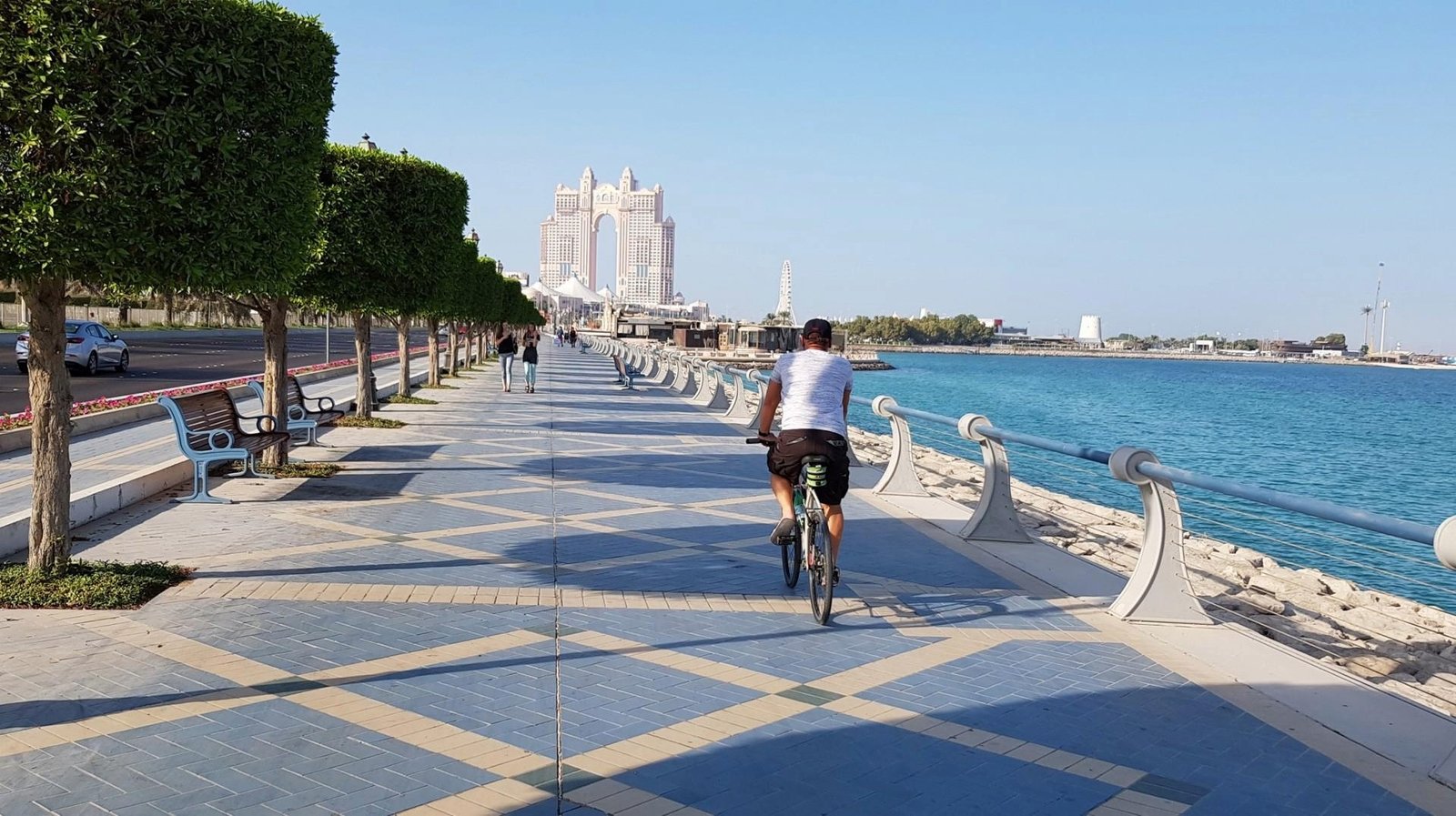
The programme also included nearly 120 kilometres of walking paths and 283 kilometres of cycling tracks, alongside street lighting and beautification works.
The emirate subsequently approved AED42 billion for a new phase of projects under the strategy, with planned work including additional cycling tracks, landscaping, road connectivity, community facilities and improvements to existing infrastructure.
Abu Dhabi prepares for global liveability event
The emirate’s focus on urban quality of life will also be showcased internationally later this month.
DMT is scheduled to host LIVEX 2026 from September 29 to October 1 at ADNEC Centre Abu Dhabi. The inaugural event will bring together government representatives, investors, developers, academics and industry experts to discuss liveability, urban development and investment.
DMT expects more than 20,000 participants, over 75 exhibitors and representatives from more than 50 countries.
The programme will cover sectors including real estate, mobility, healthcare, education, culture, technology and sustainability, reflecting the increasingly cross-sector nature of Abu Dhabi’s urban-planning agenda.
For residents, the practical focus of the strategy is visible in areas such as pedestrian connectivity, public spaces, community facilities, transport networks and neighbourhood amenities. The next stage places greater emphasis on whether those systems continue to meet residents’ needs as Abu Dhabi grows.
The result is a planning model that increasingly links physical development with the way people actually experience their neighbourhoods.
What is Abu Dhabi’s Liveability Strategy?
It is an emirate-wide urban development strategy focused on improving neighbourhood infrastructure, community facilities and residents’ quality of life. Its second phase places greater emphasis on the performance and social impact of those facilities.
What is Phase 2 of Abu Dhabi’s Liveability Strategy?
Phase 2 is a five-year roadmap launched by DMT on September 18, 2026. It introduces higher targets for infrastructure quality, facility performance and community outcomes.
What is the Livability by Design Framework?
It is a DMT planning framework that incorporates liveability considerations into major urban master plans from the design stage. It applies to new and updated master plans accommodating more than 2,000 people.
How will data be used in Abu Dhabi’s urban planning?
DMT says a unified digital platform will combine infrastructure information with resident and customer satisfaction data to identify local needs and guide government investment.
What facilities are covered by Abu Dhabi’s liveability approach?
The strategy includes infrastructure and community amenities such as parks, sports facilities, recreational clubs and community centres, alongside mobility and public-space planning.
When is LIVEX 2026 taking place?
LIVEX 2026 is scheduled for September 29 to October 1, 2026, at ADNEC Centre Abu Dhabi.
How does the new framework affect major developments?
New and updated master plans for areas accommodating more than 2,000 residents must incorporate liveability considerations including walkability, connected mobility, public spaces and accessibility.
