
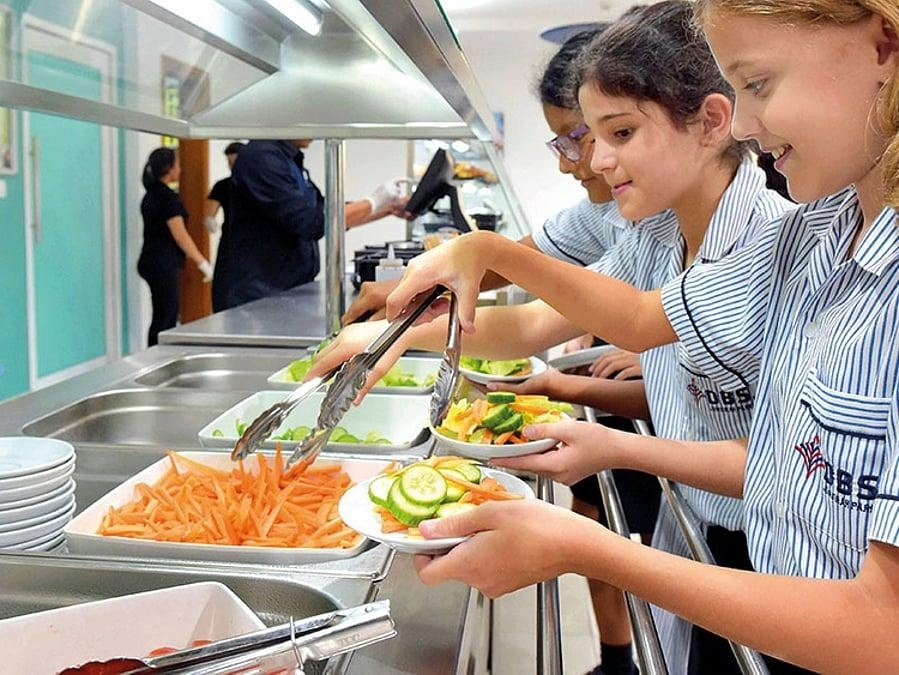
DUBAI: School lunch menus across the UAE are undergoing a gradual shift, with schools reducing highly processed and sugary options and increasing the use of fresh ingredients, vegetables, whole grains and freshly prepared meals.
The change is not limited to what is available in school canteens. Schools are also placing greater emphasis on nutrition education, helping students understand food choices and encouraging healthier habits that can continue beyond the classroom.
The wider approach comes as the UAE strengthens its school-food framework. The Ministry of Health and Prevention adopted the National Guide for Food and Beverages Served in the School Environment through Ministerial Resolution No. 23 of 2026.
Dubai has also stepped up food-safety and nutrition checks ahead of the 2026–27 academic year. Dubai Municipality said in September that inspections were being conducted across more than 500 educational institutions, including checks of school canteens, suppliers and menus against approved food-safety and nutrition requirements.
Fresh preparation replaces some processed options
Individual schools are taking different approaches, depending on their menus and catering arrangements.
At schools cited in the reporting, some commonly processed products are being replaced with meals prepared from fresh ingredients. Examples include freshly prepared chicken dishes instead of chicken nuggets, homemade burgers instead of processed frozen patties, and sauces prepared with vegetables rather than relying on packaged alternatives.
Menus can also include meals built around vegetables, whole grains and lean proteins, alongside modified versions of familiar dishes designed to remain appealing to children.
The objective is not simply to remove foods that are considered less nutritious. Schools are increasingly trying to make healthier choices practical and attractive enough that students will actually choose them.
At Raha International School in Abu Dhabi, for example, reported menu changes include vegetable-based dishes, high-fibre pizza and meals prepared with fresh ingredients. The school also prohibits energy drinks on campus, according to the school’s principal.
Nutrition is becoming part of school education
Food education is another part of the shift.
Dubai British School principal Lee Hole told Gulf News that nutrition is incorporated into areas including science, physical education, pastoral programmes and daily school routines rather than necessarily being taught as a separate subject.
Students may learn about the relationship between food, energy, exercise and wellbeing while younger children can receive age-appropriate guidance on balanced snacks and everyday food choices.
The approach is intended to give children a reason for choosing healthier foods rather than presenting nutrition simply as a list of prohibited items.
UAE authorities strengthen school-food oversight
The policy direction extends beyond individual schools.
MoHAP’s January 2026 School Canteen Lab initiative brought students, parents, teachers, chefs and specialists together in Sharjah to develop healthier school-food options. The initiative involved 80 students and 20 teachers and parents, with participants tasting foods, testing recipes and contributing to decisions about meals.
The ministry said the initiative supports the UAE’s National Nutrition Strategy 2030 and is intended to improve acceptance of nutritious food by involving students in the development process.
Abu Dhabi has also established a formal Food and Nutrition Policy for schools. The Abu Dhabi Department of Education and Knowledge says the policy sets basic requirements for schools to provide healthy and sustainable food environments, with compliance beginning in the 2025–26 academic year.
The policy framework also extends to food brought from home, according to the reporting on Abu Dhabi schools, making parents part of the wider effort to improve children’s school-day nutrition.
Dubai expands inspections and food-choice education
Dubai Municipality’s latest back-to-school programme shows how the issue is being addressed at the operational level.
Ahead of the new academic year, inspectors reviewed school canteens and food suppliers, while menus were checked against approved nutrition requirements. The municipality also introduced awareness sessions for students, parents, school staff and canteen employees.
Students are being introduced to Dubai’s Smart Food Choices system, which uses green, orange, red and black classifications to help explain different food choices.
The municipality is also providing guidance on safe lunchbox preparation, food storage, hygiene and responsible consumption. Food supervisors and canteen employees receive training covering meal preparation, storage and handling requirements.
Lunchboxes remain part of the equation
School canteens are only one part of what children eat during the day.
In Abu Dhabi, the food and nutrition requirements cover food served on school premises as well as food brought from home. Schools are expected to communicate nutrition guidance to parents and support lunchbox planning through education and awareness activities.
That means the transition towards healthier school food increasingly involves three groups: schools and caterers, students and their families.
The result is a broader model in which the lunch menu, classroom education and parental guidance all contribute to children’s food environment.
For UAE parents, the practical change may therefore be visible not only in what appears on a school cafeteria menu, but also in the advice schools provide about lunchboxes, snacks, drinks and food brought in for celebrations.
The direction is clear: healthier school food is increasingly being treated as part of the wider education and wellbeing system rather than simply a catering issue.
What is changing in UAE school lunches?
Schools are increasingly reducing highly processed and sugary foods while expanding fresh, balanced and freshly prepared meal options. The approach also includes nutrition education.
Are processed foods banned in all UAE schools?
Not all processed foods are subject to a single blanket ban across every school. Requirements and implementation can vary by emirate and school, while schools are operating within applicable nutrition and food-safety standards.
What are UAE schools offering instead of processed foods?
Reported examples include freshly prepared chicken, homemade burgers, vegetable-based dishes, whole-grain products and meals containing more vegetables and lean proteins.
What is Dubai doing about school food?
Dubai Municipality is inspecting school canteens and menus and checking compliance with approved nutrition requirements. It is also running student and parent awareness programmes on healthy food choices and lunchbox safety.
Does Abu Dhabi have school food requirements?
Yes. ADEK’s Food and Nutrition Policy establishes requirements for schools to provide healthy and sustainable food environments.
Are parents involved in healthier school food?
Yes. Schools are providing parents with guidance on lunchboxes, snacks and healthy eating, while Abu Dhabi’s framework also addresses food brought from home.
What is the UAE School Canteen Lab?
It is a MoHAP initiative that involves students, parents, teachers and food specialists in developing healthier school meals and testing food options. It was launched in Sharjah in January 2026.
