
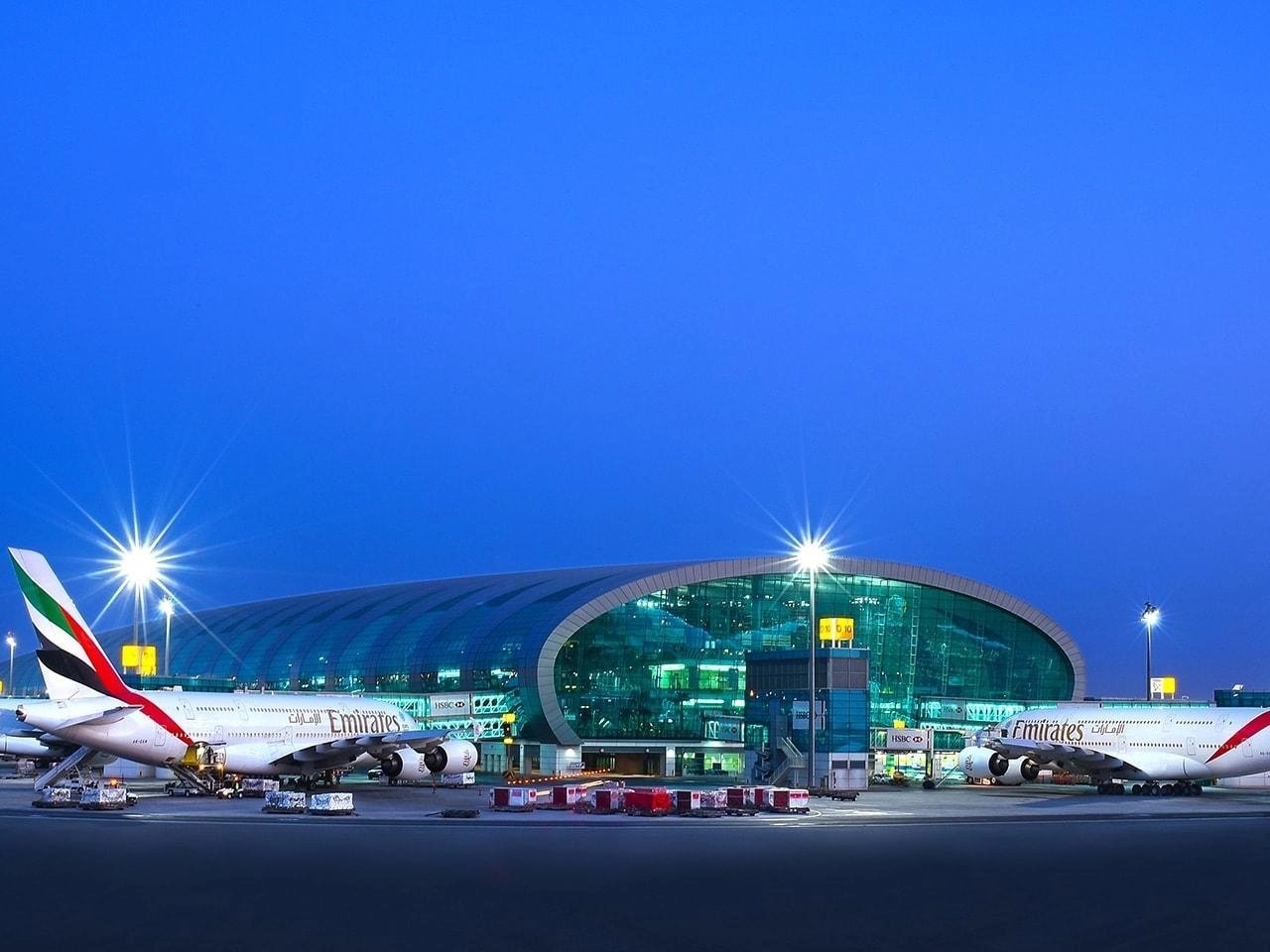
DUBAI: Emirates carried about 8.7 million passengers during July and August, highlighting strong travel demand through Dubai as the emirate prepares for another busy period for tourism and international aviation.
The passenger figure comes at an important point for Dubai’s aviation sector. Dubai International (DXB) handled 31.5 million passengers in the first half of 2026, with traffic strengthening considerably during the second quarter. Monthly passenger volumes rose from 3.5 million in April to 4.5 million in May and 5 million in June.
The recovery is particularly significant after a disrupted first half of the year. Dubai Airports said regional airspace constraints affected operations, but international airline capacity gradually returned and passenger demand responded.
Emirates remains central to Dubai’s connectivity
Emirates is one of the main carriers underpinning Dubai’s international connectivity, linking the emirate with destinations across major global markets.
The airline has also continued expanding capacity on selected routes during the summer. In July, Emirates added a third daily service between Dubai and Phuket, citing strong summer travel demand from Europe and the Middle East/GCC.
The airline has simultaneously continued investing in its fleet and customer experience. In July, Emirates announced that 100 aircraft had been completed under its US$5 billion retrofit programme, covering Airbus A380s and Boeing 777s.
These investments are taking place while Dubai seeks to maintain its role as a leading international tourism and transit centre.
Dubai aviation enters a stronger second half
DXB’s first-half numbers show both the scale of the disruption earlier in the year and the speed of the subsequent recovery.
The airport reported a 31.3 per cent year-on-year decline in first-half passenger traffic, largely reflecting the difficult regional operating environment. However, passenger numbers improved quarter by quarter, while load factors strengthened and international airlines gradually restored services.
By the end of June, DXB was connected to 217 destinations across 99 countries through almost 50 international airlines, according to Dubai Airports.
The airport’s performance also reinforces Dubai’s importance to international connecting traffic. Improving connectivity is particularly important for Emirates, whose network uses Dubai as its principal global hub.
Tourism remains a key part of Dubai’s growth strategy
The aviation recovery comes alongside Dubai’s continued focus on international tourism.
Dubai’s Department of Economy and Tourism maintains a dedicated tourism-performance reporting programme tracking visitor numbers and market trends. Its latest reports underline the emirate’s continuing importance as a major international tourism destination.
The Arabian Travel Market (ATM) 2026 was also rescheduled to August and took place at Dubai World Trade Centre from August 17–20. The event brought together destinations, airlines, hotels, technology companies and other travel-industry businesses.
For Dubai, the combination of airline capacity, airport connectivity and tourism promotion is important because aviation supports more than passenger movement. It also feeds the wider hospitality, retail, events and business-travel ecosystem.
Emirates’ passenger performance therefore offers another indication that international travel demand is responding as connectivity improves.
What happens next?
The coming months will provide a clearer picture of whether the improvement seen during the summer develops into a sustained recovery.
Dubai Airports has already described the second half of 2026 as a stronger period, with returning airline capacity and improving demand. The airport said international connectivity was continuing to expand as airlines restored services.
For Emirates, continued route expansion, aircraft refurbishment and investment in onboard products are expected to remain important parts of its strategy as Dubai seeks to accommodate growing international demand.
The 8.7 million passenger figure therefore sits within a broader story: Dubai’s aviation sector is rebuilding momentum after a difficult start to 2026, while Emirates continues to use its global network to connect travellers through the emirate.
How many passengers did Emirates carry in July and August 2026?
Emirates carried about 8.7 million passengers across July and August, according to the supplied source story.
Why is Emirates’ passenger traffic important for Dubai?
Emirates is a major international carrier based in Dubai, so its passenger activity is closely connected with Dubai’s role as a global aviation and transit hub.
How many passengers did DXB handle in the first half of 2026?
Dubai International handled 31.5 million passengers during the first six months of 2026.
Has Dubai aviation traffic been recovering?
Yes. Dubai Airports reported rising monthly passenger volumes during Q2, from 3.5 million in April to 5 million in June.
What happened to DXB traffic in the first half of 2026?
Passenger traffic was down 31.3 per cent year on year, reflecting the difficult regional operating environment and airspace constraints.
What is ATM 2026?
Arabian Travel Market is an international travel and tourism industry event held at Dubai World Trade Centre. The 2026 edition was rescheduled to August 17–20.
Is Emirates expanding its network?
Yes. Emirates added a third daily Dubai–Phuket service in July 2026, citing strong summer travel demand.
