
Emirates Global Aluminium is testing a new technology upgrade at its Al Taweelah smelter in Abu Dhabi that could increase annual hot-metal production from two existing potlines by 67,000 tonnes while lowering energy consumption.
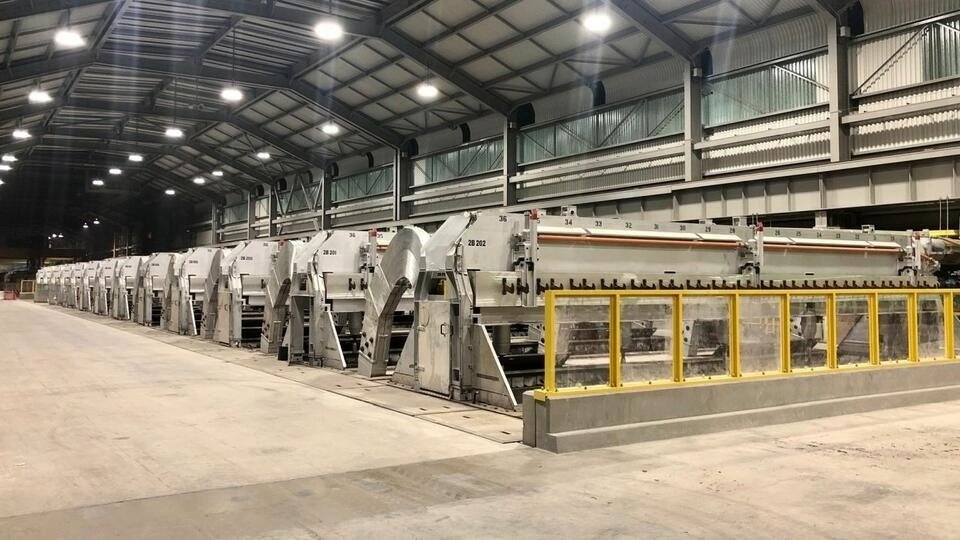
The company is installing its E40 technology on 13 reduction cells as part of a pilot programme. If the trial demonstrates the expected performance, EGA could consider extending the technology across all 808 DX reduction cells serving potlines 1 and 2.
A full deployment would potentially increase hot-metal output from those two potlines by about 67,000 tonnes a year, according to EGA. The company also expects net specific energy consumption and the carbon dioxide emissions associated with power generation to decline by approximately 6% for every tonne of aluminium produced.
Pilot linked to Al Taweelah restoration
EGA has brought forward the E40 pilot so that the technology can be installed while the Al Taweelah site is undergoing its wider restoration programme.
The site suffered significant damage on March 28, 2026, following attacks on the Khalifa Economic Zone Abu Dhabi, forcing an emergency shutdown of EGA’s facilities there. The company subsequently began a phased restoration of the smelter and other operations.
EGA’s latest recovery updates show that work on the smelter is progressing through the gradual repair and restart of its reduction cells. By August 26, the company said 315 of the smelter’s 1,262 reduction cells had been restarted, representing 25% of the total.
The E40 pilot therefore forms part of a broader effort to restore production while also improving the performance of existing infrastructure.
EGA said the company is accelerating the pilot because it sees an opportunity to integrate the upgrade into the current restoration work rather than treating technology improvement as a separate future project.
What the E40 upgrade could change
Aluminium is produced in reduction cells, where alumina is converted into molten aluminium through an electrochemical process. Improving the operating performance of these cells can allow a smelter to produce more metal while using resources more efficiently.
EGA’s proposed E40 rollout focuses on the 808 DX cells in Al Taweelah’s first two potlines. The company said the potential additional production would come from these existing assets rather than from building an entirely new potline.
The projected 67,000-tonne increase remains conditional on the pilot’s results and any subsequent decision to expand the technology. It should therefore be viewed as potential additional capacity rather than an immediate increase in production.
The energy benefit is also important for EGA’s operating costs and emissions profile. A reduction of around 6% in net specific energy consumption would mean less electricity required for each tonne of aluminium produced, while the associated reduction in power-generation emissions would lower the carbon intensity linked to that electricity use.
EGA’s wider technology programme
The Al Taweelah trial builds on EGA’s long-running programme of developing and deploying aluminium-smelting technology in the UAE.
The company says it has used its own smelting technology in every expansion of its smelters since the 1990s. EGA has also previously retrofitted older production lines with internally developed technology to increase capacity and improve operating efficiency.
One major example was the company’s Jebel Ali smelter retrofit, completed in 2017 after a three-year investment programme worth $300 million. EGA said the project increased production capacity while reducing costs and environmental emissions.
The company is also testing its 10th-generation EX smelting technology at Al Taweelah. That pilot is intended to support potential future deployment of the technology, including at EGA’s planned primary aluminium smelter in Oklahoma.
Al Taweelah’s role in EGA’s production network
The Al Taweelah complex is a major part of EGA’s UAE aluminium operations.
Alongside the smelter, the site includes an alumina refinery and a newer aluminium recycling plant. The alumina refinery, which began production in 2019, converts imported bauxite into alumina, the raw material used by aluminium smelters.
The refinery produced 2.4 million tonnes of alumina in 2025 and supplied 46% of EGA’s alumina requirements that year.
Production at the refinery was suspended after the March incident but restarted in July. EGA said production reached 50% of pre-incident levels within days, while the pace of further ramp-up would depend on supply-chain considerations and the company’s alumina sourcing strategy.
The smelter restoration is a separate process, requiring the progressive repair and restart of its reduction cells.
For EGA, the technology pilot adds another layer to that recovery programme: restoring production capacity while testing whether existing equipment can deliver more aluminium with lower energy consumption.
The company has not said that the potential 67,000 tonnes will be added immediately. The next key step is the performance of the 13-cell E40 pilot and any subsequent decision on a wider rollout across the two potlines.
What is EGA testing at Al Taweelah?
EGA is testing its E40 smelting technology on 13 reduction cells at the Al Taweelah smelter in Abu Dhabi.
How much could the Al Taweelah upgrade increase production?
If E40 is rolled out across all 808 DX cells on potlines 1 and 2, EGA says it could increase hot-metal production by about 67,000 tonnes per year.
How much energy could the technology save?
EGA says net specific energy consumption could fall by approximately 6% per tonne of metal produced, alongside a similar reduction in associated power-generation carbon dioxide emissions.
Will EGA immediately produce an additional 67,000 tonnes?
No. The 67,000-tonne figure is a potential increase if the pilot performs as expected and EGA subsequently deploys the technology across the targeted cells.
Why is EGA testing the technology during the Al Taweelah restoration?
EGA has accelerated the pilot so the technology can be installed as part of the ongoing restoration programme, potentially improving existing infrastructure while production is being rebuilt.
How many reduction cells are at the Al Taweelah smelter?
The smelter has 1,262 reduction cells. The proposed E40 rollout specifically concerns the 808 DX cells serving potlines 1 and 2.
When was Al Taweelah’s alumina refinery restarted?
EGA restarted alumina production in July 2026 after the facility’s shutdown following the March incident. The refinery had produced 2.4 million tonnes of alumina in 2025.
