
Dubai/Abu Dhabi: Cities are increasingly turning to artificial intelligence and digital-twin technology to understand how urban systems could respond to disruptions before those scenarios unfold in the real world.
A digital twin creates a virtual representation of a physical environment. When combined with live data, sensors, geographic information systems and AI, the model can give planners a continuously updated picture of infrastructure and city operations.
The technology is moving beyond visualisation. Urban authorities can use digital models to test scenarios, examine potential impacts and identify where resources or interventions may be needed.
In the UAE, both Abu Dhabi and Dubai have been developing systems that use digital twins, AI and data analytics for urban planning and city management.
From digital maps to virtual city models
Abu Dhabi’s Department of Municipalities and Transport (DMT) launched its Abu Dhabi Digital Twin project in 2022. The system uses technologies including aerial photography, LiDAR scanning and 3D modelling to create a detailed digital representation of the emirate. DMT said the project could support planning and decision-making as well as emergency response by providing detailed information about buildings and their interiors.
The approach has since expanded.
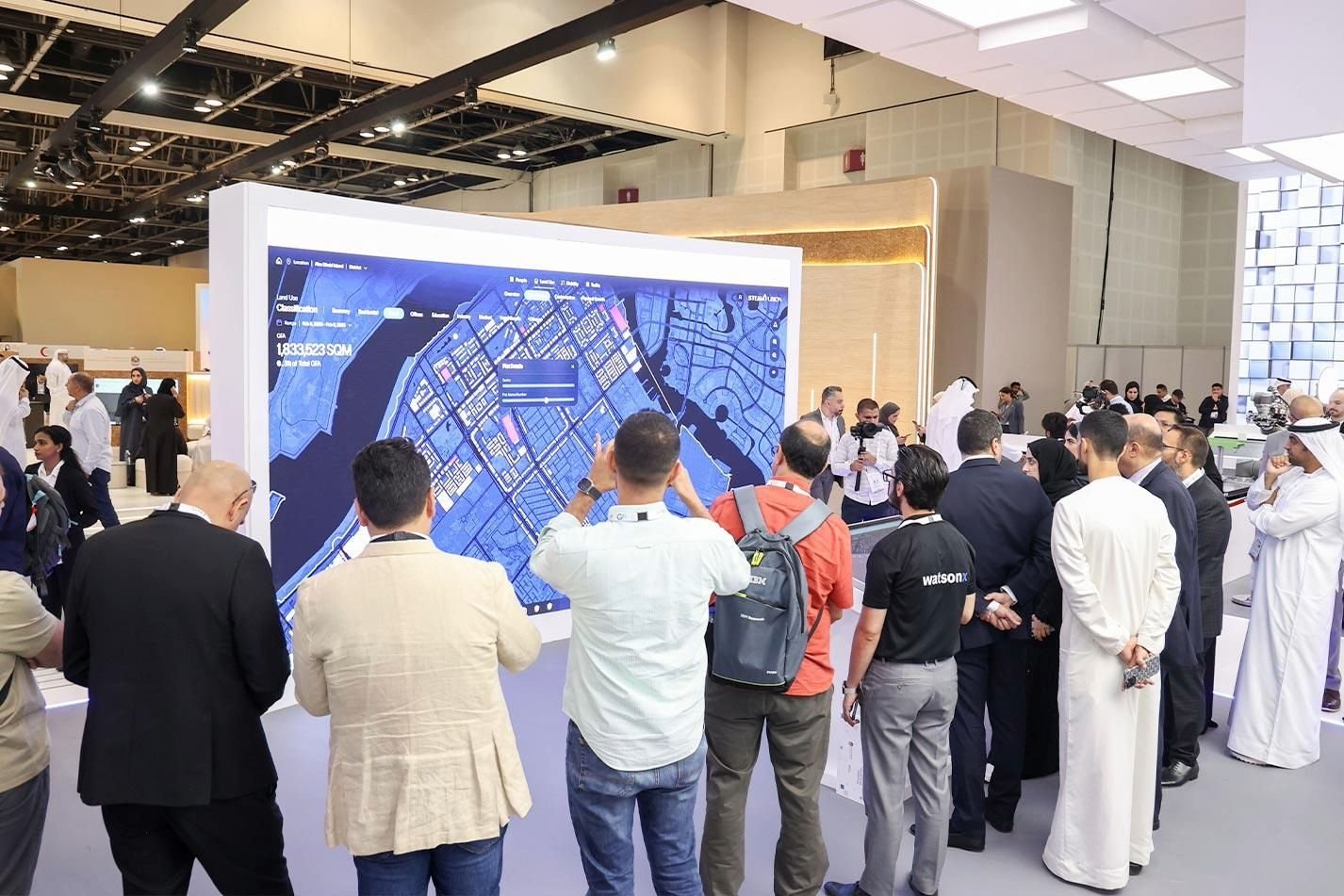
At GITEX Global 2024, DMT presented a City Management – Liveability through Digital Twin and AI Technologies project. The platform uses a dynamic 3D city model and integrates data to support predictive analytics and scenario simulations.
By 2025, DMT had introduced LivAI, an enhanced version of the platform that provides liveability information through a 3D model and uses predictive analytics and scenario modelling to support planning decisions. DMT also introduced City Eye, an AI-driven framework intended to improve city management and emergency response times.
What happens when AI is added?
A digital twin by itself provides a representation of a physical environment. AI can add analytical capabilities by processing large amounts of information and identifying patterns.
For urban authorities, that can mean analysing information from infrastructure, transport networks, environmental systems and other connected sources to understand how conditions may change.
Scenario modelling is particularly important for emergency planning.
Instead of waiting for an incident to expose weaknesses in a road network, building system or critical service, planners can use virtual models to examine possible outcomes and assess different responses.
That does not mean AI can predict every crisis. Rather, these systems can provide authorities with additional information with which to plan, test assumptions and coordinate responses.
Dubai is also building digital urban models
Dubai Municipality launched its digital twin platform through the Dubai Here portal in 2024. The municipality describes the digital twin as a dynamic, real-time 3D representation of Dubai created using technologies including IoT, machine learning, AI and data analytics.
The platform can be used to simulate development scenarios and examine potential effects on areas such as traffic congestion, energy use and air quality.
Dubai Municipality subsequently launched Dubai Live in 2025, bringing together digital-twin models, AI and predictive analytics in a platform designed to provide live information for city operations, urban planning, sustainability and emergency response.
The combination of these technologies points toward a model of urban management in which authorities can monitor conditions, analyse potential developments and test responses using digital environments.
Why this matters during a crisis
Emergencies often involve several systems at once.
A major weather event, for example, can affect roads, buildings, utilities, public services and mobility simultaneously. A digital model that brings information from multiple systems together can potentially give decision-makers a broader view of how those effects interact.
The value is therefore not simply the 3D visualisation itself. It is the ability to connect information and examine relationships between different parts of a city.
DMT’s more recent planning technology also reflects this direction. In June 2026, the department said its Nabd platform provides a live three-dimensional view of Abu Dhabi covering buildings, roads, utilities, underground infrastructure and other urban assets. DMT said the platform combines operational data from more than 70 data sources and more than 15 connected systems with planning analytics and liveability indicators.
Such systems can help create a common operational picture for different teams rather than requiring each department to work from isolated datasets.
The technology still depends on data and people
AI and digital twins do not remove the need for human decision-making.
The accuracy and usefulness of a digital model depend on the quality, availability and timeliness of the information feeding it. Different agencies also need to coordinate their data and systems for a city-wide model to provide a comprehensive picture.
Privacy, cybersecurity, governance and system reliability are also important considerations when increasingly sensitive urban information is connected to digital platforms.
The UAE’s experience shows that digital twins are already being applied beyond experimental demonstrations. Abu Dhabi and Dubai are incorporating them into planning, infrastructure management, liveability analysis and emergency-response capabilities.
The next stage is likely to focus less on simply creating virtual copies of cities and more on using those models as operational tools — allowing authorities to examine possible outcomes, coordinate information and make decisions before problems become larger disruptions.
What is a digital twin of a city?
A city digital twin is a virtual representation of a physical urban environment. It can combine 3D models with data from infrastructure, sensors and other systems.
How can AI help digital twins?
AI can analyse large datasets, identify patterns and support predictive analytics and scenario modelling.
Can digital twins predict a crisis?
They cannot guarantee prediction of future crises. They can, however, help authorities model scenarios and examine potential impacts before making decisions.
How is Abu Dhabi using digital twins?
Abu Dhabi’s DMT has developed digital-twin and AI platforms for planning, liveability analysis, infrastructure information and city management.
How is Dubai using digital twins?
Dubai Municipality uses digital-twin technology for urban planning and launched Dubai Live, which combines digital twins, AI and predictive analytics for city operations and emergency response.
What is scenario modelling?
Scenario modelling allows planners to examine how different conditions or decisions could affect a city before implementing them in the physical environment.
What is the main benefit of digital twins for cities?
They can bring different types of urban information together and allow authorities to visualise, analyse and test potential situations using a digital environment.
