
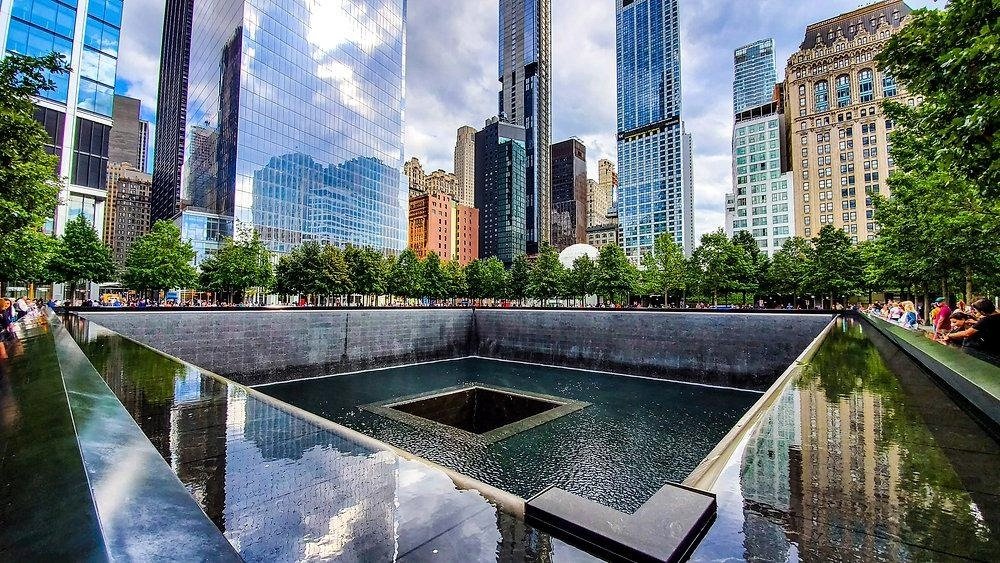
WASHINGTON/NEW YORK — The United States is marking 25 years since the September 11, 2001 terrorist attacks on Friday, with ceremonies across the country remembering the 2,977 people who died and reflecting on an event that reshaped American security, foreign policy and public life.
At New York’s 9/11 Memorial, family members of victims are taking part in the annual commemoration by reading the names of those killed. The 25th-anniversary programme includes moments of silence corresponding to key points in the attacks, including when the World Trade Center towers were struck and collapsed, the Pentagon was attacked and Flight 93 crashed in Pennsylvania. The ceremony began in the morning and is being held on the Memorial plaza.
President Donald Trump is marking the anniversary at the Pentagon, while Vice President JD Vance is attending the ceremony in New York. Other senior US officials are participating in commemorations at the three principal attack sites.
What happened on September 11, 2001?
Twenty-five years ago, 19 al-Qaeda terrorists hijacked four commercial aircraft after their departures from the US East Coast.
Two planes were deliberately flown into the North and South towers of the World Trade Center in New York City. A third struck the Pentagon in Arlington, Virginia. Passengers and crew members on the fourth aircraft fought the hijackers before the plane crashed into a field near Shanksville, Pennsylvania.
The attacks killed 2,977 people from 90 nations, including people in New York, at the Pentagon and aboard Flight 93. The number excludes the 19 hijackers.
The attacks unfolded in less than two hours but transformed the direction of US policy for decades.
The immediate response included an unprecedented emergency and rescue operation in New York. Firefighters, police officers, emergency medical workers and volunteers worked at Ground Zero while the country struggled to understand the scale of the attack.
A security system transformed
One of the most visible legacies of 9/11 has been the expansion and restructuring of the US national-security system.
The Department of Homeland Security was created in the aftermath of the attacks, bringing together 22 federal agencies and offices under one Cabinet-level department. The Homeland Security Act of 2002 provided the legal foundation for its creation.
Airport security also changed fundamentally. The Transportation Security Administration became part of the new security framework, introducing a much more extensive federal role in screening passengers and protecting the country’s transportation systems.
Those changes continue to affect international travellers, including passengers travelling to and from the UAE and other Gulf countries.
The anniversary therefore carries significance beyond the United States. The attacks helped establish a new era of international aviation security and counterterrorism cooperation, changes that travellers have experienced through airport screening and other security procedures for years.
The consequences extended far beyond September 2001
The attacks were followed by US military campaigns that lasted for years, particularly in Afghanistan and Iraq. The broader “war on terror” also influenced American foreign policy, intelligence operations and debates over surveillance and civil liberties.
Reuters, in its 25th-anniversary reporting, described the attacks as a turning point that led to decades of military involvement and continued to shape the lives of families, veterans and survivors.
The anniversary is also being observed at a time when a growing share of Americans have no personal memory of the attacks.
The 9/11 Memorial & Museum says around 100 million Americans are too young to remember the day, making education an increasingly important part of preserving the historical record.
An Associated Press review found that at least 40 US states either encourage or require schools to teach about 9/11, although the depth and approach differ from state to state.
That generational divide has become one of the central questions surrounding the 25th anniversary: how should an event that remains deeply personal to millions be explained to people who know it primarily through textbooks, photographs, documentaries and stories from older relatives?
The health consequences are still being felt
The physical destruction of September 11 was concentrated in New York, Arlington and Pennsylvania, but the health consequences have continued for decades.
Dust and other exposures associated with the World Trade Center disaster have been linked to long-term health conditions among responders and survivors. The US World Trade Center Health Program provides medical monitoring and treatment to people affected by the attacks and their aftermath.
The programme currently serves nearly 150,000 members across the United States and its territories, according to the US Centers for Disease Control and Prevention.
The health legacy has become an important part of anniversary commemorations. The 9/11 Memorial’s 25th-anniversary ceremony includes a moment of silence to honour people who died from illnesses and injuries related to the attacks in the years that followed.
Remembering a day that divided history
The 25th anniversary is therefore more than a commemoration of the attacks themselves.
For victims’ families, it remains a day of personal loss. For first responders and survivors, it is also connected to years of physical and psychological consequences. For policymakers, it represents a turning point in national security. And for younger Americans, it is increasingly a historical event that must be learned rather than remembered.
The National September 11 Memorial & Museum has framed the anniversary around remembrance, reflection, education and service, with programmes examining the impact of 9/11 across the past quarter-century.
The US government has also formally designated September 11, 2026, as Patriot Day, calling for US flags to be displayed at half-staff in honour of the victims.
A quarter-century later, the names read aloud in New York remain the most direct reminder of the human cost of the attacks. But the anniversary also points to everything that followed — changes to aviation security, the creation of new government institutions, military conflicts, health programmes and a generation growing up without its own memory of that September morning.
What happened on September 11, 2001?
Nineteen al-Qaeda terrorists hijacked four commercial aircraft. Two crashed into the World Trade Center in New York, one struck the Pentagon and the fourth crashed near Shanksville, Pennsylvania, after passengers fought back.
How many people died in the 9/11 attacks?
2,977 people were killed, excluding the 19 hijackers. The victims came from 90 nations.
When is the 25th anniversary of 9/11?
The 25th anniversary falls on September 11, 2026, exactly 25 years after the attacks of September 11, 2001.
Where are the main 9/11 commemorations taking place?
Major commemorations are taking place at the 9/11 Memorial in New York, the Pentagon in Arlington, Virginia, and the Flight 93 site near Shanksville, Pennsylvania.
What is being remembered at the New York ceremony?
Family members are reading the names of those killed in the September 11 attacks and the 1993 World Trade Center bombing. The ceremony also includes moments of silence marking key events during the attacks and honouring people who later died from 9/11-related illness and injury.
How did 9/11 change US security?
The attacks prompted a major restructuring of US homeland security. The Department of Homeland Security was created by bringing together 22 federal agencies and offices, while aviation security was significantly expanded.
Are people still suffering health effects from 9/11?
Yes. The World Trade Center Health Program provides monitoring and treatment for responders and survivors affected by 9/11-related conditions and currently serves nearly 150,000 members.
Why is the 25th anniversary significant for younger Americans?
A large number of Americans were born after 2001 and have no direct memory of the attacks. The 9/11 Memorial & Museum says about 100 million Americans are too young to remember the event, increasing the importance of historical education.
