
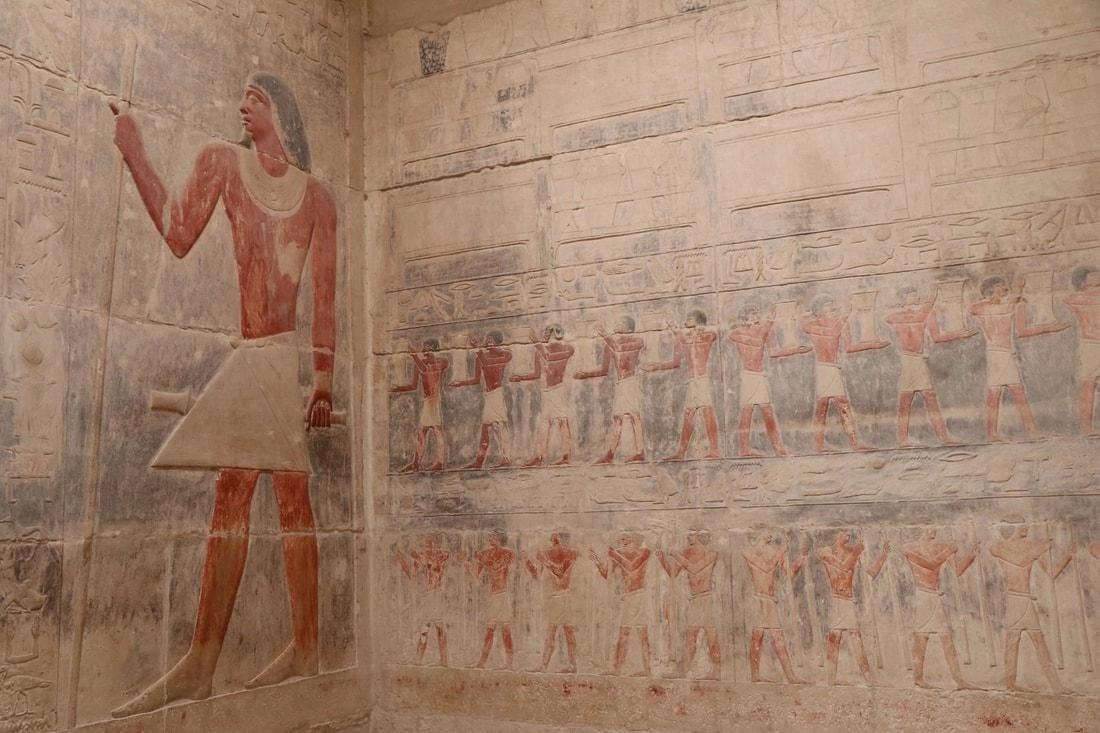
CAIRO: A 4,300-year-old tomb belonging to an ancient Egyptian official who served as a judge has been uncovered at Saqqara, revealing detailed scenes of agricultural work, offerings and funerary rituals from the late Fifth Dynasty.
The discovery was made during the 2026 excavation season in the Mariette Cemetery, an area of northern Saqqara associated with archaeological work begun by French Egyptologist Auguste Mariette in the 19th century. A joint mission involving Egypt’s Supreme Council of Antiquities and the Autonomous University of Barcelona carried out the excavation and documentation.
The tomb dates to the reign of Pharaoh Djedkare Isesi, who ruled near the end of Egypt’s Fifth Dynasty. Archaeological reports identify its principal occupant as Yunmin, a senior state official who held several administrative positions, including judge, court director and chief of scribes responsible for examining petitions and complaints.
A tomb shared by father and son
The structure is a medium-sized mastaba, an above-ground rectangular tomb characteristic of ancient Egyptian burial architecture.
It contains two funerary chapels. The main northern chapel belonged to Yunmin, while the second was associated with his father, Ity, whose responsibilities included scribal work connected with agricultural land and offerings.
The arrangement provides more than a record of where two officials were buried. The inscriptions and decorations help researchers reconstruct aspects of the administrative hierarchy of late Fifth Dynasty Egypt and the kinds of responsibilities held by officials serving the royal state.
Yunmin’s titles are particularly revealing. His role as a judge and court official involved dealing with petitions and complaints, placing him within an administrative system that relied heavily on trained scribes and officials to manage state affairs.
Colours survive after more than four millennia
One of the most striking aspects of the discovery is the preservation of the tomb’s decorative programme.
Raised reliefs inside Yunmin’s chapel depict agricultural activities and processions carrying offerings. Several scenes have retained significant portions of their original colours, giving archaeologists a rare opportunity to study the appearance and artistic treatment of an Old Kingdom funerary monument.
The tomb also contains funerary inscriptions and an elaborately decorated architectural façade. The decoration was closely connected to the identity and official responsibilities of the tomb’s owner, according to accounts of the excavation.
Ity’s chapel includes a false door, a standard feature of Egyptian funerary architecture that symbolically connected the deceased with the world of the living and served as a focus for offerings.
Why the Saqqara discovery matters
Saqqara was the principal necropolis of ancient Memphis, the historic capital of Egypt, and was used for burials over thousands of years. Its monuments include the famous Step Pyramid of Djoser, as well as tombs, temples and burial complexes from different periods of Egyptian history.
The newly documented mastaba is particularly useful because its inscriptions connect the physical monument with the careers of the people buried there.
It also illustrates the importance of administrative officials during the Old Kingdom. Rather than focusing only on royal monuments, the tomb provides evidence about individuals who worked within the machinery of the state — handling courts, petitions, agricultural administration and religious offerings.
Egyptian archaeologists said the discovery adds information about the architecture and artistic traditions of the late Fifth Dynasty and contributes to the wider understanding of Saqqara’s development as a major burial ground.
The location itself had been known since earlier archaeological work, but the recently completed excavation represents a more comprehensive scientific investigation and documentation of the monument.
For Egypt, the discovery also adds to a continuing sequence of archaeological finds at Saqqara. Excavations in 2026 have produced several discoveries across different parts of the necropolis, reinforcing the site’s importance as an archaeological record spanning successive periods of ancient Egyptian civilisation.
The latest tomb therefore offers two stories at once: a glimpse into the career of an Old Kingdom judge who dealt with petitions and disputes, and an unusually well-preserved record of the visual culture surrounding elite burial more than 4,000 years ago.
What was discovered at Saqqara?
A joint Spanish-Egyptian archaeological mission uncovered a late Fifth Dynasty mastaba containing two funerary chapels at Saqqara in northern Egypt. One belonged to senior official Yunmin and the other to his father, Ity.
Who was Yunmin?
Yunmin was a high-ranking official who served as a judge, court director and chief of scribes responsible for examining petitions and complaints.
How old is the Saqqara tomb?
The tomb dates to the late Fifth Dynasty, during the reign of Pharaoh Djedkare Isesi, making it roughly 4,300–4,400 years old, depending on the dating convention used by the source.
Where was the tomb discovered?
It was found in the Mariette Cemetery, in the northern part of the Saqqara archaeological area, south of Cairo.
What was found inside the tomb?
Archaeologists documented two funerary chapels, inscriptions, a false door and detailed reliefs showing agricultural activities and processions carrying offerings. Many of the reliefs retain elements of their original colours.
Who was Ity?
Ity was Yunmin’s father. He held scribal positions associated with the administration of agricultural lands and offerings.
Why is the discovery important?
The tomb provides evidence about Old Kingdom funerary art, architecture and the administrative roles of senior officials during the late Fifth Dynasty. Its preserved colours also provide valuable information about ancient Egyptian decorative practices.
