
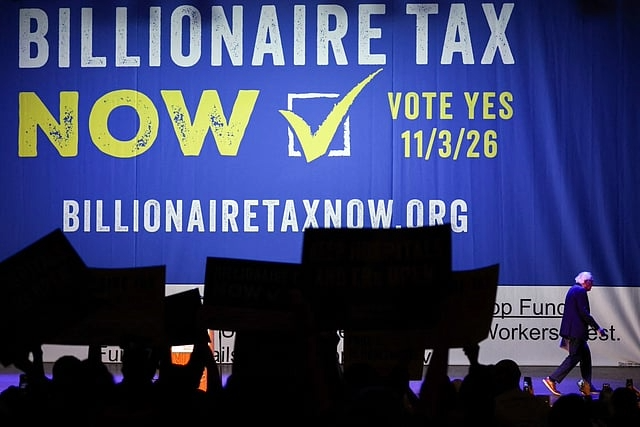
California’s proposed billionaire wealth tax was trailing in early election results on November 4, with a majority of counted votes opposing Proposition 40, according to preliminary results reported after the November 3 general election.
The measure, which sought to introduce a one-time tax of up to 5% on qualifying billionaire wealth, had become one of the state’s most closely watched economic and political debates. It was designed to generate tens of billions of dollars for public healthcare and other services, but faced strong criticism over its potential impact on investment, business confidence and future tax revenues.
With the count still underway, the early figures pointed towards a setback for supporters of the proposal. The result had not yet been officially certified.
What would California’s Proposition 40 introduce?
Proposition 40, also known as the California Billionaire Tax Act, proposed a one-time state wealth tax on individuals, couples and certain trusts meeting the qualifying wealth threshold.
Under the proposal, the tax would apply to qualifying individuals who were California residents on January 1, 2026. Their taxable wealth would be assessed using the measure’s valuation rules, with the tax generally due in 2027.
The proposed rate was 5% for qualifying billionaire wealth, subject to provisions in the measure. Taxpayers would have the option of spreading payments over five years, although doing so would increase the overall amount payable.
Unlike an ordinary income tax, which applies to earnings over a particular period, a wealth tax measures the value of assets owned after accounting for relevant liabilities.
The proposal covered a range of assets, including business interests, securities, art, collectibles and intellectual property. Real estate and certain pension and retirement accounts were generally excluded.
Where would the tax revenue go?
Healthcare was the central funding priority behind Proposition 40.
The proposal specified that 90% of the revenue would be allocated to public healthcare services. The remaining 10% would support food assistance, education-related programmes and the administration of the tax.
California’s public healthcare system includes Medi-Cal, the state’s health coverage programme for eligible low-income residents. State spending also supports public health services, mental healthcare and treatment programmes.
According to California’s Legislative Analyst’s Office, the measure could generate tens of billions of dollars in temporary state revenue over several years.
However, the actual amount would depend on how taxable assets were valued, changes in wealth and the responses of people potentially affected by the measure.
Why did Proposition 40 face opposition?
The proposal divided political leaders, business organisations and supporters of public healthcare funding.
Supporters argued that California needed additional resources to protect healthcare and other public services. They viewed the wealth tax as a way of asking the state’s richest residents to contribute more towards programmes used by the wider population.
Opponents raised concerns about the possibility of wealthy residents relocating, shifting investments or changing their financial arrangements to reduce their tax exposure.
California’s technology sector was particularly relevant to the debate because many of the state’s billionaires accumulated wealth through company ownership, shares and investments.
There were also practical questions about how the state would determine the value of privately held businesses, intellectual property and other assets that do not have straightforward market prices.
The Legislative Analyst’s Office warned that the measure could lead to lower income tax collections in future years if some billionaires left California. It estimated that the possible ongoing reduction could be less than $1 billion annually.
What happens after the early election results?
California held its general election on November 3, 2026. Preliminary results published on November 4 showed Proposition 40 trailing, with approximately 56.3% of counted votes against the proposal and 43.6% in favour in the reported update.
The figures were based on a partial count and remained subject to change as election officials processed outstanding ballots.
The California Secretary of State has stated that election results would continue to be updated during the canvass, with official certified results expected by December 11, 2026.
The proposal also faced a complication involving two other ballot measures, Propositions 41 and 42. California’s Legislative Analyst’s Office explained that if either received more affirmative votes than Proposition 40, legal conflicts could prevent the billionaire tax from taking effect even if Proposition 40 itself received majority support.
For now, the early vote count represents a political setback for supporters of the wealth tax, but the final outcome depends on the completion of the official counting and certification process.
For international investors and business observers, the California debate offers a closely watched example of the challenges involved in taxing accumulated wealth while balancing public spending requirements with the competitiveness of a major business economy.
1. What is California Proposition 40?
Proposition 40 is a 2026 California ballot measure proposing a one-time wealth tax of up to 5% on qualifying billionaires and certain trusts.
2. How much tax would billionaires pay under Proposition 40?
The proposal generally set a 5% rate on qualifying taxable wealth, with specific provisions governing the calculation and payment.
3. Who would be affected by the California billionaire tax?
It would apply to qualifying individuals, couples and certain trusts meeting the wealth threshold and residency requirements, including California residents on January 1, 2026.
4. Where would the Proposition 40 tax revenue go?
The proposal allocated 90% of revenue to public healthcare services. The remaining 10% would support food assistance, education-related programmes and tax administration.
5. Would ordinary California residents have to pay this wealth tax?
No. The proposal specifically targeted qualifying billionaires and certain trusts, not ordinary workers or households.
6. Did California voters approve Proposition 40?
Preliminary November 4 results showed more votes against than in favour. The election count was still underway, so the result had not yet been officially certified.
7. Could billionaires pay the tax in instalments?
Yes. The proposal allowed qualifying taxpayers to spread payments over five years, with an additional cost for deferred payments.
8. Does Proposition 40 affect UAE residents?
The measure concerns California’s state tax system. It does not introduce a new tax on UAE residents generally. Any implications for an individual would depend on their actual tax residency, assets and circumstances.
