
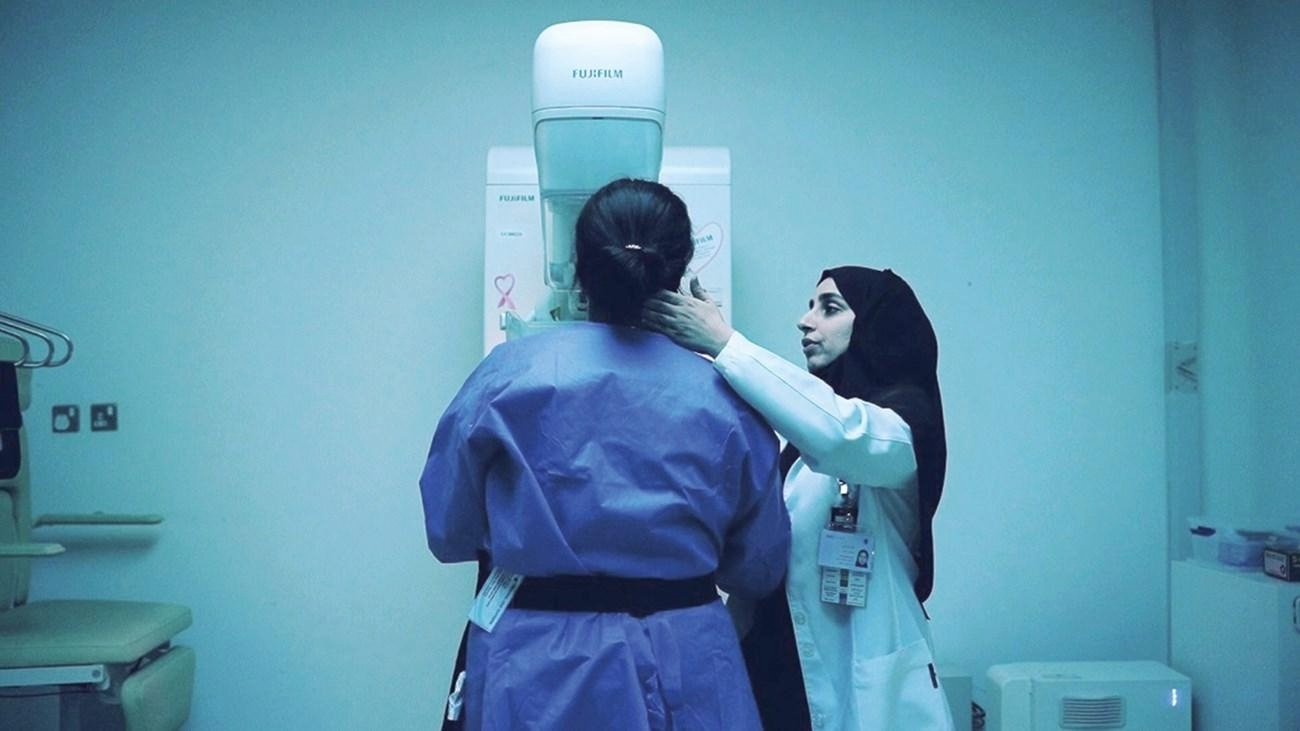
A Dubai breast surgeon is urging women not to treat the absence of breast cancer in their family as a reason to postpone screening, saying most of the patients she diagnoses have no known family history of the disease.
Dr Taghreed Almahmeed, an American Board-Certified Consultant General and Breast Surgeon in Dubai, told Gulf News that around 85 per cent of women she diagnoses with breast cancer do not have a family history of the condition. She said the misconception that breast cancer mainly affects women with affected relatives can contribute to delayed screening.
The message is particularly relevant in the UAE, where national and Dubai health guidance recommends regular mammography for women beginning at age 40. Dubai Health Authority’s 2024 periodic screening guideline advises women aged 40 and above to undergo breast cancer screening every two years, while women with additional risk factors may need an earlier or more intensive screening plan.
Family history is a risk factor, not a requirement
Having a close relative with breast cancer can increase an individual’s risk, but the absence of such a history does not eliminate the possibility of developing the disease.
The World Health Organisation says approximately 80 per cent of breast cancers occur in women who have no specific risk factors other than sex and age. WHO also states that most women diagnosed with breast cancer do not have a known family history.
The American Cancer Society similarly says most women diagnosed with breast cancer have no family history of the disease. It identifies factors including age, inherited gene changes, personal medical history and other risk factors that can influence individual risk.
For women who do have a significant family history, the risk assessment can be different. The American Cancer Society notes that breast cancer in a first-degree relative, such as a mother, sister or daughter, can substantially increase risk, with the age at which that relative was diagnosed also relevant.
UAE guidance recommends screening from 40
The UAE’s National Guideline for Breast Cancer Screening and Diagnosis places women at average risk in the 40-69 age group and recommends mammography every two years. For women aged 70 and above, the guideline also lists mammography every two years, with screening decisions continuing according to individual circumstances. Women at increased or high risk may require an individualised starting age and annual screening.
Dubai Health Authority’s periodic health screening guideline likewise recommends mammography every two years from age 40. It states that women with other risk factors, including a family history or known inherited genetic mutation, may begin regular screening earlier on clinical advice.
That distinction is important: screening recommendations for average-risk women should not be interpreted as meaning every woman has the same individual risk. A strong family history or known genetic predisposition can change the appropriate screening plan.
Screening can find changes before symptoms
Almahmeed told Gulf News that slightly more than half of the breast cancer patients in her practice are diagnosed through screening mammography before they notice physical changes themselves. Other patients seek medical assessment after discovering a lump or another breast change.
A mammogram can identify abnormalities that are not yet noticeable by touch. At the same time, women should not wait for a scheduled screening appointment if they notice a persistent or unusual change.
Symptoms that warrant medical assessment can include a new lump, skin dimpling, an inward-turning nipple, persistent redness or swelling, a change in the appearance of one breast, or persistent pain in a particular area, according to Almahmeed.
MoHAP’s public guidance also advises people experiencing symptoms to visit a health centre for medical assessment rather than relying solely on routine screening.
Treatment has also evolved
Fear of treatment can be another reason women delay seeking medical advice. Almahmeed said some patients still associate a breast cancer diagnosis automatically with removal of the entire breast.
Treatment, however, depends on the type and stage of cancer and the individual patient. For some women diagnosed at an early stage, breast-conserving surgery such as a lumpectomy followed by radiation may be appropriate. Genomic testing of a tumour can also help doctors assess whether chemotherapy is likely to provide meaningful benefit in selected cases.
The surgeon also discussed the increasing availability of robotic and endoscopic breast procedures in the UAE, while stressing that newer technology is not automatically a better cancer treatment. The appropriate surgical approach depends on the patient’s condition and the clinical judgement of the treating team.
For UAE women, the central message is straightforward: having no known family history should not be used as a reason to assume breast cancer cannot happen. Current UAE guidance provides a regular mammography pathway beginning at 40 for women at average risk, while those with additional risk factors may need personalised advice.
Does breast cancer occur without a family history?
Yes. WHO says approximately 80 per cent of breast cancers occur in women without specific risk factors other than sex and age, and most women diagnosed do not have a known family history.
At what age does breast cancer screening start in the UAE?
The UAE national guideline recommends mammography every two years for women aged 40-69 at average risk. Dubai’s periodic screening guidance also recommends mammography every two years from age 40.
Does having no family history mean a woman is low risk?
No. Family history is one risk factor among several. Age and other personal, genetic and lifestyle factors can also affect breast cancer risk.
How often is a mammogram recommended in Dubai?
Dubai Health Authority’s current periodic screening guideline recommends mammography every two years from age 40 for the general screening population. Women with additional risk factors may need different screening based on clinical advice.
What breast changes should women get checked?
A new lump, skin dimpling, nipple inversion, persistent redness or swelling, changes in breast appearance or persistent localised pain should be medically assessed.
Can breast cancer treatment avoid complete breast removal?
For some women, particularly those diagnosed at an early stage, breast-conserving surgery such as lumpectomy followed by radiation may be an option. Treatment depends on the individual cancer and clinical assessment.
Can women with a strong family history need earlier screening?
Yes. The UAE national guideline says women at increased or high risk may require an individualised screening start age and annual mammography, with genetic counselling considered where there is strong familial or genetic predisposition.
