
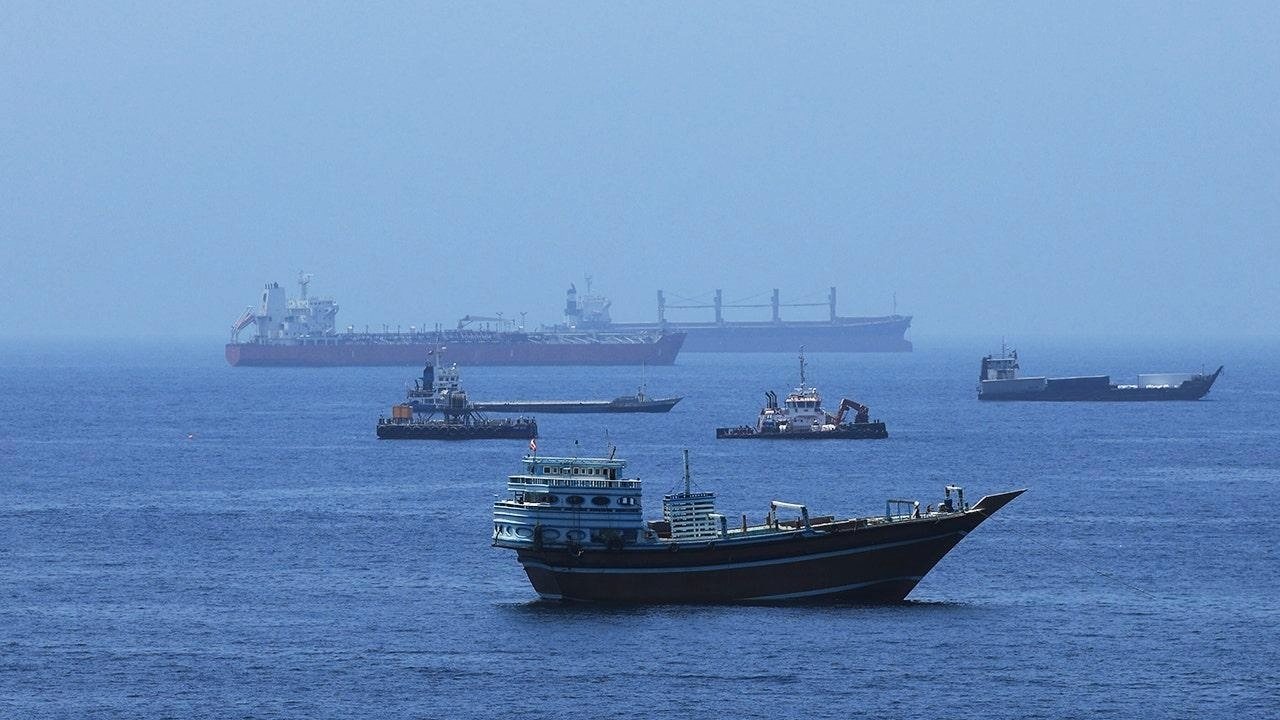
DUBAI: Iran has stepped up its warnings against US naval forces operating around the Gulf as a new round of strikes involving warships, oil tankers and regional energy infrastructure raises fresh concerns about the security of the Strait of Hormuz.
The escalation has also sent oil prices higher. Brent crude rose to $98.63 a barrel on Tuesday, while the benchmark briefly moved close to the $100 mark as investors priced in the possibility of further disruption to Middle East energy supplies.
The latest confrontation followed attacks by Iran’s Islamic Revolutionary Guard Corps (IRGC) on US Navy vessels and subsequent US strikes on Iranian oil tankers.
US Central Command said on September 8 that American forces had destroyed five Iranian crude carriers after Iranian forces attempted to strike a US warship with ballistic missiles. CENTCOM said the US vessel evaded the attacks and that no American personnel were injured.
Iran has responded with increasingly direct warnings. Iranian military officials said attacks on Iranian tankers could lead to strikes against US bases in the region, while the IRGC has also warned tanker crews near ports in Kuwait and Bahrain to leave their vessels, according to reports carried by Iranian state-linked media.
Strait of Hormuz remains the central pressure point
The confrontation is particularly significant because of the Strait of Hormuz, the narrow waterway connecting the Gulf with the Gulf of Oman and a critical route for international energy shipments.
Commercial shipping through the strait has already fallen sharply. Reuters reported that the average number of commodity vessels transiting the waterway over the 10 days to September 6 was about 10 per day, the lowest level since May.
The reduction in traffic is adding a risk premium to crude markets, although oil prices have not yet moved decisively above $100.
Reuters reported that Middle East crude shipments have fallen to about 11 million barrels per day from roughly 18 million barrels per day before the current war began. At the same time, some Gulf producers are using alternative routes and ports to maintain exports.
That has helped prevent an immediate global supply shock. But the market remains highly sensitive to any further attacks on tankers or infrastructure.
Why oil has not yet broken above $100
Despite the worsening security situation, several factors are limiting the immediate rise in crude prices.
Some oil continues to move through Hormuz, while producers including Saudi Arabia, Iraq and the UAE have alternative export options. Non-OPEC producers such as the United States, Canada and Guyana are also expected to increase output this year.
Weaker oil demand, particularly in China, is another factor. Reuters reported that Chinese seaborne crude imports remained significantly below earlier-year levels, while large inventories have provided an additional buffer for the market.
Physical oil markets, however, are showing tighter conditions than headline Brent prices alone suggest. Premiums for some Middle Eastern crude grades have risen sharply, while diesel markets are also facing supply pressure.
UAE watches trade and energy routes closely
For the UAE, the disruption has a direct regional and commercial dimension.
The UAE has been developing alternative trade corridors and export routes as the conflict threatens established maritime links. UAE officials have previously highlighted the use of eastern ports including Fujairah and Khorfakkan, along with other trade corridors, to reduce exposure to disrupted routes.
The UAE has also repeatedly stressed the importance of freedom of navigation through regional waterways. In a statement earlier this month, the Ministry of Foreign Affairs condemned an Iranian attack on a Saudi carrier transiting the Strait of Hormuz and warned that targeting commercial shipping threatens regional stability and global energy security.
The latest market moves are also being watched by investors in Dubai and Abu Dhabi. On Tuesday, Dubai’s main stock index gained 0.3%, while Abu Dhabi’s index rose 0.5%, although Reuters reported that regional investors remained cautious because of the geopolitical risks.
Saudi attacks widen the energy risk
The oil-market pressure is no longer limited to the Strait of Hormuz.
Iran-backed Houthi forces launched attacks on several locations in southern Saudi Arabia on Tuesday, with Saudi authorities reporting 73 people injured and fires at several energy facilities. Some operations were temporarily halted while emergency teams dealt with the damage.
The expansion of attacks toward Saudi energy infrastructure raises the possibility of simultaneous disruption around both the Strait of Hormuz and the Red Sea-Bab Al Mandab corridor.
That would make it harder for energy companies and shipping operators to reroute cargoes and could increase transport costs even if some crude continues to reach global markets.
What happens next
The immediate focus for oil traders and shipping companies will be whether the US-Iran confrontation spreads further into commercial shipping.
Iran has threatened additional restrictions around the Strait of Hormuz, while the United States is continuing efforts to enforce its blockade and facilitate selected maritime traffic. CENTCOM said its forces had redirected 94 commercial vessels, disabled three and boarded two as of September 7 while enforcing the blockade.
For now, the oil market is balancing two competing forces: actual supply that is still reaching international buyers and the growing possibility that military escalation could sharply reduce those flows.
A sustained fall in tanker traffic would put significantly greater pressure on crude prices. Until then, traders are likely to remain focused on developments around Hormuz, Gulf energy facilities and the next moves by Washington and Tehran.
What happened between Iran and the US?
Iranian forces attempted to strike US Navy vessels with ballistic missiles, according to the US military. The US subsequently struck Iranian oil tankers, while Iran threatened further retaliation against American forces and shipping interests.
Why are oil prices rising?
Markets are concerned that continued fighting could reduce oil shipments through the Strait of Hormuz and other Gulf shipping routes. Brent crude reached $98.63 a barrel on Tuesday.
What is the Strait of Hormuz?
The Strait of Hormuz is a strategically important waterway linking the Gulf with the Gulf of Oman. It is one of the world’s major routes for oil and other energy shipments.
Is oil above $100 a barrel?
Brent remained below $100 in the latest Reuters market report, although it moved close to that level as tensions intensified.
Is UAE oil supply affected?
The UAE has continued using its export infrastructure while developing alternative trade and logistics routes to reduce exposure to disruption around regional maritime chokepoints.
Why is the Strait of Hormuz important to the UAE?
The waterway is important to regional energy exports, maritime trade and Gulf shipping. Disruption can increase shipping costs, insurance risks and pressure on regional supply chains.
Could oil prices rise further?
Yes. A further reduction in tanker traffic or attacks on energy infrastructure could increase the supply-risk premium. However, alternative export routes, additional production outside the region and weaker demand could limit the rise.
What should UAE businesses watch?
Businesses should monitor shipping conditions, freight and insurance costs, energy prices and official government or port advisories, particularly if disruptions around Hormuz or the Red Sea persist.
