
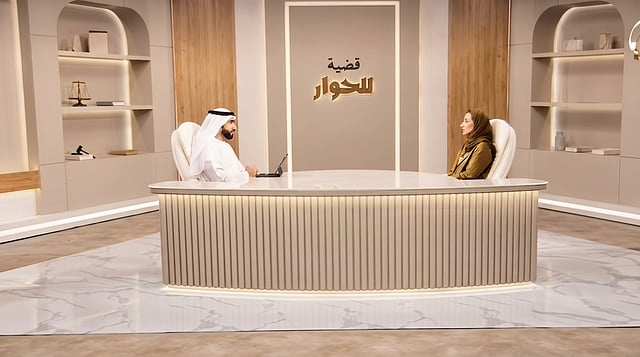
A father in the UAE was reportedly ordered by a court to continue financially supporting his unmarried 37-year-old daughter until she secured employment or married, according to a case discussed by lawyer Aisha Rashid Al Tunaiji on Sharjah TV.
The case was among several family disputes highlighted by Al Tunaiji during the programme Qadiya Lil Hiwar, which examined disagreements involving financial support, elderly parents, inheritance, property ownership and family relationships. The examples offer a glimpse into how personal and financial conflicts can develop into legal proceedings.
The case involving the adult daughter raises a practical question for UAE residents: does a parent’s financial responsibility automatically end when a child becomes an adult?
Under the applicable UAE personal status legislation, the answer is not necessarily yes. Financial maintenance can depend on a person’s employment, marital status, ability to support themselves and the law governing the family. However, the circumstances of one reported case should not be treated as a blanket rule for every adult child.
Why financial support can continue into adulthood
The UAE’s Federal Decree-Law No. 41 of 2024 on the Issuance of the Personal Status Law sets out rules governing family maintenance. The legislation came into force on April 15, 2025, replacing the previous federal Personal Status Law of 2005.
Under Article 106 of the 2024 law, a father’s responsibility for a daughter’s maintenance generally continues until she marries or starts working, subject to the applicable legal framework and circumstances. The legislation also provides for maintenance in certain situations involving adult children, including a divorced or widowed daughter who does not have sufficient means or another person responsible for her support.
These provisions help explain why age alone may not settle a maintenance dispute. A court must consider the relevant legal rules and the facts of the individual case rather than assume that every person over 18 is automatically financially independent.
The reported case involving the 37-year-old woman was presented by Al Tunaiji as an example of support continuing until employment or a change in marital circumstances. The publicly available account does not provide the full judgment, the court’s location, the amount of maintenance ordered or the detailed evidence considered by the judge.
Those details matter when assessing the case’s precise legal implications.
How UAE courts assess maintenance claims
Financial support is not necessarily calculated using one fixed amount for every family.
Under Article 96 of the federal Personal Status Law, the court considers the financial means of the person providing maintenance, the circumstances of the person receiving it and the economic conditions at the relevant time and place. The amount therefore depends on the individual circumstances rather than a universal salary percentage.
For families involved in a dispute, this means the financial position of both parties and the nature of the claim can be important. Employment status, income, personal needs and other relevant responsibilities may affect the court’s assessment.
The UAE also has different legal frameworks for certain civil family matters. The 2022 Civil Personal Status Law and the separate civil family rules applicable in Abu Dhabi may affect which provisions govern a particular case. Residents should establish which law applies before assuming that a rule described in another family’s dispute will apply to them.
Elderly parents and disputes over financial support
Al Tunaiji also discussed disputes involving elderly parents and their adult children. One case concerned a father who allegedly could not access his pension, while another involved a request for financial assistance from children who were themselves seeking support from their father.
The reported examples raise questions about financial independence, access to personal income and the responsibilities of relatives when an older family member needs assistance. The allegations described during the television discussion should not be interpreted as findings against any identified individual.
The federal Personal Status Law also addresses maintenance for parents. Article 107 provides for financial support for parents who lack sufficient property to meet their needs, subject to the provision’s conditions and the circumstances of the children responsible for support.
This is distinct from a parent’s responsibility to support a child. Each claim has its own legal basis, and the circumstances of the person seeking maintenance must be assessed under the relevant rules.
Property transfers and family disagreements
The television discussion also covered disputes over family property and inheritance. Al Tunaiji described a case in which a mother transferred a house into her daughter’s name, with the arrangement later becoming a source of concern as family relationships deteriorated.
Property transfers within families can have long-term consequences, particularly when an older person relies on a home or other assets for financial security. Questions about ownership, control, inheritance and the intentions behind a transfer may become contentious when relationships change.
The programme also examined disagreements over money earned through social media accounts managed by family members. Such disputes can involve questions about who controls an account, how earnings are distributed and whether contributions by different relatives have been recognised.
Clear financial arrangements and appropriate records can help families understand their respective responsibilities. Where a disagreement concerns ownership or alleged misuse of funds, the relevant documents and applicable law become especially important.
When a family dispute becomes a legal matter
Not every disagreement between relatives requires court intervention. However, the discussion distinguished ordinary relationship tensions from allegations involving financial exploitation, threats, physical violence or neglect of vulnerable family members.
The lawyer also addressed disputes arising from messages and posts on family WhatsApp groups. An argument that begins privately can become a formal complaint if the conduct involves alleged insults, abuse or defamation. The legal consequences depend on what occurred and the applicable law.
Where an elderly or seriously ill parent cannot manage personal or financial affairs, questions about decision-making authority may also arise. Al Tunaiji cautioned that old age or physical weakness alone does not establish that a person lacks legal capacity; appropriate evidence may be needed before a court considers intervention.
The examples discussed on Sharjah TV demonstrate that family law can involve much more than divorce or child custody. Maintenance, access to income, property ownership and the welfare of vulnerable relatives can all become matters for legal consideration.
For UAE residents facing a similar situation, the reported case is a reminder to seek advice based on the specific family circumstances and the applicable legislation, rather than relying on a headline or another family’s outcome.
1. Can a father in the UAE be required to support an adult daughter?
Yes, under certain circumstances and subject to the applicable law. Article 106 of the federal Personal Status Law sets out maintenance rules for daughters, including provisions linked to marriage and employment.
2. Why was a father reportedly ordered to support his 37-year-old daughter?
Lawyer Aisha Rashid Al Tunaiji described a case involving an unmarried 37-year-old woman whose father was ordered to support her until she found employment or her circumstances changed through marriage. The full court judgment and detailed reasoning were not available in the report.
3. Does financial maintenance automatically end when a daughter turns 18?
Not necessarily. Under Article 106 of the 2024 federal Personal Status Law, a daughter’s maintenance is generally linked to marriage or employment rather than a universal age limit, subject to the applicable law and circumstances.
4. Can a divorced or widowed daughter receive financial support from her father?
The federal Personal Status Law provides for maintenance for a divorced or widowed daughter in certain circumstances, including where she lacks sufficient property, is not working or has no other person responsible for her maintenance. The individual facts and applicable law matter.
5. Can elderly parents claim financial support from their children in the UAE?
The federal Personal Status Law provides for maintenance for parents who lack sufficient property to support themselves, subject to legal conditions. Article 107 addresses this responsibility.
6. How do UAE courts determine maintenance amounts?
The applicable rules and the circumstances of the case determine the assessment. Under Article 96 of the federal Personal Status Law, relevant factors include the provider’s financial means, the recipient’s circumstances and the economic conditions at the relevant time and place.
7. Do the same maintenance rules apply to every UAE resident?
No. The applicable legal framework can depend on the parties and the nature of the family matter. The federal Personal Status Law, the Civil Personal Status Law and Abu Dhabi’s civil family rules have different scopes and provisions.
8. What should someone do if they face a family maintenance dispute?
They should establish which law applies, gather relevant financial and family documents, and consult a qualified UAE family lawyer. A reported case should not be treated as a guarantee of the outcome in another family’s circumstances.
