
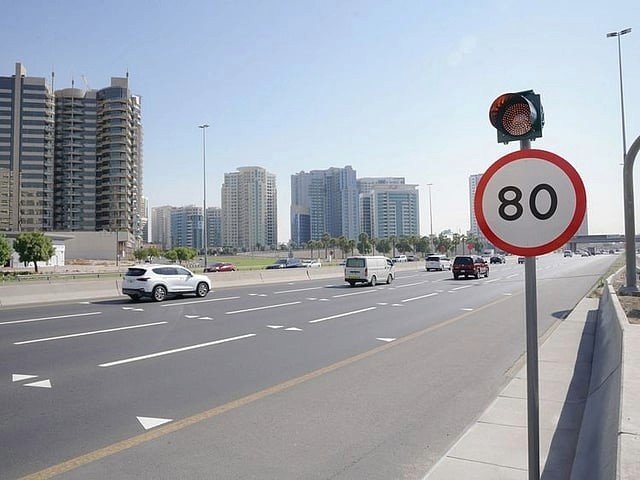
Dubai motorists will need to adjust their driving speeds on five road sections from November 1, 2026, when revised limits announced by the Roads and Transport Authority (RTA), in coordination with Dubai Police, come into effect.
The changes will increase limits on three roads and lower them on two. Authorities will replace speed-limit signs and adjust traffic cameras to reflect the revised limits before implementation.
The announcement is particularly relevant for drivers who regularly use Al Asayel Street, Al Mustaqbal Street, Latifa bint Hamdan Street, Al Rebat Street and Sheikh Sabah Al Ahmad Al Jaber Al Sabah Street.
Which Dubai roads will have new speed limits?
The revised limits will apply in both directions along the specified stretches of the five roads.
| Road | Current limit | New limit | Affected section |
|---|---|---|---|
| Al Asayel Street | 60 km/h | 80 km/h | Oud Maitha Street to Al Meydan Street |
| Al Mustaqbal Street | 60 km/h | 70 km/h | Sheikh Rashid Street to Al Meydan Street |
| Latifa bint Hamdan Street | 60 km/h | 70 km/h | Sheikh Zayed Road to Al Khail Road |
| Al Rebat Street | 100 km/h | 90 km/h | Marrakech Street to Sheikh Mohammed bin Zayed Road |
| Sheikh Sabah Al Ahmad Al Jaber Al Sabah Street | 80 km/h | 70 km/h | 2nd December Street to Khalid bin Al Waleed Street |
The details were reported in coverage of the RTA and Dubai Police announcement on October 21. The new limits are scheduled to take effect on November 1, 2026.
Drivers should pay particular attention to Al Rebat Street and Sheikh Sabah Al Ahmad Al Jaber Al Sabah Street, where the permitted speeds will decrease. Continuing at the previous limit after the change takes effect could result in a speeding violation.
Why are Dubai’s speed limits changing?
The RTA said the adjustments follow engineering and technical assessments conducted in line with updates to the Dubai Speed Management Manual.
The review considered factors including road design, traffic volumes, surrounding urban development and actual vehicle speeds. Pedestrian activity and nearby facilities were also among the considerations described in the announcement. The stated objectives include improving road safety, supporting traffic flow and aligning speed limits with road conditions.
The increases and reductions reflect different assessments of individual road sections rather than a single speed policy being applied uniformly across Dubai.
For motorists, the practical step is to follow the signs on the specific section of road they are using. A route may include different speed limits, so drivers should not assume that a limit remains unchanged throughout a journey.
Dubai radar grace limits explained
Dubai Police distinguishes between a road’s posted speed and its radar control speed. The posted speed is the legal limit shown on road signs, while the radar control speed indicates the threshold at which a camera is configured to record a speeding violation.
For example, Dubai Police’s published road-speed information lists an 80 km/h limit and a 101 km/h radar control speed for several roads. That difference should not be interpreted as permission to drive at 101 km/h.
The radar threshold may vary according to the road and its applicable settings. Drivers should not assume that every road has the same grace margin or that an enforcement threshold will remain unchanged after a speed-limit revision.
With the November changes approaching, motorists should pay attention to the new road signs and follow the posted limit rather than using a radar threshold to determine how fast they can drive.
What are the speeding fines in Dubai?
Speeding penalties in the UAE depend on how far a driver exceeds the applicable speed limit. The published fine schedule includes the following penalties:
| Speeding offence | Fine |
|---|---|
| Exceeding the limit by up to 20 km/h | AED 300 |
| Exceeding the limit by up to 30 km/h | AED 600 |
| Exceeding the limit by up to 40 km/h | AED 700 |
| Exceeding the limit by up to 50 km/h | AED 1,000 |
More serious speeding offences can carry additional penalties, including black points and vehicle impoundment. The published schedule lists AED 1,500, six black points and 15 days of vehicle impoundment for exceeding the limit by up to 60 km/h; higher excess speeds can attract more severe penalties.
Drivers should check the applicable official penalty schedule for the precise offence and consequences rather than relying on the fine alone.
What drivers should do before November 1
Motorists who use the affected roads should familiarise themselves with the revised limits before the changes begin. They should watch for replacement signs, particularly where limits are being reduced, and remain alert to further changes along the route.
The important distinction is simple: the posted speed limit remains the limit drivers should follow, regardless of the radar grace threshold. From November 1, the new signs on the five affected road sections will determine the speeds motorists must observe.
Q1. When do Dubai’s new speed limits take effect?
The revised limits on five Dubai road sections are scheduled to take effect on November 1, 2026.
Q2. Which Dubai roads will have higher speed limits?
Al Asayel Street will increase from 60 to 80 km/h. Al Mustaqbal Street and Latifa bint Hamdan Street will each increase from 60 to 70 km/h on the specified sections.
Q3. Which roads will have lower speed limits?
Al Rebat Street will decrease from 100 to 90 km/h, while Sheikh Sabah Al Ahmad Al Jaber Al Sabah Street will decrease from 80 to 70 km/h.
Q4. What is Dubai’s radar grace limit?
It is the difference between a posted road speed and the radar control speed. The threshold varies by road and should not be treated as permission to exceed the posted legal limit.
Q5. Will Dubai speed cameras be adjusted?
The announcement says speed cameras will be reprogrammed to reflect the revised limits before the changes take effect.
Q6. What is the fine for speeding in Dubai?
Fines depend on how far the driver exceeds the applicable limit. Published penalties include AED 300, AED 600, AED 700 and AED 1,000 for different speeding bands, with more severe offences carrying additional penalties.
Q7. How can motorists check the applicable speed limit?
Drivers should follow the road signs on the specific stretch they are using and consult the official Dubai Police road-speed information for reference.
