
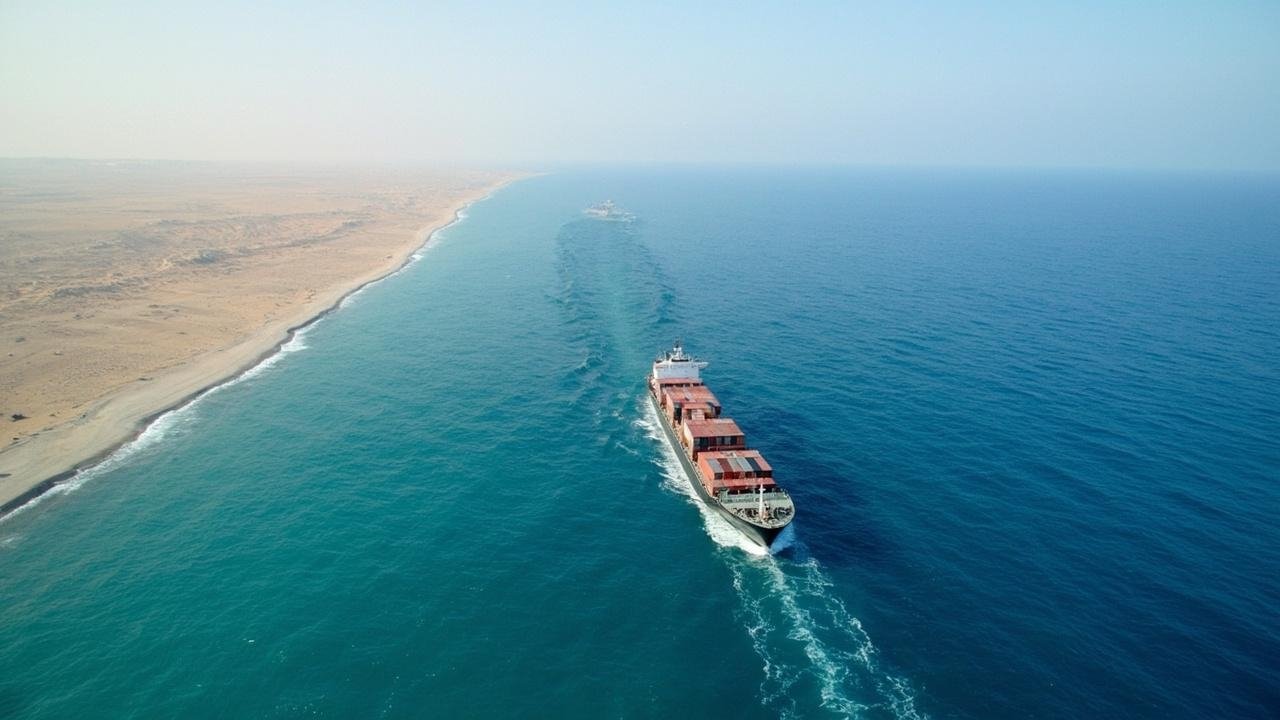
The widening Middle East conflict is placing renewed pressure on regional energy supplies after fighting involving Yemen’s Houthis and Saudi Arabia reached another level, while shipping through the Strait of Hormuz remains constrained.
Saudi Arabia’s Civil Defence said on September 17 that debris from an intercepted Houthi drone fell in Taif, killing a Yemeni resident and injuring two other people. Several buildings and vehicles were also damaged, according to the Saudi authorities. Reuters and the Associated Press reported the incident as the first announced death in Saudi Arabia during the latest escalation in Houthi attacks.
At the same time, the security situation around Yemen’s Red Sea coastline is becoming increasingly important for global energy markets. Houthi forces have advanced along the coast and taken positions around the Bab Al Mandab, the narrow waterway connecting the Red Sea with the Gulf of Aden. The United Nations said on September 15 that fighting had intensified along Yemen’s western coast and that the Houthi advance had added to concerns over shipping and energy supplies.
Two major oil corridors face disruption
The latest escalation matters because Gulf energy exports depend on a network of routes rather than a single passage.
The Strait of Hormuz, between Iran and Oman, is one of the world’s most important energy chokepoints. Before the current conflict, about one-fifth of global oil and liquefied natural gas trade passed through the waterway, according to Reuters. Traffic has been severely constrained during the conflict.
The Bab Al Mandab Strait presents a separate vulnerability. The waterway lies at the southern entrance to the Red Sea and is a key route for vessels travelling between the Indian Ocean and the Suez Canal.
Reuters reported that Houthi forces reached the strategic Perim island in Bab Al Mandab on September 11. The move came alongside fighting on Yemen’s Red Sea coast and raised concerns that pressure on shipping could extend beyond Hormuz.
The UN, however, said maritime tracking indicated that commercial shipping through the Red Sea appeared to remain unaffected as of September 15, while warning that the situation was becoming increasingly volatile.
Saudi Arabia’s alternative oil route also hit
The disruption is particularly significant for Saudi Arabia because the kingdom’s East-West pipeline provides an alternative way to move crude towards the Red Sea without relying on the Strait of Hormuz.
The approximately 1,200-kilometre pipeline was damaged in a drone attack last week. Reuters reported that it normally carries around 4 million to 5 million barrels of oil per day, equivalent to roughly 4% to 5% of global supply.
The pipeline connects Saudi oil-producing areas in the east with the Red Sea port of Yanbu, allowing exports to reach international markets without passing through Hormuz.
Saudi pipeline repairs were under way on September 18. US Energy Secretary Chris Wright described the disruption as temporary, while Reuters reported that traders were reacting positively to indications that repairs could restore flows. The precise repair timetable remained unclear.
The development has helped ease some immediate market concerns, but oil prices remain well above earlier 2026 levels.
Oil prices remain elevated
Brent crude was trading around $103 a barrel on the morning of September 18, while US West Texas Intermediate was close to $101, according to Gulf News’ market update. Prices had earlier approached $110 during the week as concerns over regional supply intensified.
Reuters reported on September 17 that crude prices had eased slightly but remained above $100 a barrel after reaching their highest levels since May.
The market response reflects concerns about cumulative disruption. If shipping through Hormuz remains restricted while the Red Sea route faces additional security risks and Saudi Arabia’s alternative pipeline is temporarily impaired, traders have fewer straightforward routes for moving Gulf energy supplies.
Fighting expands beyond the main Iran-US confrontation
The developments in Yemen represent a widening of the conflict beyond direct confrontation involving Iran and the United States.
Saudi Arabia and the Houthis exchanged fresh attacks on September 17, while Saudi forces conducted airstrikes in parts of Yemen, according to Reuters. The International Organization for Migration said more than 100,000 Yemenis had been displaced by the latest fighting, most of them within Yemen. Some civilians have also crossed the Red Sea towards Djibouti.
The Houthis have demanded an end to what they describe as Saudi aggression and restrictions on Yemen. Iran has described the Houthis as an ally while publicly denying that it directs their military operations. Reuters has separately reported Iranian support and guidance for the Houthi campaign. Those claims remain contested.
The United Nations has urged de-escalation as fighting spreads across Yemen and maritime security concerns grow.
What it means for Gulf markets
For the UAE and wider Gulf region, the immediate issue is not a confirmed shortage of oil or fuel in the UAE, but the potential for prolonged disruption to regional shipping and energy flows.
Higher crude prices can affect transport, manufacturing, aviation, shipping and other industries through increased energy and logistics costs. A sustained disruption could also increase insurance premiums and freight costs for vessels using exposed routes.
The UAE has also continued to stress the importance of balancing regional security with diplomacy and economic stability. UAE diplomatic adviser Anwar Gargash said on September 17 that the country would combine deterrence and defence of its sovereignty with dialogue with Iran, while seeking to prevent regional tensions from derailing its economic and development agenda.
For now, the situation remains fluid. Repairs to Saudi Arabia’s East-West pipeline could reduce pressure on the oil market, but continued fighting around Yemen and restrictions affecting Hormuz mean the underlying supply risk has not disappeared.
What happened in Saudi Arabia?
Saudi Civil Defence said debris from an intercepted Houthi drone fell in Taif on September 17, killing one Yemeni resident and injuring two people. Buildings and vehicles were also damaged.
Why are Gulf oil supplies under pressure?
Oil supplies face pressure because shipping through the Strait of Hormuz remains constrained while the Red Sea and Bab Al Mandab face growing security risks. Saudi Arabia’s alternative East-West pipeline was also damaged in a drone attack.
What is the Strait of Hormuz?
The Strait of Hormuz is the maritime passage between Iran and Oman connecting the Persian Gulf with the Gulf of Oman. It is a major global energy route.
What is Bab Al Mandab?
Bab Al Mandab is a narrow waterway connecting the Red Sea with the Gulf of Aden. It is an important route for ships travelling between the Indian Ocean and the Suez Canal.
Has Saudi Arabia’s East-West pipeline been repaired?
Repairs were under way as of September 18. US Energy Secretary Chris Wright indicated the outage would be temporary, although the exact restoration timetable remained uncertain.
Are oil prices affected?
Yes. Brent crude remained above $100 a barrel on September 18 after reaching substantially higher levels earlier in the week amid concerns over regional supply disruption.
Does the conflict directly affect the UAE?
The developments create potential regional effects through energy markets, shipping and logistics. The sources consulted do not establish a direct disruption to UAE oil supplies or domestic fuel availability from these specific incidents.
