
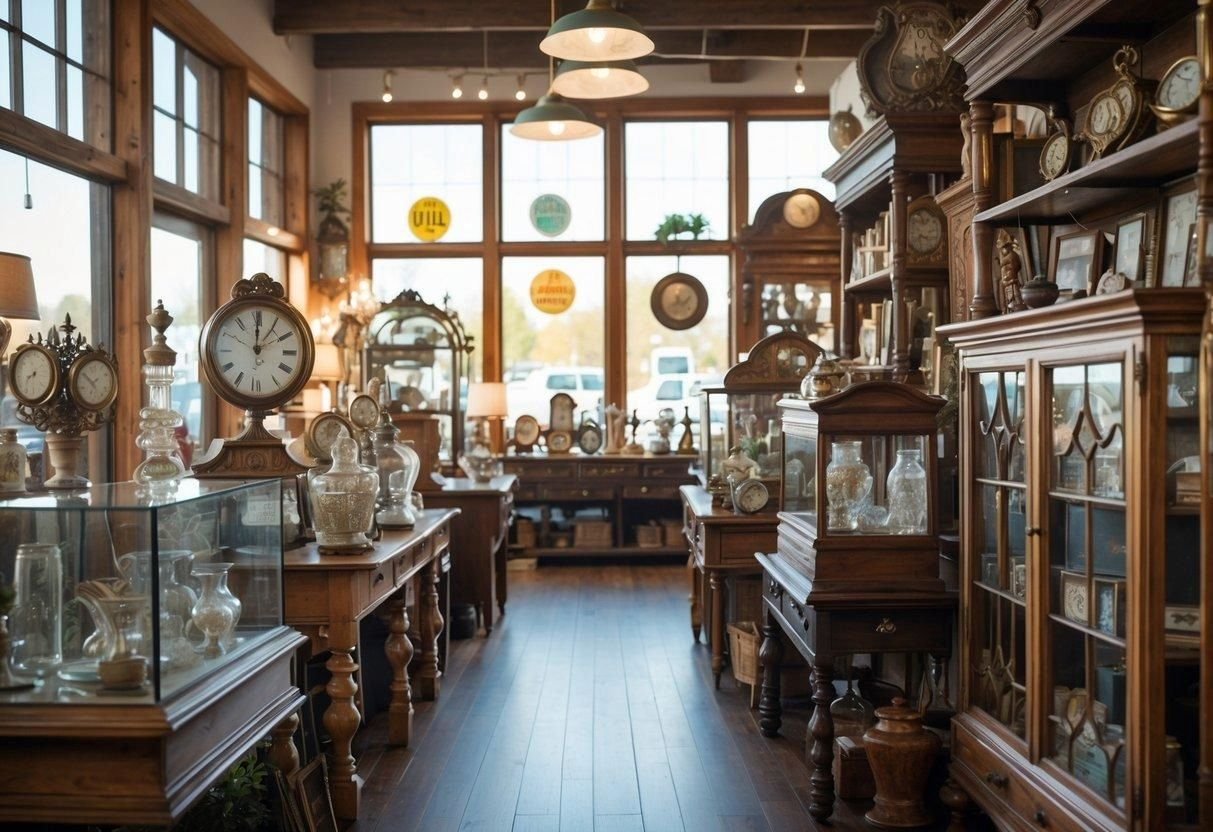
ABU DHABI: A vintage watch, an old decorative vessel or a piece of handmade mosaic can hold more than monetary value for Youssef Akram Fahsa. For the young Syrian collector, each object offers a connection to the people, places and craftsmanship that shaped its past.
Fahsa is the co-founder of Five J Antique, a shop in Abu Dhabi’s Mina Port area that opened in 2023. The business brings together his interest in historical objects and his preference for pieces with a story behind them, rather than items chosen simply for their brand or appearance.
His journey to the UAE began with a childhood interest in preserving objects, followed by years of work in carpentry and clothing before he eventually established himself in the antique trade.
From practical work to collecting
According to a profile published by Gulf News on October 13, 2026, Fahsa grew up in Syria and began working as a carpenter’s apprentice at the age of 14 during the country’s conflict. He helped support his family while learning a trade that required patience, precision and practical skill.
He later entered the clothing business, starting in a warehouse before moving into management. He also worked with another clothing brand, where he was given an opportunity to develop a shop around his own taste in clothing.
Fahsa subsequently spent time in Turkey and Lebanon before moving to Abu Dhabi in 2021. He decided to settle in the UAE partly because he valued the sense of safety and calm he associated with the capital, according to the report.
His interest in antiques eventually brought him together with a Jordanian business partner who shared the same passion. The two established Five J Antique in 2023, transforming a former gift shop into a space devoted to older objects and collectibles.
A collection built around history
The shop’s inventory, as described in the report, includes vintage watches, decorative vessels, a Persian sword and other objects that Fahsa considers historically or personally significant.
Watches are a particular interest. Fahsa says he studies their mechanisms and has taught himself to dismantle and reassemble them. His collection includes military-style timepieces and watches associated with different periods and countries.
For him, a watch’s appeal is not determined by its maker alone. Its design, provenance and the circumstances surrounding its production can be just as important.
Some pieces are not available for sale, according to the report. Fahsa says he makes selective decisions about which objects he is willing to part with.
The historical descriptions attached to individual items, however, should be treated separately from independently verified provenance. Claims about an object’s age, previous ownership, military connections or rarity require supporting documentation before they can be established conclusively.
That distinction matters in the antiques trade, where an item’s appearance and a seller’s account may not be enough to confirm its origins.
Finding objects beyond the shop
Fahsa reportedly travels to Europe approximately every four months to meet collectors and explore potential acquisitions. Rather than relying only on general markets, he seeks out people who have maintained their own collections and may be willing to sell selected pieces.
Such relationships can be important to independent antique dealers. Collectors may have knowledge of an object’s history, its previous owners and the reasons it was preserved, although those details still need verification when a purchase is made.
For a small specialist business, building a network of collectors can also help create a more distinctive inventory than one based entirely on readily available second-hand goods.
The approach requires judgement. Age alone does not establish authenticity, and the value of a historical object can depend on its condition, documentation, maker, cultural significance and market demand.
Syrian craftsmanship remains part of the business
Fahsa’s interests extend beyond watches and antiques. The Gulf News report says he also runs a workshop in Syria that produces handmade mosaic pieces, which are sent to him for sale.
The venture connects his business in Abu Dhabi with traditional craft production in his home country. It also gives him a way to work with a form of decorative art that interested him when he was younger.
Unlike a mass-produced decorative item, a handmade mosaic can reflect the individual work involved in arranging and assembling its components. Its quality and provenance depend on the materials, techniques and people responsible for making it.
The workshop’s production, export arrangements and commercial scale were not independently established for this article.
A place for older objects in Abu Dhabi
Five J Antique operates in an area with an established connection to trade and traditional markets. Abu Dhabi’s official tourism website describes Mina Zayed as a waterfront district linked to the capital’s maritime past, with Souq Al Mina offering antiques, vintage shops and other traditional retail businesses.
The setting provides a natural context for a shop built around objects that have circulated between places, collectors and generations.
For residents interested in antiques, the wider market also offers a reminder to ask questions before buying: Who made the item? How old is it? Where did it come from? Is there documentation to support its history?
These questions are especially important for high-value or supposedly rare pieces. Where an object has military, cultural or historical significance, credible provenance can be as important as its physical condition.
For Fahsa, collecting has become both a business and a way of staying connected to craftsmanship and memories of Syria. His Abu Dhabi shop brings those interests together in a market where older objects continue to find new owners.
1. Who is Youssef Akram Fahsa?
Youssef Akram Fahsa is a Syrian antique collector and co-founder of Five J Antique in Abu Dhabi, according to the Gulf News profile published on October 13, 2026.
2. What is Five J Antique?
Five J Antique is an antique and collectibles shop in Abu Dhabi’s Mina Port area. Fahsa established the business with a Jordanian partner in 2023, according to the source report.
3. When did Fahsa move to Abu Dhabi?
The Gulf News profile reports that Fahsa arrived in Abu Dhabi in 2021.
4. What kinds of objects does Five J Antique sell?
The reported collection includes vintage watches, decorative vessels, a Persian sword and other collectible objects. Availability and the authenticity of individual items should be confirmed with the seller.
5. Does Fahsa work with Syrian craftspeople?
The report says he operates a workshop in Syria producing handmade mosaic pieces for sale through his business.
6. Where can visitors find antique shops in Abu Dhabi?
Mina Zayed and Souq Al Mina are among the areas associated with traditional markets and vintage retail in Abu Dhabi. The official tourism website describes Souq Al Mina as a place to explore antiques and vintage shops.
7. How can buyers assess whether an antique is authentic?
Ask for provenance records, ownership history, maker details and any available expert assessment. For valuable or historically significant pieces, seek independent verification rather than relying solely on a seller’s description.
8. Are the historical objects in Five J Antique independently authenticated?
The available reporting does not independently establish the provenance of every object described. Buyers should request supporting documentation for specific pieces before making a purchase.
