
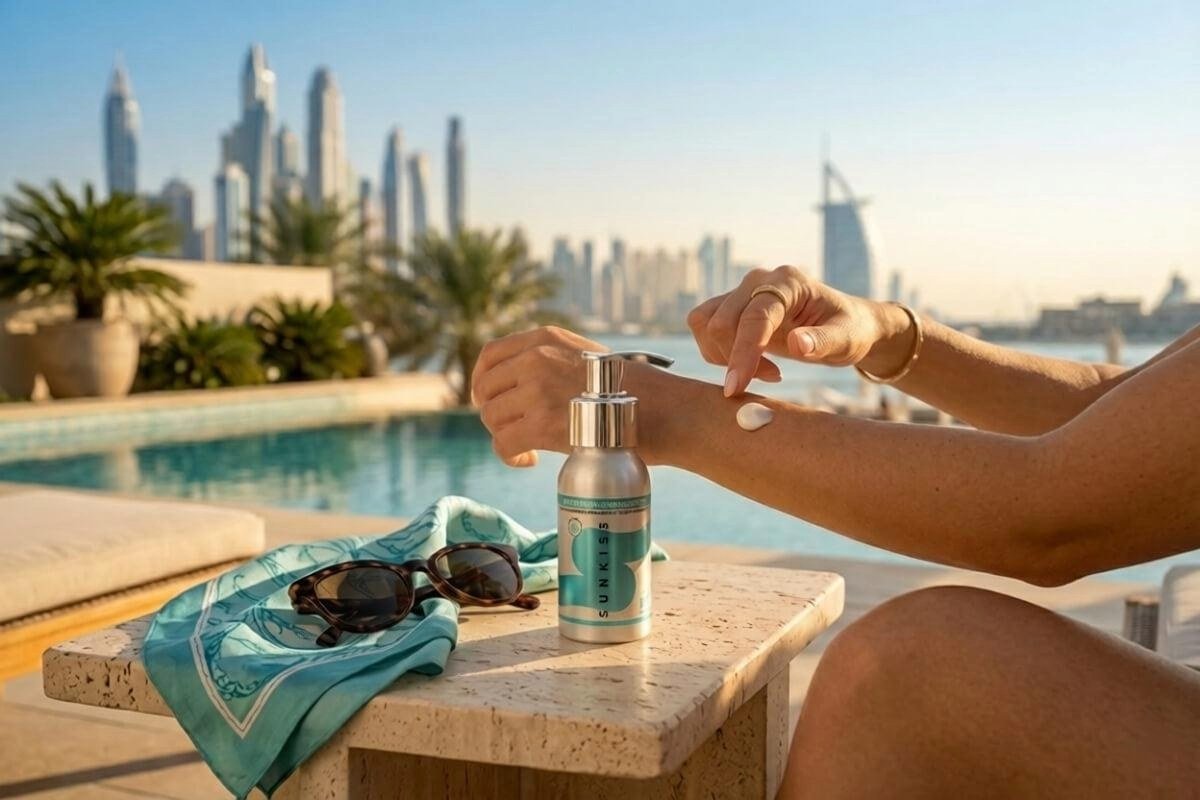
DUBAI: September 28, 2026: Cooler mornings and less intense summer heat can make sunscreen feel less necessary in the UAE, but temperature is not a reliable measure of ultraviolet (UV) exposure.
As autumn arrives, UAE residents spending time outdoors, driving or sitting near direct sunlight still need to consider sun protection. The World Health Organization recommends protective measures when the UV Index reaches 3 or above, while dermatologists generally advise broad-spectrum sunscreen for exposed skin.
The reason is simple: UV radiation cannot be judged by how hot the weather feels.
Why cooler weather does not mean UV protection is unnecessary
UVA and UVB radiation behave differently.
UVB is strongly associated with sunburn and tends to vary more according to season, time of day and location. UVA penetrates deeper into the skin and contributes to photoageing and pigmentation. Both types of UV radiation are relevant to skin damage and skin cancer prevention.
That means a pleasant autumn day can still involve meaningful UV exposure, particularly for someone spending several hours outside.
The original Gulf News report, published on September 28, cited Dubai-based dermatologists Dr Rahaf Ali Madanieh of Medcare Medical Centre and Dr Zaheer Abbas of SKIN111 Clinic, who stressed that sunscreen decisions should be linked more closely to exposure than to the calendar.
What should UAE residents use?
For regular outdoor exposure, the dermatologists cited by Gulf News recommended a broad-spectrum SPF 30 or SPF 50 sunscreen. Broad-spectrum protection is important because it covers both UVA and UVB radiation rather than focusing only on the SPF number.
The American Academy of Dermatology also recommends choosing a sunscreen offering:
- SPF 30 or higher
- Broad-spectrum UVA and UVB protection
- Water resistance
The WHO similarly recommends broad-spectrum sunscreen with at least SPF 30 and says it should be reapplied every two hours, particularly after sweating, swimming, playing or exercising outdoors.
For UAE residents, the practical choice can therefore depend on the day’s activities. Someone spending a short period indoors has a different exposure profile from a person commuting, walking outdoors, exercising or spending several hours in direct sunlight.
Do you need sunscreen indoors?
Not necessarily to the same extent as someone outdoors.
The dermatologists quoted by Gulf News noted that ordinary window glass blocks most UVB, but UVA can pass through glass depending on the type of glass, coating and film. Someone sitting beside a large sunny window for hours or driving frequently can therefore have greater cumulative UVA exposure than someone working away from direct daylight.
For people who spend most of the day indoors and away from windows, repeated sunscreen application throughout the day may not be necessary.
Those with concerns such as hyperpigmentation or photosensitivity may have different needs and should consider individual advice from a dermatologist.
Cloudy, hazy or foggy days are not automatically UV-free
Another common mistake is using the appearance of the sky as a guide to UV exposure.
Clouds can reduce UV radiation reaching the ground, but they do not necessarily eliminate it. The amount of UV that passes through depends on cloud type and thickness, location and time of day. Haze and fog should not automatically be treated as a protective barrier.
The WHO recommends using the UV Index as a practical guide. Its guidance identifies UV Index 3 and above as the point at which sun-protection measures should be adopted.
Mineral or chemical sunscreen?
Both mineral and chemical sunscreens can provide effective UVA and UVB protection when appropriately formulated and correctly applied.
Mineral sunscreens generally use filters such as zinc oxide or titanium dioxide. Chemical, also called organic, sunscreens use UV filters that absorb radiation. The choice can come down to skin type, formulation, comfort and whether the product is one the user can apply consistently.
The American Academy of Dermatology emphasises broad-spectrum protection, SPF 30 or higher and water resistance rather than requiring one particular sunscreen format.
Don’t forget the commonly missed areas
Applying sunscreen to the face but ignoring other exposed areas can leave skin unprotected.
The dermatologists cited by Gulf News identified areas including the ears, neck, hands, hairline and tops of the feet as places people commonly miss.
Sunscreen is also only one part of sun protection. The WHO recommends combining sunscreen with shade, protective clothing, hats and UV-protective sunglasses when appropriate.
What about SPF in makeup?
Foundation or moisturiser containing SPF can contribute to protection, but it should not automatically replace dedicated broad-spectrum sunscreen.
One practical issue is the amount of product used. People may not apply enough makeup or moisturiser to achieve the level of SPF shown on its label. The dermatologists cited by Gulf News therefore recommended treating SPF-containing makeup as an additional layer rather than the sole source of protection.
For UAE residents, the simplest approach is to match sun protection to the day’s actual exposure: cooler weather does not mean UV protection can be switched off.
Does sunscreen still matter in UAE autumn?
Yes. Cooler temperatures do not mean UV radiation has disappeared. The amount of protection needed depends on UV levels and how much time a person spends outdoors.
What SPF should I use in the UAE?
The American Academy of Dermatology recommends broad-spectrum, water-resistant sunscreen with SPF 30 or higher. The dermatologists cited in the Gulf News report suggested SPF 30 or 50 for regular outdoor exposure.
What is the difference between UVA and UVB?
UVB is strongly associated with sunburn and varies more with season and time of day. UVA penetrates deeper into the skin and contributes to photoageing and pigmentation; both are relevant to skin damage.
Do I need sunscreen on cloudy days?
If UV exposure is significant, clouds should not automatically be treated as complete protection. The WHO recommends using the UV Index as a guide and taking protection measures when it reaches 3 or above.
Do I need sunscreen indoors?
It depends on exposure. Someone away from direct daylight has less exposure than someone spending hours beside a sunny window or driving. UVA can pass through some types of window glass.
How often should sunscreen be reapplied?
The WHO recommends reapplying broad-spectrum sunscreen every two hours, particularly after sweating, swimming, playing or exercising outdoors.
Is SPF makeup enough?
SPF-containing makeup or moisturiser can provide some protection, but dermatologists cited in the report advise treating it as an additional layer rather than automatically replacing dedicated broad-spectrum sunscreen.
Is mineral or chemical sunscreen better?
Both can provide effective UVA and UVB protection when correctly formulated and applied. Skin type, comfort and whether a person will use the product consistently can influence the choice.
