
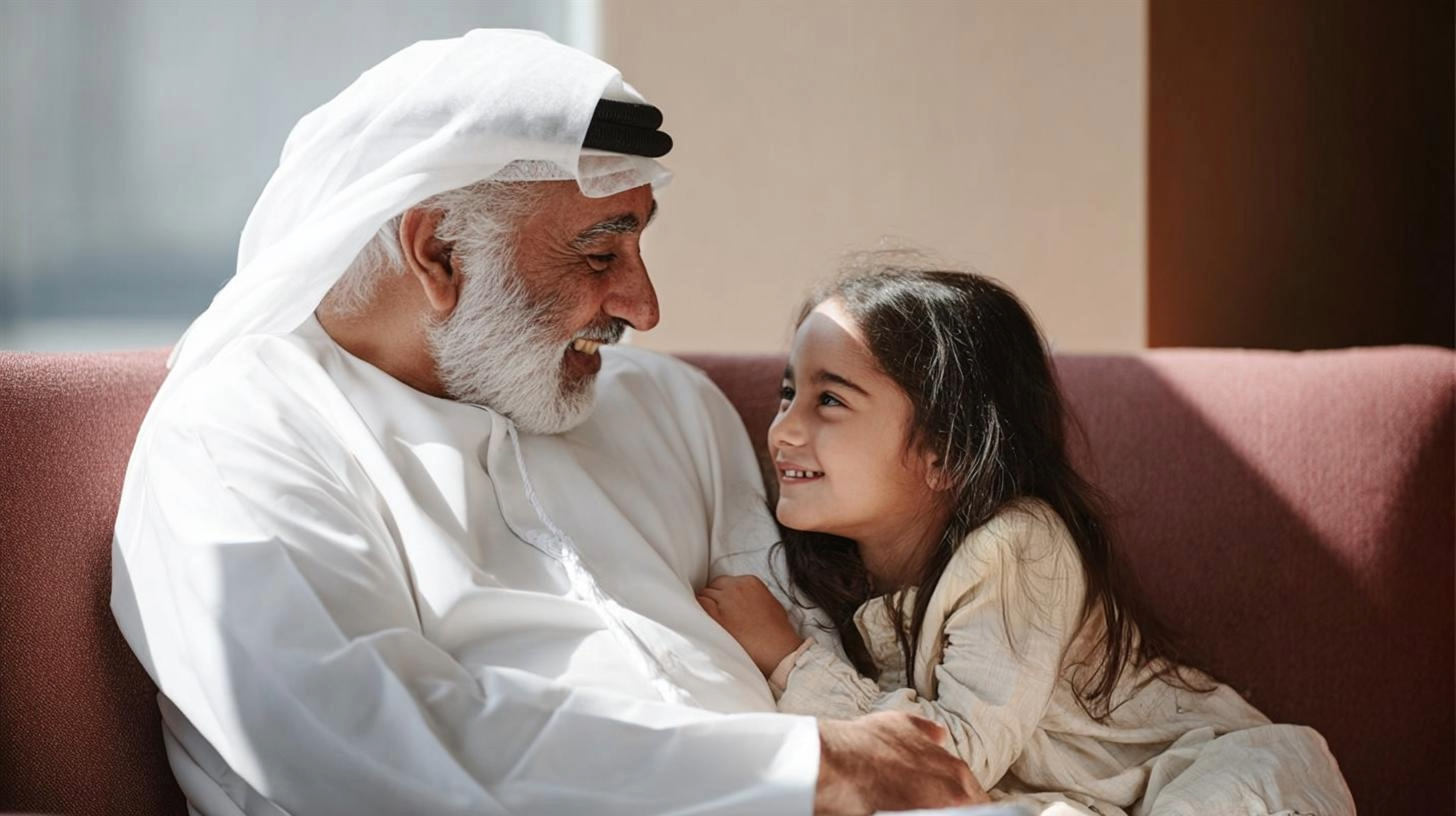
An Emirati short film is bringing the UAE’s traditional stories to the screen, using the memories of an older generation to explore friendship, pearl diving and the country’s cultural identity.
Titled Al Rawy (The Storyteller), the six-minute film was directed by Youssef Akef and premiered during the opening programme of the 26th Sharjah International Narrator Forum in September 2026. Commissioned by the Sharjah Institute for Heritage and produced by The Way Studio, the film places traditional Emirati storytelling at the centre of its narrative.
Set in 1960s Sharjah, the story follows a grandfather who shares memories of life during the pearl-diving era with his granddaughter. Through his account of two men whose friendship developed through their experiences at sea, the film explores the trust, loyalty and cooperation that shaped relationships in earlier Emirati communities.
Rather than presenting the country’s past as a collection of historical events, Al Rawy focuses on the personal stories that give cultural heritage its meaning.
A grandfather’s story becomes a lesson for the next generation
At the heart of Al Rawy is the relationship between a grandfather and his granddaughter. As she listens to his memories, she gradually becomes interested in the art of storytelling.
The narrative moves between generations, showing how a story can continue to live long after the person who first told it is gone. By the end, the grandfather passes the storyteller’s role to his granddaughter, suggesting that preserving heritage is not only about remembering the past but also about sharing it with those who come next.
The film’s central story draws on the friendship of two men during the 1960s, when pearl diving and life at sea formed part of the region’s social and economic history.
For pearl divers, working together required trust and cooperation. These relationships provide the historical setting for the film’s wider message about friendship and the bonds that hold communities together.
Youssef Akef brings historical Sharjah to the screen
Director Youssef Akef developed the project with Aisha Rashid Al Hussan Al Shamsi, Director of the Arab Heritage Centre and General Coordinator of the Sharjah International Narrator Forum.
The screenplay drew on memories and stories passed down through Al Shamsi’s family. The original script was considerably longer than the final film, creating the challenge of presenting several perspectives within a short running time.
According to Akef, the production had a particularly tight schedule. Filming was completed over two days, with separate days allocated for colour grading, editing and visual effects.
Historical accuracy was another important consideration. The production team researched details associated with Sharjah before the UAE’s formation, including the boats used during the period, traditional houses and clothing.
This research helped the filmmakers establish a setting that reflected the period represented in the story rather than relying entirely on visual imagination.
Emirati cast and modern filmmaking techniques
The film features Emirati performers from different generations, with participants ranging in age from nine to 75.
Bringing together performers with varying levels of acting experience required careful direction. The team also had to pay attention to the Emirati dialect, as regional accents and differences in everyday speech could affect the authenticity of the historical setting.
The production combined traditional filmmaking with contemporary visual technology.
Akef explained that the team used 3D modelling, conventional visual effects and artificial intelligence as part of the creative process. Sharjah was recreated digitally using Blender, with traditional maps supplied through Sharjah Heritage helping guide the visual representation of the city.
A falcon was also used as a narrative device, providing a bird’s-eye perspective of Sharjah within the film.
These techniques allowed the production to connect historical references with a cinematic presentation designed for contemporary audiences.
Sharjah’s storytelling tradition finds a place in cinema
The premiere of Al Rawy added a cinematic element to the 26th Sharjah International Narrator Forum, an event dedicated to oral storytelling and the preservation of cultural traditions.
The forum brings together storytellers, researchers and heritage enthusiasts from different countries through performances and cultural activities.
Presenting an original short film as part of its opening programme offered another way to explore the role of storytelling in preserving collective memory.
The film was commissioned by the Sharjah Institute for Heritage and produced by The Way Studio. Sharjah Museum and Shurooq, the Sharjah Investment and Development Authority, also supported the production by providing filming venues, according to Akef’s interview with Gulf News.
Following its premiere, the production was being prepared for submission to regional and international film festivals, with the aim of introducing the Emirati story to a wider audience.
For viewers in the UAE, Al Rawy offers a reminder that cultural heritage is not limited to historical buildings, traditional clothing or preserved objects. Family memories, conversations between generations and stories about everyday life also contribute to how a country’s identity is understood and remembered.
The film brings those elements together through a simple idea: a story shared by one generation can become the inspiration for the next.
Q1. What is the Emirati short film Al Rawy about?
Al Rawy is a short Emirati film about friendship, pearl-diving history and cultural heritage. It follows a grandfather sharing stories of old Sharjah with his granddaughter.
Q2. Who directed Al Rawy?
The film was directed by Youssef Akef of The Way Studio.
Q3. Who wrote Al Rawy?
The screenplay was written by Aisha Rashid Al Hussan Al Shamsi, Director of the Arab Heritage Centre and General Coordinator of the Sharjah International Narrator Forum.
Q4. When did Al Rawy premiere?
The film premiered during the opening programme of the 26th Sharjah International Narrator Forum in September 2026.
Q5. How long is the film Al Rawy?
The film runs for approximately six minutes. Its production portfolio lists the runtime as six minutes and 36 seconds.
Q6. What historical period does Al Rawy portray?
The story is set in Sharjah during the 1960s, before the formation of the UAE.
Q7. Who produced Al Rawy?
The Way Studio produced the film, which was commissioned by the Sharjah Institute for Heritage.
Q8. Will Al Rawy be shown at international film festivals?
Following its premiere, the film was being prepared for submission to regional and international film festivals.
