
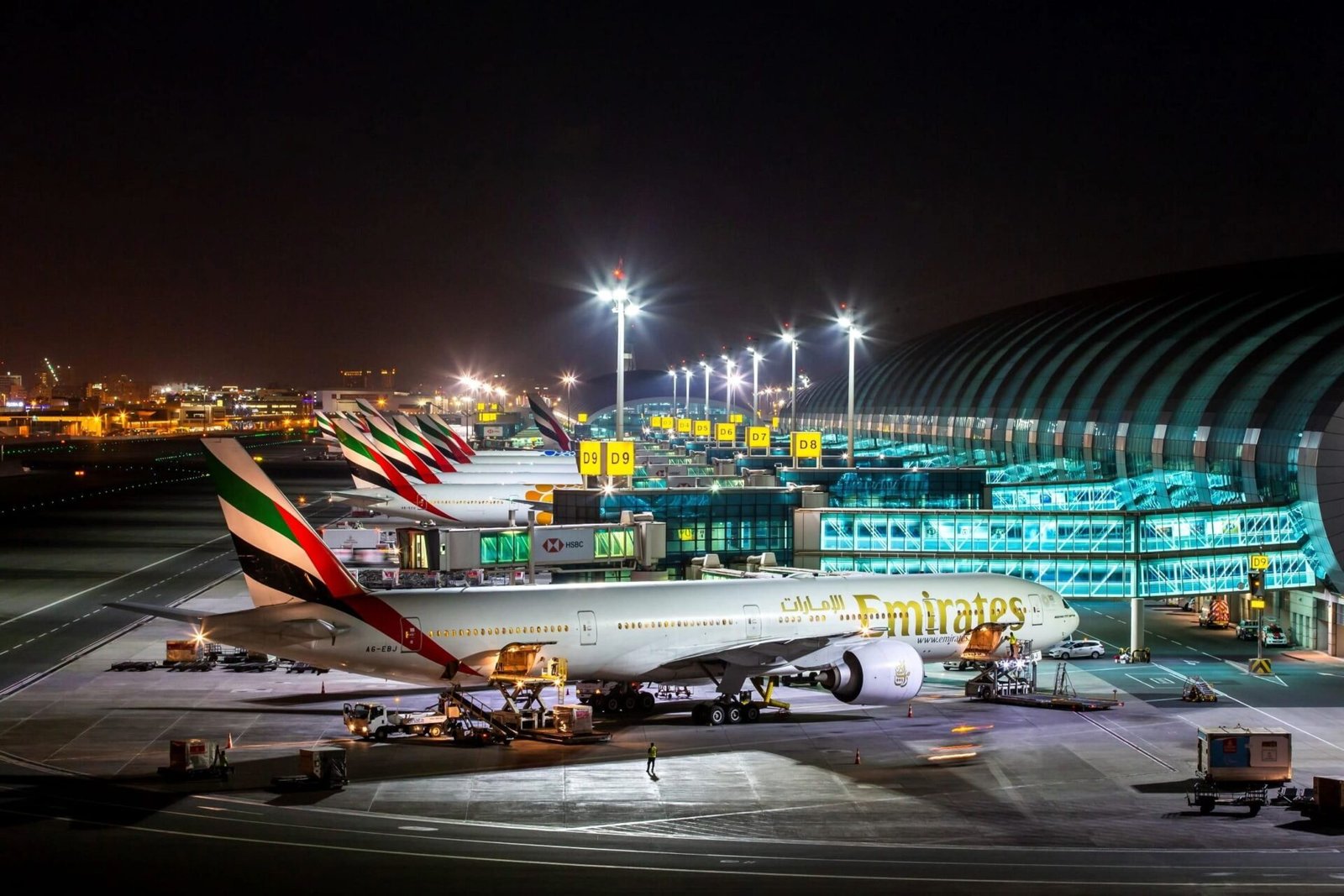
DUBAI: The continuing US-Iran conflict is being felt across the UAE through disruptions to regional air travel, more expensive shipping and rising pressure on household and business costs, although the country’s main airports remain operational.
Dubai International Airport (DXB), Al Maktoum International Airport (DWC) and Abu Dhabi’s Zayed International Airport continue to handle flights. However, airlines are adjusting schedules as security conditions across the wider region remain unsettled.
The situation is also being closely watched at sea. The Strait of Hormuz remains open but under significant pressure, making shipping, energy supplies and freight costs important issues for the UAE economy.
UAE airports remain open, but travellers face uncertainty
For passengers travelling from Dubai or Abu Dhabi, the immediate issue is not a general airport closure but the possibility of cancellations, delays and changes to regional routes.
Airlines operating from the UAE have continued to adjust schedules as routes through parts of the Middle East are affected by the security situation. Flights involving destinations such as Beirut, Iraq and Jordan have faced restrictions or cancellations, creating knock-on effects for connecting passengers.
The disruption can extend beyond the original route. A change to one regional flight can affect aircraft rotations, crew movements and connecting services elsewhere in an airline’s network.
Travellers therefore need to check their flight status directly with their airline before leaving for the airport rather than relying only on a previously issued itinerary.
Gulf News reported on October 6 that flights operated by Iranian airlines to and from the UAE remained suspended until further notice, citing the UAE General Civil Aviation Authority.
Why the Strait of Hormuz matters to UAE residents
The Strait of Hormuz is one of the most important maritime routes for Gulf energy exports and international trade. Its security has become a central concern during the conflict.
The UAE has repeatedly stressed the importance of keeping the waterway open and protecting freedom of navigation. In July, the UAE Ministry of Foreign Affairs condemned attacks on two UAE-linked tankers travelling through the Strait and called for the protection of commercial shipping and international maritime routes.
The ministry had earlier also emphasised that uninterrupted navigation through Hormuz is important for regional and global economic stability.
The latest shipping situation is significant because higher risk at sea can translate into higher insurance premiums, longer routes, additional security measures and increased freight charges.
Those costs can eventually reach importers, retailers and consumers.
Shipping pressure could affect imported goods
Higher maritime costs are particularly important for the UAE because the country imports a large range of food, consumer products, industrial inputs and construction materials.
When shipping companies face higher war-risk premiums or have to use more complicated routes, the additional expense can be passed through the supply chain.
That does not mean every product will immediately become more expensive. The eventual effect depends on factors including existing inventories, supplier contracts, transport arrangements and the duration of the disruption.
But prolonged pressure on shipping would increase costs for companies bringing goods into the Gulf.
Oil markets remain sensitive to developments
Energy markets are another major transmission channel.
Reuters reported on October 6 that Brent crude was trading around $100 a barrel as markets assessed continuing Gulf security risks and tanker attacks, while Gulf oil flows excluding Iran had recovered to more than 80 per cent of pre-war levels in September.
The combination creates a complicated picture: physical oil exports from Gulf producers have continued, but traders remain sensitive to the possibility of further disruption.
For UAE consumers, higher energy and transport costs can have wider consequences because fuel costs affect logistics, deliveries and the movement of goods.
What does this mean for households?
For residents, the impact is likely to appear in several areas rather than through a single immediate change.
Travel is one of the most visible. People with upcoming international trips should monitor airline notifications because schedules can change quickly when regional airspace or connecting routes are affected.
Transport and delivery costs are another area to watch. Higher fuel and freight expenses can increase operating costs for logistics companies and businesses.
Imported goods may also face pressure if elevated shipping expenses persist.
The UAE’s October fuel prices have risen for a third consecutive month, according to the October 6 Gulf News report, adding to the cost pressure already facing transport and logistics operators.
UAE remains focused on regional stability
The UAE government has consistently called for de-escalation, diplomacy and respect for international law.
The Ministry of Foreign Affairs has specifically highlighted the need to protect maritime routes and maintain freedom of navigation through the Strait of Hormuz.
The ministry has also condemned attacks affecting commercial vessels in the waterway, including vessels linked to UAE energy interests.
For the UAE, the concern extends beyond the immediate security situation. Hormuz and other regional maritime corridors are directly connected to energy exports, international shipping and the movement of goods.
What UAE residents should watch next
The situation remains fluid, so four indicators are particularly important:
- Airline updates: Changes to regional routes can affect connections and onward travel.
- Strait of Hormuz: Any further attacks or restrictions could increase shipping and energy risks.
- Oil and fuel prices: Changes in global energy markets can affect transport and business costs.
- Freight rates: Prolonged maritime disruption could place further pressure on imported goods.
There is currently no indication of a general shutdown of the UAE’s main airports. The bigger concern for residents and businesses is whether continuing regional instability creates longer-lasting disruption to aviation, shipping, energy and supply chains.
For travellers, the practical priority is to verify flight information directly with the airline. For businesses, monitoring freight, insurance and supply-chain conditions will remain important as the regional situation develops.
What is happening to UAE flights during the US-Iran conflict?
The UAE’s major airports remain operational, but airlines are adjusting some regional services because of security concerns and changing regional conditions. Passengers should verify their flight status directly with their airline.
Are UAE airports closed?
No general closure of Dubai International, Al Maktoum International or Zayed International airports was reported in the October 6 update. However, individual routes can be disrupted or cancelled.
Are flights between Iran and the UAE operating?
Flights operated by Iranian airlines to and from the UAE remained suspended until further notice, according to the UAE General Civil Aviation Authority as reported by Gulf News.
Why is the Strait of Hormuz important to the UAE?
Hormuz is a major maritime route for Gulf energy exports and international trade. Disruption can increase shipping, insurance and energy costs.
Will the conflict increase prices in the UAE?
It can put upward pressure on some costs through fuel, freight and imported goods. The extent and duration of any price impact will depend on how long the disruption continues.
Should UAE residents cancel upcoming flights?
There is no blanket reason to cancel travel based solely on the wider conflict. Travellers should check their specific flight and destination with the airline because regional schedules can change quickly.
What should UAE businesses monitor?
Businesses should monitor freight rates, shipping routes, insurance costs, fuel prices and supplier lead times, particularly if they rely heavily on imported goods.
What is the UAE’s position on the regional conflict?
The UAE has repeatedly called for diplomacy, de-escalation and respect for international law, while stressing the importance of safe and uninterrupted navigation through the Strait of Hormuz.
