
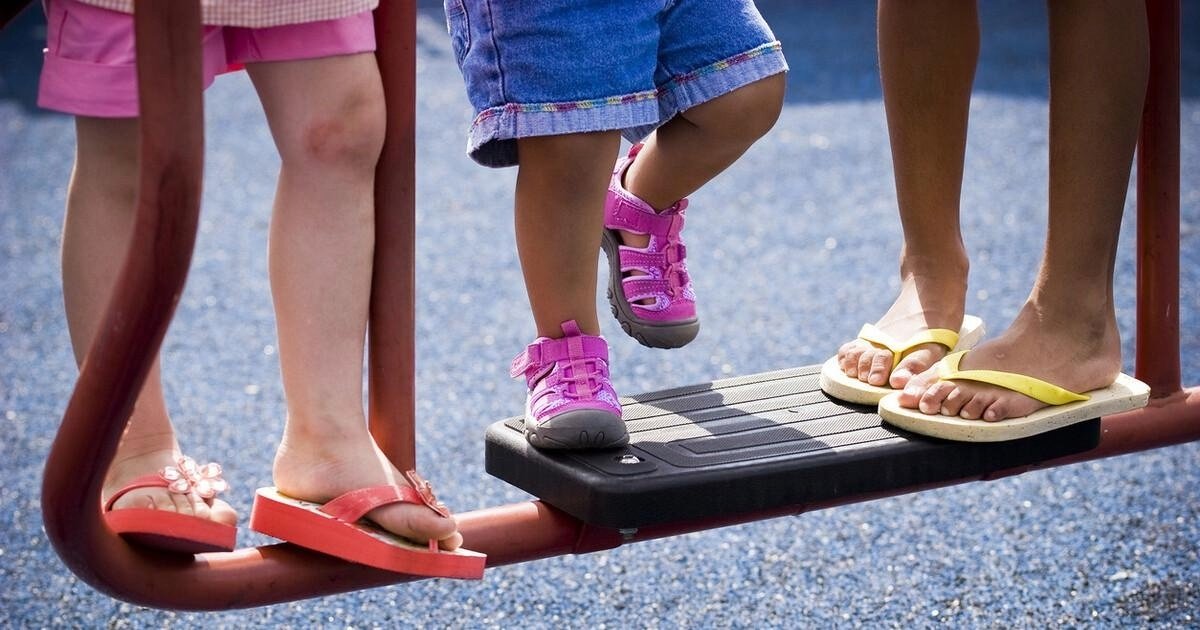
Hot weather does not only raise the temperature of the air. Pavements, metal surfaces, playground equipment, sand and other materials exposed to direct sunlight can heat up enough to cause burns when they come into contact with bare skin.
Young children are particularly vulnerable because their skin is more sensitive and they may not react quickly enough to move away from a dangerously hot surface. South Australia’s Women’s and Children’s Hospital warns that young children can suffer serious burns to the soles of their feet when they walk barefoot on heated outdoor surfaces.
The risk is especially relevant during the hottest part of the day, when sunlight has had more time to heat outdoor materials.
Why outdoor surfaces can become dangerous
Air temperature does not tell the whole story.
Dark pavement, concrete, metal playground equipment and other surfaces can absorb and retain heat from direct sunlight. Research and public-health guidance have documented burns caused by sun-heated surfaces, including playground equipment and outdoor flooring.
A study from Queensland, Australia, examined 15 children who suffered burns from sun-heated surfaces between January 2013 and February 2014. The children had a mean age of 18.3 months, and all of the injuries occurred during warmer months between 11am and 4pm. The feet were among the areas commonly affected, while metal was the most frequently involved surface in the study.
The findings illustrate why a surface that appears safe can become hazardous after prolonged exposure to strong sunlight.
Why young children are more vulnerable
Children’s skin is thinner and more sensitive than adult skin, according to guidance from the Women’s and Children’s Hospital. Young toddlers may also have a slower reaction time, meaning they can remain in contact with a hot surface long enough for an injury to occur.
Research into paediatric foot burns has also found that contact burns are an important cause of foot injuries in children living in warmer climates. A Queensland paediatric burns-centre study found contact burns accounted for 63.1 per cent of isolated foot burns in its study population, with hot ground and other hot surfaces among the causes identified.
That does not mean every warm pavement or playground surface will cause a burn. The risk depends on factors including the material, sunlight exposure, surface temperature and length of contact.
Which surfaces should parents watch?
Parents should be particularly careful around surfaces that have been sitting in direct sunlight.
These can include:
- Asphalt and concrete pavement
- Metal playground equipment
- Metal grates and outdoor fixtures
- Playground flooring
- Outdoor seating
- Hot sand
- Other dark-coloured surfaces exposed to strong sunlight
The American Academy of Pediatrics advises parents to protect children from hot surfaces such as playground slides and dark pavement on hot, sunny days.
How parents can reduce the risk
Keeping children’s feet covered outdoors is one of the simplest precautions.
South Australia’s Women’s and Children’s Hospital recommends ensuring children wear shoes outside during hot weather and avoiding outdoor activity during the hottest part of the day, listed in its guidance as 11am to 4pm during daylight-saving time. It also advises close supervision of young toddlers outdoors.
Parents can also check playground equipment and other surfaces before allowing children to walk, sit or play on them.
For outdoor activities, choosing shaded areas can reduce exposure to surfaces that have been heated by direct sunlight.
What if a child gets a burn?
For a thermal burn, the Women’s and Children’s Hospital advises removing clothing or jewellery around the affected area where appropriate and cooling the injury with cool running water for 20 minutes. It specifically advises against using ice, butter, toothpaste or creams as an initial treatment.
Medical attention should be sought when the injury is significant. The hospital’s guidance recommends medical advice if the skin is broken or the burn is larger than a 20-cent piece.
Hot-surface burns are preventable in many situations, but the danger can be easy to overlook because the source of heat is not always obvious. During periods of intense sunshine, checking the ground and keeping young children’s feet protected can help reduce unnecessary injuries.
Can hot pavement burn a child’s feet?
Yes. Sun-heated pavement and other outdoor surfaces can become hot enough to cause contact burns, particularly when children walk barefoot on them.
Why are young children’s feet vulnerable?
Young children have thinner, more sensitive skin and may react more slowly when they step onto a hot surface.
Which outdoor surfaces can become dangerously hot?
Pavement, concrete, metal playground equipment, playground flooring and other surfaces exposed to direct sunlight can become hot enough to injure skin.
What time of day is the risk higher?
The risk can increase during the hottest part of the day after surfaces have been exposed to sunlight for several hours. One Queensland study identified children’s sun-heated-surface burns between 11am and 4pm during warmer months.
How can parents protect children’s feet?
Parents can keep children in suitable footwear outdoors, use shaded areas, avoid the hottest part of the day and closely supervise young children around potentially hot surfaces.
What should parents do immediately after a hot-surface burn?
Cool the affected area with cool running water for 20 minutes. Ice, butter, toothpaste and creams should not be used as initial treatment, according to Women’s and Children’s Hospital guidance.
When should a child with a burn receive medical attention?
Medical advice is recommended when the skin is broken or the burn is significant. Women’s and Children’s Hospital guidance specifically advises medical attention if the burn is larger than a 20-cent piece.
