
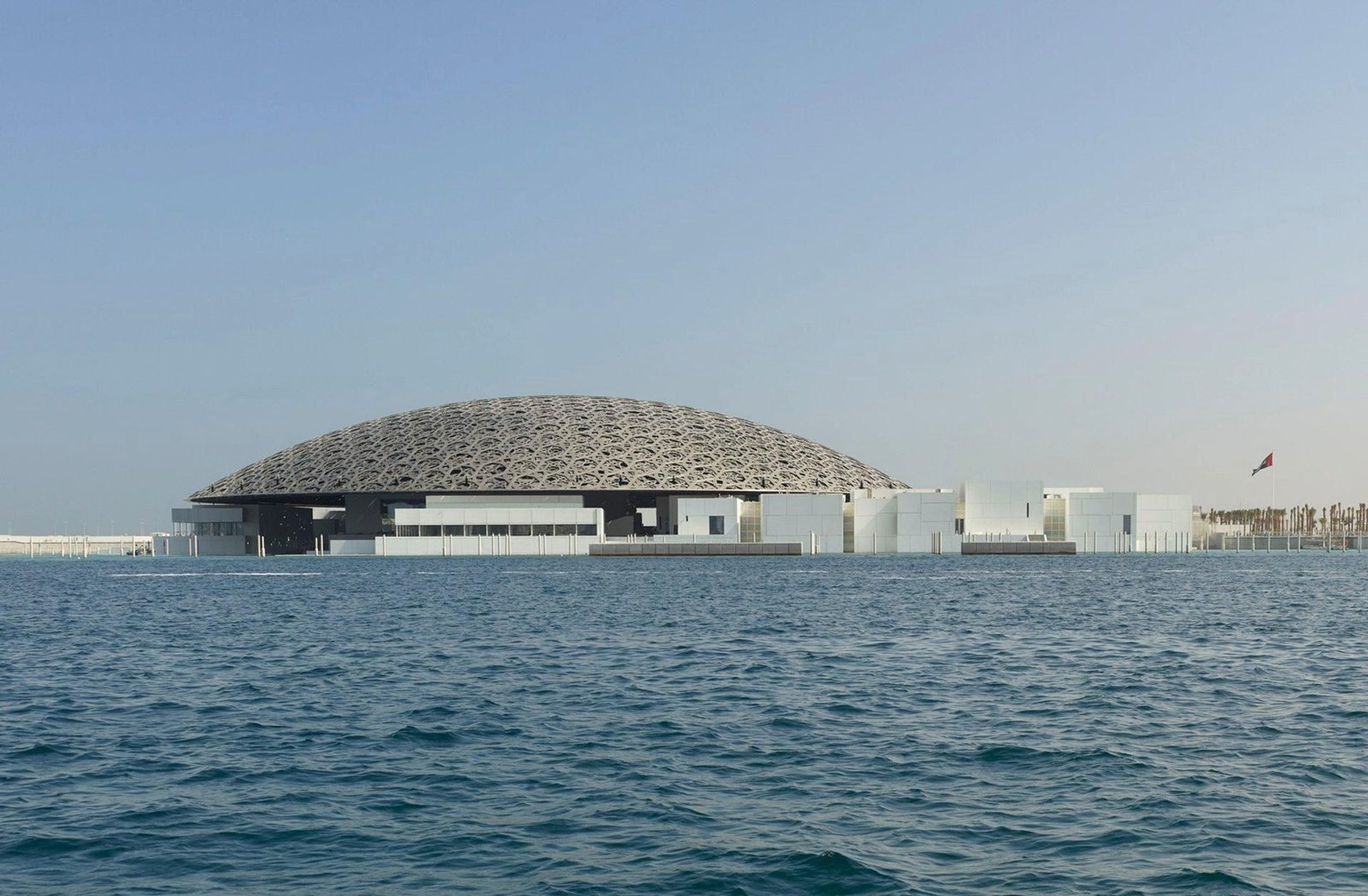
ABU DHABI: Louvre Abu Dhabi offers visitors a way to explore world history through art, placing objects from different civilisations in a shared chronological and thematic setting rather than separating them strictly by country. Located on Saadiyat Island, the museum combines an international collection with architecture inspired by the UAE’s landscape and regional design traditions.
Opened in November 2017, the museum was established through a cultural partnership between the UAE and France. Its aim is to explore the connections between human societies through works spanning prehistoric periods to contemporary art.
The approach makes Louvre Abu Dhabi more than a destination for viewing individual masterpieces. Its galleries encourage visitors to consider how artistic expression, belief, trade and cultural exchange have shaped societies across different periods.
A museum built around shared human history
The idea behind Louvre Abu Dhabi dates to an intergovernmental agreement signed by the UAE and France on March 6, 2007. The partnership brought together Abu Dhabi’s cultural ambitions and French museum expertise to establish the Arab world’s first universal museum.
According to the museum’s official information, its permanent collection includes around 700 artworks and groups of artworks, supplemented by approximately 300 works on loan from partner museums. The collection covers a broad sweep of human history, from prehistoric objects to modern and contemporary works.
Rather than arranging its galleries solely by nationality or geographic origin, Louvre Abu Dhabi uses chronological and thematic connections to bring different traditions into conversation.
An object from one region may be displayed alongside works from another period or society, inviting visitors to examine similarities in artistic techniques, religious ideas and everyday life. The arrangement helps place individual objects within a wider history of human creativity.
The collection also changes through temporary exhibitions and loans, giving returning visitors opportunities to encounter different works and interpretations.
Jean Nouvel’s architecture shapes the experience
The museum’s building is central to its identity. Designed by French architect Jean Nouvel, the complex draws on the relationship between the Arabian Gulf, Saadiyat Island’s landscape and traditional architectural responses to sunlight and heat.
Its defining feature is a vast, silvery dome measuring approximately 180 metres across. The structure contains 7,850 geometric stars arranged across eight layers, allowing daylight to filter through in shifting patterns.
The resulting effect, known as the “rain of light”, changes with the position of the sun. Patterns of brightness and shadow move across the spaces beneath the dome, creating an architectural experience that changes throughout the day.
The design also has a practical purpose. The dome shades the outdoor areas and helps moderate the environment beneath it. Water, low-rise buildings and open walkways further shape the relationship between the museum and its surroundings.
Nouvel’s design draws on regional architectural traditions without simply reproducing a historic building. Instead, it combines contemporary construction with references to the climate, landscape and visual character of Abu Dhabi.
A partnership between Abu Dhabi and France
Louvre Abu Dhabi’s international identity is rooted in its founding agreement. French cultural institutions have contributed loans, expertise and collaboration, while the museum has developed its own collection and exhibition programme in Abu Dhabi.
The Musée du Louvre in Paris describes the institution as a major cultural partnership between France and the UAE. Its collection and temporary exhibitions bring international works to audiences in the Gulf without requiring visitors to travel abroad to encounter them.
The relationship is also significant for the way cultural institutions work across national borders. Loans and exhibitions allow museums to present objects in new contexts, supported by research, curatorial planning and conservation practices.
The museum says its acquisitions process includes assessments of an object’s historical importance, condition and provenance — the documented history of its ownership and origin. Provenance research is particularly important in museum collections because it helps establish an object’s history and supports responsible acquisition decisions.
What visitors can explore
Visitors can discover works from different periods and parts of the world through the permanent galleries, alongside changing exhibitions and educational programmes. The museum also offers a Children’s Museum and activities designed for different audiences.
For UAE residents, the museum provides a cultural destination on Saadiyat Island that can appeal to art enthusiasts, families, students and visitors interested in history or architecture.
The building itself is part of the visit. Beyond the galleries, the dome, water-facing spaces and outdoor walkways offer opportunities to experience the relationship between art, light and the surrounding landscape.
People planning a visit should check Louvre Abu Dhabi’s official website for current opening hours, ticket prices, exhibition schedules and any advance-booking requirements, as these details can change.
Abu Dhabi’s wider cultural landscape
Louvre Abu Dhabi is part of the cultural development of Saadiyat Island, where museums and other cultural projects contribute to Abu Dhabi’s international profile as a destination for art and heritage.
Its approach offers a particular perspective on cultural history: civilisations are not presented as isolated stories, but as societies whose ideas and creative traditions can be examined in relation to one another.
For visitors moving through the galleries, the result is an opportunity to look beyond the origin of an individual object and consider the broader human experiences it represents — a central idea behind the museum’s universal approach to art.
1. What is Louvre Abu Dhabi?
Louvre Abu Dhabi is a museum on Saadiyat Island in Abu Dhabi. It presents art and historical objects from different cultures and periods through a universal, chronological and thematic approach.
2. When did Louvre Abu Dhabi open?
Louvre Abu Dhabi opened in November 2017 following a cultural agreement between the UAE and France signed on March 6, 2007.
3. Where is Louvre Abu Dhabi located?
The museum is located on Saadiyat Island in Abu Dhabi, UAE.
4. Who designed Louvre Abu Dhabi?
French architect Jean Nouvel designed the museum, including its distinctive dome inspired by regional architectural traditions.
5. What is the rain of light at Louvre Abu Dhabi?
It is the changing pattern of sunlight that filters through the museum’s layered dome, producing shifting areas of light and shade beneath it.
6. What can visitors see at Louvre Abu Dhabi?
Visitors can explore permanent galleries, artworks and historical objects from different civilisations, temporary exhibitions, educational activities and the Children’s Museum. The programme varies, so visitors should check the official website before travelling.
7. Why is Louvre Abu Dhabi called a universal museum?
Its galleries explore shared themes in human creativity across cultures and historical periods rather than organising the entire collection exclusively by geography or nationality.
8. Where can visitors check Louvre Abu Dhabi tickets and opening hours?
Visitors can check the official Louvre Abu Dhabi website for current visitor information, tickets and exhibition schedules.
