
The World Bank is prioritising employment, private investment and practical AI tools as developing economies face a widening gap between young people entering the workforce and jobs expected to become available.
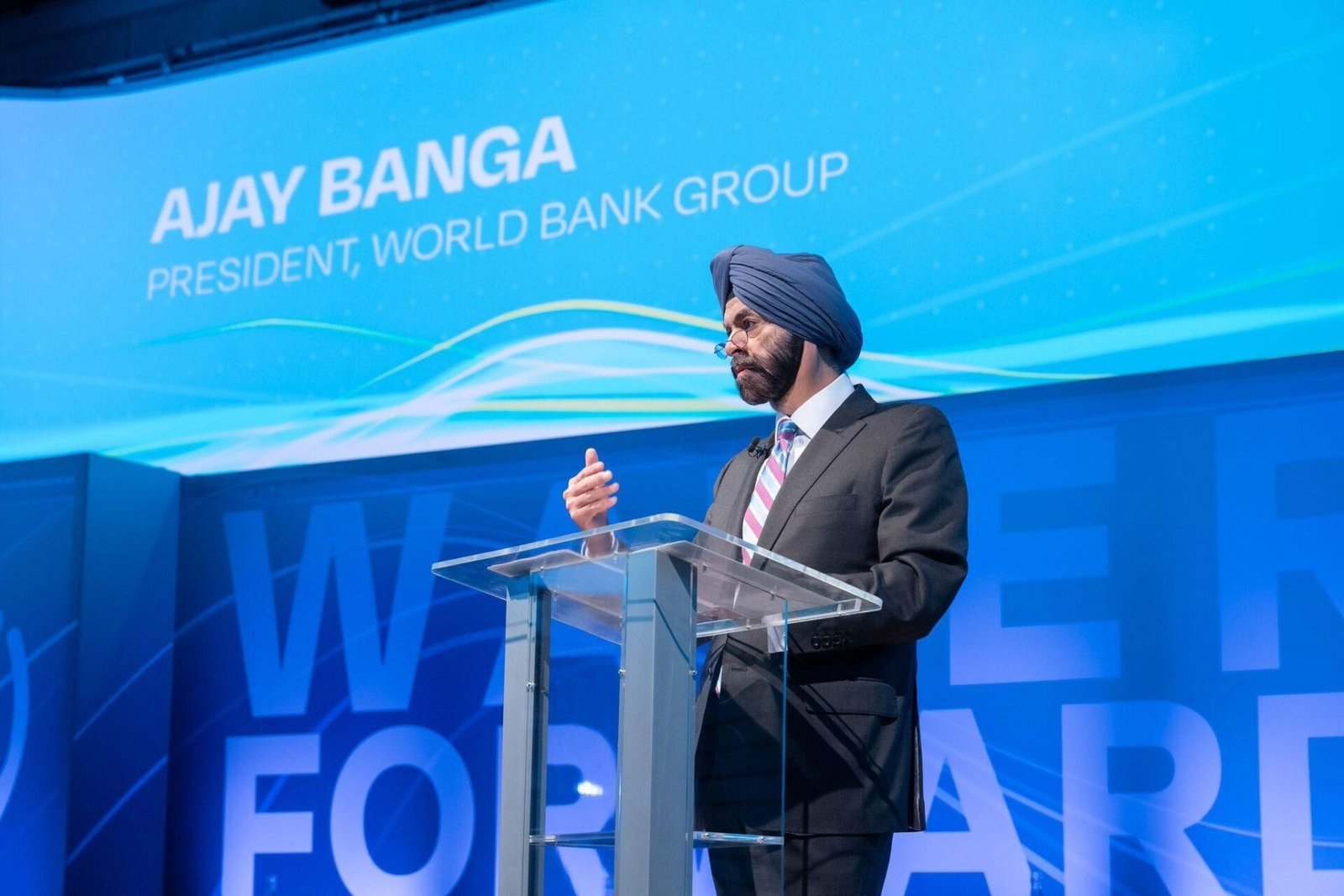
World Bank President Ajay Banga has called for a development model that places employment at the centre of economic policy, urging governments to combine public funding, private investment and technology to expand opportunities in developing countries.
Speaking at the World Bank’s Annual Meetings in Bangkok on Friday, October 16, 2026, Banga said mounting debt, tighter government budgets and international conflicts were making development more difficult. His agenda focuses on helping countries use limited resources more effectively while encouraging businesses to invest and hire.
The employment challenge is substantial. The World Bank Group estimates that around 1.2 billion young people in developing economies will reach working age over the next 10 to 15 years, while only about 420 million jobs are expected to be created during that period. That leaves a projected gap of roughly 780 million jobs, underscoring the scale of the task facing governments and employers.
Why the World Bank is prioritising jobs
Banga’s approach reflects a shift towards measuring development not only by the amount of money invested, but also by whether that investment helps businesses expand and creates productive employment.
The World Bank Group’s strategy combines three priorities: investment in essential infrastructure and human capital, business-friendly rules and regulations, and support for private companies to grow.
Reliable electricity, transport links, healthcare and education can make it easier for businesses to operate and workers to develop relevant skills. Clear regulations and access to finance can then help companies expand their operations and recruit more people.
The institution is focusing on five sectors with potential to generate employment at scale: infrastructure and energy, agribusiness, healthcare, tourism and value-added manufacturing. These industries can create jobs directly and support additional employment through supply chains and related services.
Private investment is central to the plan
The World Bank is also seeking to attract more private money into developing economies, where public budgets alone cannot meet infrastructure and business financing needs.
In a statement published on September 17, 2026, the World Bank Group reported that it mobilised $112 billion in private capital during fiscal year 2026, more than three times the $35 billion recorded in fiscal 2022. The institution said total financing and capital mobilisation for developing economies exceeded $200 billion during the latest financial year.
However, attracting private capital remains difficult in poorer and higher-risk markets. Investors may be reluctant to fund businesses where infrastructure is weak, regulations are uncertain or financial returns are harder to predict.
The strategy therefore relies on development financing, guarantees and policy reforms to make viable projects more attractive to investors. The World Bank has also identified micro, small and medium-sized enterprises (MSMEs) as a priority because smaller businesses need access to finance, technology and skills to expand.
The approach faces a broader question: whether additional private investment will generate enough lasting employment and wider economic benefits in the countries that need them most. The World Bank’s financing figures demonstrate the scale of capital mobilised, but they do not, by themselves, establish how many additional jobs will result.
Practical artificial intelligence for developing economies
Banga has also promoted what the World Bank calls “Small AI”: affordable, purpose-built artificial intelligence applications designed around local needs rather than expensive, resource-intensive systems.
Potential uses include helping farmers make better-informed decisions, supporting teachers with tailored learning, assisting healthcare workers and enabling small businesses to reach customers.
The emphasis is on practical applications that can operate in settings where computing resources, reliable electricity or internet connectivity may be limited. The World Bank’s broader AI strategy argues that developing economies could benefit from the technology if they address these basic infrastructure and skills gaps.
AI is not a substitute for the wider employment agenda. Businesses still need customers, access to capital and the ability to operate effectively. Workers also need education and training to benefit from new technologies.
The development challenge is to use digital tools to improve productivity and expand opportunities without leaving people and smaller businesses behind.
What the jobs agenda means for emerging markets
For developing countries, the strategy places greater emphasis on connecting investment with local economic activity. Projects are expected to support businesses, improve infrastructure and build the conditions needed for sustained hiring.
The World Bank has also acknowledged that mobilising private investment in low-income countries remains particularly challenging. Its fiscal 2026 figures put private capital mobilised in these economies at about $3 billion, compared with much larger totals in lower-middle-income and upper-middle-income countries.
That imbalance is important because countries with the greatest development needs may also face the strongest barriers to attracting investors. More financing alone will not resolve those obstacles; local institutions, business conditions, workforce skills and access to markets will also matter.
For UAE readers, the agenda is relevant as an international economic development story, particularly for businesses and investors interested in emerging markets. However, Banga’s remarks do not announce a new UAE employment programme, change UAE labour rules or establish a direct policy change for Dubai or Abu Dhabi.
The next measure of the strategy’s effectiveness will be whether investment translates into more productive jobs, stronger small businesses and opportunities that reach younger workers across developing economies.
1. What is Ajay Banga’s development plan focused on?
World Bank President Ajay Banga is prioritising job creation, private-sector investment and practical technology to support economic development in poorer and emerging economies.
2. How many jobs are developing countries expected to need?
The World Bank Group estimates that around 1.2 billion young people will reach working age in developing economies over the next 10 to 15 years, while approximately 420 million jobs are projected to be created. The figures imply a gap of roughly 780 million jobs.
3. How much private capital did the World Bank mobilise in fiscal 2026?
The World Bank Group reported mobilising $112 billion in private capital in fiscal year 2026, compared with $35 billion in fiscal 2022.
4. Which sectors is the World Bank targeting for job creation?
The five priority sectors are infrastructure and energy, agribusiness, healthcare, tourism and value-added manufacturing.
5. What does “Small AI” mean?
Small AI refers to practical, affordable artificial intelligence applications designed for specific tasks and local conditions. Examples include tools for agriculture, education, healthcare and small businesses.
6. Why is private investment important for developing countries?
Private investment can help finance business expansion, infrastructure and employment when public budgets are insufficient. The challenge is ensuring that investment reaches countries and communities where financing is most difficult to attract.
7. Does the World Bank announcement change employment rules in the UAE?
No UAE employment-rule change was announced in the report. Banga’s remarks concern the World Bank’s international development priorities, rather than a new UAE labour regulation.
8. When did Ajay Banga outline the jobs agenda?
Banga outlined the agenda at the World Bank Annual Meetings in Bangkok on October 16, 2026, according to the supplied report.
