
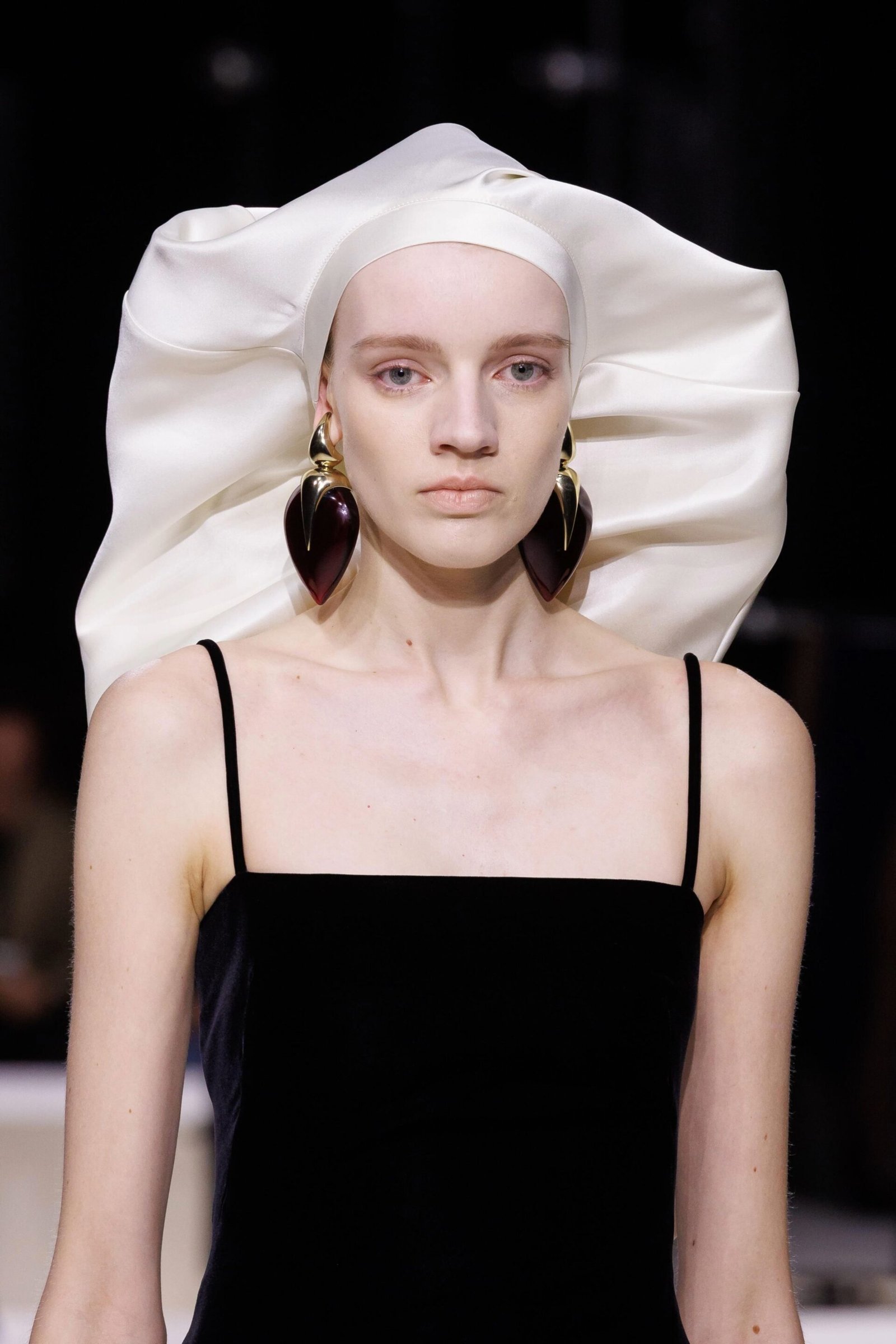
Fashion has never been limited to clothes that are easy to wear. In 2026, several designs from luxury fashion houses have drawn attention for pushing familiar accessories and silhouettes into unexpected territory, from unconventional footwear to jewellery inspired by the natural world.
The designs featured in Gulf News’ September 27 fashion roundup include creations associated with Chanel, Balenciaga, Dior, Nina Ricci, Givenchy and Saint Laurent. Each approaches fashion differently, but they share a willingness to challenge conventional ideas of what belongs in a wardrobe.
For fashion enthusiasts in the UAE, where luxury retail, international labels and personal styling are part of a diverse fashion landscape, these examples offer a look at the more experimental side of the industry. They also raise a practical question: how much of a runway idea translates into everyday dressing?
1. Chanel challenges the traditional shoe
Footwear is usually designed to balance appearance with comfort and support. An unconventional heel design associated with Chanel’s 2026 collections challenged that expectation by reducing the familiar shoe to a minimal structure around the heel.
The unusual concept attracted attention because it placed design experimentation ahead of the conventional idea of a complete shoe. Rather than serving simply as a finishing touch to an outfit, footwear became a talking point in its own right.
Chanel’s official Spring-Summer 2026 collection materials confirm that Matthieu Blazy’s debut collection for the house revisited its established design codes. The specific experimental heel described in the September roundup should, however, be distinguished from the broader collection information available on the brand’s website.
The wider lesson is that accessories can become central to a look, even when their design challenges expectations about function.
2. Balenciaga turns an everyday shape into a luxury accessory
Few accessories make a stronger statement than a handbag that resembles something usually associated with household waste.
Balenciaga has explored this territory with its Trash Bag Large Pouch, a design whose name and appearance play with the familiar shape of a rubbish bag. The concept challenges the traditional relationship between luxury, appearance and perceived value.
The appeal of such a piece depends on more than its practical function. Recognition of the designer, the context in which the accessory is presented and the conversation it generates all influence how audiences interpret it.
Balenciaga’s broader use of unconventional shapes fits into a long-running debate about luxury fashion: must an expensive accessory look traditionally elegant, or can an unexpected design be the point?
The distinction matters to consumers. A bag may be technically useful while remaining deliberately provocative in appearance. The two qualities are not mutually exclusive, but they do not necessarily appeal to the same buyer.
3. Historical silhouettes return to the runway
Another striking direction in 2026 fashion is the use of shapes associated with historical European dress.
The September roundup pointed to designers including Dior and Nina Ricci, highlighting structured silhouettes, decorative embroidery and shapes that recall aristocratic clothing from earlier centuries. Such references can bring a theatrical quality to contemporary fashion.
Historical inspiration is not new. Designers regularly revisit earlier periods, adapting their proportions, materials and decorative details for modern collections. The challenge lies in deciding which elements to preserve and which to reinterpret.
For everyday wear, the influence may be easier to adopt through a single statement piece than through a complete historical look. A structured jacket, decorative detailing or a carefully shaped waist can introduce a vintage reference without requiring an elaborate costume.
For UAE readers planning occasionwear or festive outfits, the broader styling idea is to balance a dramatic piece with simpler elements rather than allowing every part of an outfit to compete for attention.
4. Givenchy gives the T-shirt a different role
A T-shirt is among the most familiar items in a modern wardrobe. Givenchy’s Fall-Winter 2026 womenswear presentation explored a less conventional use of the garment through headwear created by milliner Stephen Jones.
The concept transforms an everyday item into a styling accessory, changing its function through the way it is folded, twisted and worn. Givenchy’s official collection notes describe the headpieces as part of Sarah Burton’s exploration of silhouette, sculptural forms and women’s self-expression.
The idea illustrates how fashion experimentation does not always require an entirely new material or object. Sometimes, changing how an existing item is used can produce a fresh visual result.
It also blurs the boundary between casual dressing and high fashion. An object associated with comfort and informality can take on a different character when placed within a carefully constructed runway look.
Whether consumers choose to adopt the styling themselves is a separate matter. A runway presentation is designed to communicate a creative vision, and not every element is intended to become an everyday wardrobe staple.
5. Saint Laurent makes jewellery the focal point
Jewellery can change the character of an outfit without altering its basic silhouette. Sculptural earrings and oversized accessories take that idea further by making the accessory one of the most noticeable elements of a look.
The 2026 fashion roundup included bird-shaped ear jewellery associated with Saint Laurent. Such designs move beyond the familiar role of earrings as small decorative accents, instead using shape and scale to attract attention.
Nature has long provided inspiration for jewellery, from floral motifs to animal forms. The impact depends on how these references are translated into materials, proportions and styling.
For a more wearable interpretation, an unusual pair of earrings can be paired with a simple outfit, allowing one accessory to provide the visual interest. That approach can be more practical than combining several oversized pieces.
The same principle applies to other statement accessories: a distinctive design often works best when it has room to stand out.
What these designs reveal about fashion in 2026
These five examples illustrate different ways designers can challenge established expectations. Footwear can become an experiment in form, a handbag can question conventional ideas of luxury, historical silhouettes can influence modern dressing, ordinary garments can be repurposed, and jewellery can become the centre of an outfit.
Their presence on the runway does not mean every design will become commercially popular or influence everyday wardrobes. Fashion shows provide space for creative exploration, while consumers make their own decisions about comfort, cost, personal identity and practicality.
For UAE residents, the most useful takeaway is not that every unusual trend deserves a place in the wardrobe. It is that personal style can draw inspiration from bold ideas without reproducing them literally.
A statement accessory, a vintage-inspired detail or an unexpected way to wear a familiar item can be enough. Fashion’s more experimental side may provoke debate, but it also expands the possibilities available to anyone interested in dressing with individuality.
Q1. What are some of the most unusual fashion designs of 2026?
Examples include unconventional Chanel footwear, Balenciaga’s Trash Bag Large Pouch, historical-inspired silhouettes associated with Dior and Nina Ricci, Givenchy’s T-shirt-inspired headwear and bird-shaped jewellery associated with Saint Laurent.
Q2. Why are luxury fashion designers experimenting with unusual designs?
Experimental designs allow designers to explore new shapes, challenge traditional ideas of beauty and function, and create distinctive visual identities for their collections.
Q3. What is Balenciaga’s Trash Bag Large Pouch?
It is a Balenciaga accessory designed to resemble a refuse bag. Its unconventional appearance challenges traditional expectations of what a luxury handbag should look like.
Q4. What was unusual about Givenchy’s Fall-Winter 2026 headwear?
Givenchy’s collection included headpieces created by milliner Stephen Jones using a T-shirt-inspired concept. The styling transformed a familiar garment into a runway accessory.
Q5. Are runway fashion trends suitable for everyday wear?
Not every runway design is intended for everyday use. Wearers can adapt ideas such as statement jewellery, vintage-inspired details or distinctive accessories to suit their comfort and personal style.
Q6. Which designers were associated with the unusual fashion examples?
The examples featured Chanel, Balenciaga, Dior, Nina Ricci, Givenchy and Saint Laurent. The specific designs and their presentation should be checked against the relevant collection materials before publication.
Q7. How can UAE residents adapt experimental fashion trends?
A practical approach is to introduce one statement item, such as sculptural earrings or a structured jacket, while keeping the rest of the outfit simple. Fabric choice and comfort can also be considered when dressing for the UAE climate.
