
A monthly subscription of Dh30 costs Dh360 over a year. Five subscriptions at the same price would total Dh1,800 annually, while ten would reach Dh3,600 — before any price increases or additional services.
For UAE residents managing rent, groceries, transport and other household expenses, these recurring payments can become an overlooked part of the monthly budget. Streaming platforms, mobile applications, cloud storage, gaming memberships and fitness services are among the costs worth reviewing.
The challenge is not that every subscription is expensive. It is that payments made to different providers can be difficult to track when they renew automatically.
How small monthly charges become a larger expense
A subscription often begins with a clear purpose: watching a particular programme, storing photographs, using a work application or trying a fitness service.
Over time, that purpose may disappear while the payment continues. A free trial may convert into a paid membership, or a service used for a short project may remain active long after the work is finished.
The annual cost offers a clearer picture of the commitment.
- One Dh30 monthly subscription costs Dh360 a year.
- Five Dh30 subscriptions cost Dh150 a month, or Dh1,800 annually.
- Ten Dh30 subscriptions cost Dh300 a month, or Dh3,600 annually.
These examples are calculations, not estimates of what the average UAE household spends. Actual costs depend on the services selected, their prices and how often they are used.
The same calculation applies to annual memberships and other recurring payments. A lower monthly price does not necessarily mean a service is worthwhile if it provides little value.
Where to look for forgotten subscriptions
Start with the payment methods used for online purchases. Bank and credit-card statements can reveal charges that are easy to overlook, especially when providers use unfamiliar billing names.
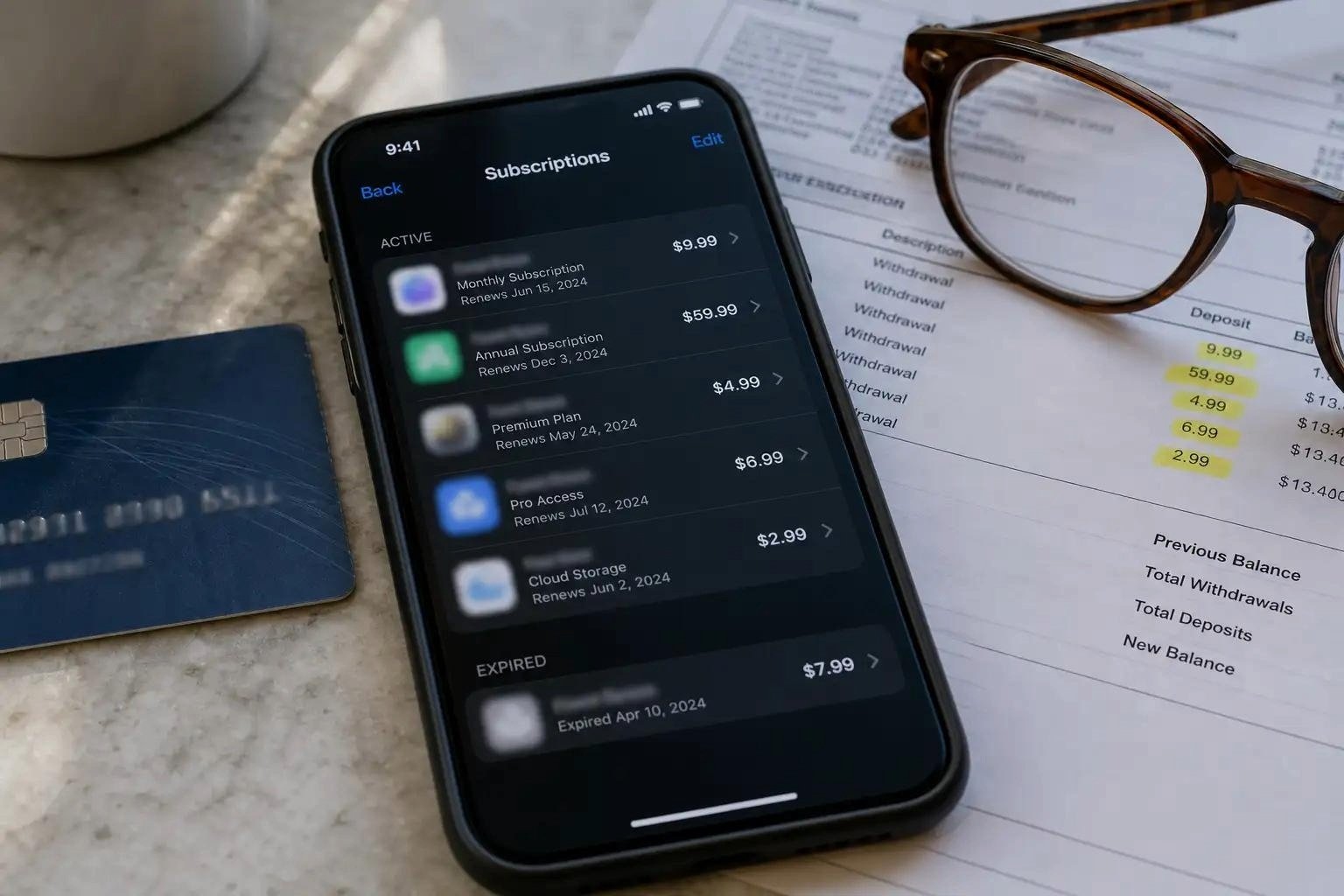
Check digital subscriptions managed through Apple or Google accounts, as well as memberships paid through digital wallets or mobile phone bills. Review email receipts and renewal notifications for additional clues.
Pay particular attention to:
- Streaming services that are rarely watched.
- Premium applications with features that are no longer needed.
- Fitness and wellness memberships that have fallen out of use.
- Duplicate services offering similar features.
- Free trials that have become paid subscriptions.
- Annual renewals that may not appear in a monthly spending review.
A useful starting point is to review the previous three months of transactions. Extending the review to a full year can help identify annual charges and services billed less frequently.
A practical subscription audit
Create a simple list of every active subscription, including its provider, cost, billing frequency and renewal date.
Calculate the annual cost of each service, then group the subscriptions into three categories: keep, downgrade or cancel.
A service that supports work, protects important files or provides regular entertainment may justify its cost. Another membership might offer overlapping features or benefits that are rarely used.
Before cancelling cloud storage or other data-related services, check what happens to stored files and whether you need to download or transfer them. Review cancellation terms and any applicable contract commitments before ending a service.
For shared household accounts, check whether separate memberships can be replaced with a suitable shared plan. Compare the total price and conditions before making the change.
Make recurring payments easier to manage
A regular review can help prevent unnecessary subscriptions from accumulating again. Set a reminder every three months to check active memberships, renewal dates and changes in prices.
It can also help to keep subscriptions in a dedicated section of a household budget. This makes the total visible alongside essential expenses rather than leaving each payment scattered across different statements.
When signing up for a new service, consider its annual cost before entering payment details. A free trial should also have a clear end date, with a reminder set in advance if you intend to cancel before renewal.
What UAE consumers should know
The UAE Ministry of Economy and Tourism outlines consumer rights that include access to correct information about goods and services, published prices and protection of personal data. Consumers can also use the ministry’s official channels to raise complaints about relevant consumer issues.
Telecommunications subscriptions have additional protections. The Telecommunications and Digital Government Regulatory Authority’s consumer guidance addresses service terms, recurring charges, subscription confirmations and cancellation procedures for telecom services and associated products.
These telecom-specific provisions should not automatically be treated as rules governing every independent streaming platform, fitness application or international digital service. Consumers should check the terms that apply to the provider and service concerned.
For UAE residents, the simplest first step remains a review of actual transactions. Identify what is being paid, establish the annual cost and decide whether each service still deserves a place in the budget.
A subscription does not need to be expensive to deserve a second look. Sometimes, a few small cancellations can free up money for savings, household priorities or services that offer greater value.
Q1. What is subscription creep?
Subscription creep is the gradual accumulation of recurring payments for services that may no longer be necessary or regularly used.
Q2. How much does a Dh30 monthly subscription cost annually?
A Dh30 subscription costs Dh360 over 12 months, assuming the price remains unchanged.
Q3. How much do five Dh30 subscriptions cost per year?
Five subscriptions at Dh30 each cost Dh150 monthly, or Dh1,800 annually.
Q4. How can UAE residents find unused subscriptions?
Review bank and credit-card statements, app-store subscription lists, digital wallets, email receipts and mobile bills for recurring charges.
Q5. Which subscriptions should consumers cancel first?
Start by reviewing services that are unused, duplicated or no longer provide enough value to justify their cost. Check cancellation conditions before proceeding.
Q6. Should consumers cancel cloud storage subscriptions?
Not without checking the consequences first. Review storage limits, backup arrangements and the provider’s rules for accessing or retaining files after cancellation.
Q7. Where can UAE consumers find official consumer protection information?
The UAE Ministry of Economy and Tourism provides consumer protection information and complaint services. Telecom-related subscription questions can also be checked against TDRA guidance.
Q8. How often should subscriptions be reviewed?
A quarterly review is a practical starting point. Checking a full year of transactions can also help identify annual renewals and less frequent charges.
