
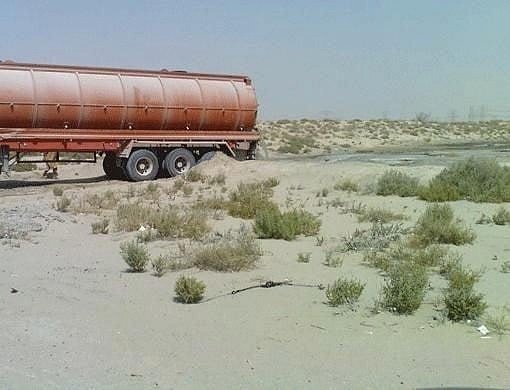
Dubai’s latest enforcement action against illegal waste disposal has put the UAE’s environmental penalties in focus, with fines ranging from hundreds of dirhams for littering to millions of dirhams for serious offences.
Dubai Police said legal action was taken against 18 suspects and 17 tankers after cases involving the alleged dumping of sewage, petrochemical waste and other harmful materials outside approved disposal sites were uncovered during the first six months of 2026. The operation involved Dubai Police, Dubai Municipality and the Dubai Environment and Climate Change Authority.
The enforcement action also provides a useful reminder that environmental penalties in the UAE do not come under a single nationwide fine. Different federal and Dubai laws cover different types of waste, pollution and disposal offences.
Dh10 million applies to specific nuclear-related offences
The highest figure in the current UAE environmental framework is Dh10 million, but it is important to understand what it covers.
Federal Law No. 24 of 1999 on the Protection and Development of the Environment provides for fines of between Dh1 million and Dh10 million for certain offences involving nuclear substances and nuclear waste. The legislation covers activities including the import, transport, burial, dumping, storage and disposal of nuclear substances or waste.
That maximum should not be interpreted as the standard penalty for illegal dumping of ordinary or hazardous waste.
Federal waste law carries separate penalties
Federal Law No. 12 of 2018 on Integrated Waste Management establishes rules covering waste segregation, collection, transportation, storage, reuse, recycling, treatment and disposal across the UAE. The law applies to waste-management activities inside the country, while nuclear and radioactive waste are excluded from its scope.
The federal framework therefore sits alongside separate legislation governing nuclear materials and local waste-management rules.
Dubai has its own waste-management framework
Dubai Law No. 18 of 2024 regulates waste management in the emirate. Under Article 20, violations of the law, its implementing bylaw and related decisions can attract an administrative fine of up to Dh500,000. A repeat violation within one year can result in the fine being doubled, subject to the maximum set by the law.
The law also provides for administrative measures in addition to financial penalties.
Dubai’s waste-management rules are supported by an implementing bylaw issued in 2026. Administrative Resolution No. 34 of 2026 sets requirements for waste producers, waste carriers, disposal sites, hazardous-waste containers and permits. It also requires certain waste producers to maintain records covering the type and quantity of waste and details of approved carriers and disposal sites.
The 2026 bylaw came into force 30 days after publication and gives covered persons six months to comply, with a possible extension in certain circumstances.
Dubai’s specific fines can start at Dh500
Separate Dubai penalty schedules provide more specific fines for waste and public-hygiene violations.
Under Executive Council Resolution No. 58 of 2017, examples include:
- Dh50,000 for disposing of hazardous waste at an unauthorised site
- Dh20,000 for bringing hazardous waste from outside Dubai into a waste-disposal site
- Dh10,000 for conducting a waste-management activity without a permit
- Dh1,000 for disposing of general waste at an unauthorised waste-disposal site
- Dh500 for littering waste in public places.
The same resolution provides additional measures for certain waste-disposal violations, including warnings, suspension of work and revocation of waste-related permits.
Wastewater violations can carry higher fines
Dubai’s public-hygiene penalty schedule separately sets out substantial penalties for wastewater and pollution-related violations.
For example, disposing of wastewater in open areas or locations not designated for disposal can result in a Dh100,000 fine. A Dh50,000 fine applies to dropping solid or spilling fluid materials from ready-mix concrete vehicles on public roads or disposing of those materials at unauthorised locations.
The schedule also sets fines of Dh10,000 for failing to prevent wastewater leakage or overflow from buildings or vacuum tankers onto public roads, while certain used-oil and oil-discharge violations carry Dh3,000 penalties.
The financial liability can go beyond the fine
Environmental enforcement does not necessarily end when a fine is issued.
Under the federal environmental law, a person who causes environmental damage through an intentional or negligent violation can be held responsible for the costs of treating or removing the damage and associated compensation. The law also refers to environmental rehabilitation costs.
Dubai’s waste-disposal rules similarly allow authorities to require a violator to remedy damage. Where Dubai Municipality undertakes remedial work, the applicable framework allows recovery of costs and additional administrative charges.
For businesses handling hazardous or industrial waste, the rules therefore extend beyond simply calculating the amount of a potential fine. Proper permits, approved carriers, authorised disposal locations and appropriate handling procedures are part of the compliance framework.
The latest Dubai enforcement action underlines the practical importance of those requirements. Dubai Police said the 17 tankers involved in the cases were confiscated and legal proceedings were initiated against the 18 suspects.
For UAE residents and businesses, the key point is that environmental penalties depend on what material was involved, where it was disposed of, which law applies and whether the offence falls under federal or Dubai legislation. The Dh10 million figure applies to specific serious nuclear-related offences; it is not a universal penalty for illegal dumping.
What is the highest environmental fine in the UAE?
Certain serious offences involving nuclear substances and nuclear waste can carry fines of up to Dh10 million under Federal Law No. 24 of 1999.
Is the Dh10 million fine for all illegal dumping?
No. The Dh10 million maximum applies to specific nuclear-related offences. Different federal and Dubai laws prescribe separate penalties for ordinary, hazardous and wastewater-related violations.
What is the fine for littering in Dubai?
Dubai’s applicable public-hygiene schedule sets a Dh500 fine for littering waste in public places.
What is the fine for illegal wastewater disposal in Dubai?
Disposing of wastewater in open areas or locations not designated for disposal carries a Dh100,000 fine under the cited Dubai public-hygiene penalty schedule.
What is the fine for dumping hazardous waste at an unauthorised site in Dubai?
Executive Council Resolution No. 58 of 2017 lists a Dh50,000 fine for disposing of hazardous waste at sites other than those designated for it.
What happened in Dubai’s latest waste crackdown?
Dubai Police said 18 suspects faced legal action and 17 tankers were seized in cases involving the alleged illegal disposal of sewage, petrochemical waste and other harmful materials during the first six months of 2026.
Which authorities were involved?
The latest enforcement action involved Dubai Police, Dubai Municipality and the Dubai Environment and Climate Change Authority.
Does Dubai have a separate waste-management law?
Yes. Dubai Law No. 18 of 2024 regulates waste management in the emirate and provides for administrative fines of up to Dh500,000 for violations covered by the law.
