
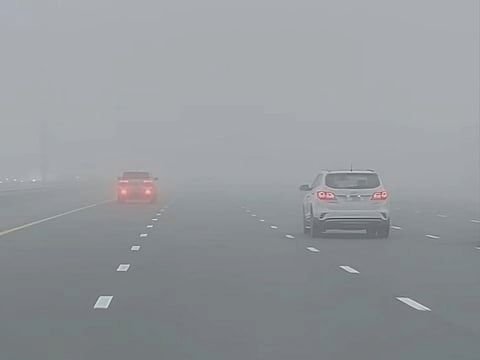
Dense fog affected parts of Abu Dhabi early Wednesday, September 30, with visibility falling below 1,000 metres in some locations and Abu Dhabi Police activating temporary 80km/h speed limits on several roads.
The National Centre of Meteorology (NCM) issued a fog alert covering the period from 1am to 9am on September 30, warning of fog and mist in several areas. The reduced visibility prompted police to remind motorists to adjust their driving to the conditions.
The temporary speed restrictions are displayed through electronic information boards. Drivers are required to follow the speed shown on those signs rather than relying on the road’s usual posted limit.
Roads affected by the 80km/h limit
According to the latest Abu Dhabi Police alert, the temporary limit applies to sections of several roads, including:
- Sheikh Khalifa Bin Zayed International Road: Al Mugheirah Bridge–Gareen Al Aish Bridge
- Sheikh Salama Bint Butti Road: Zayed City Bridge–Zayed City
- Umm Al Hosn Road: Liwa–Ghayathi
- Sheikh Hazza Bin Sultan the First: Zayed City–Ghayathi
- Sheikh Khalifa Bin Zayed International Road: Abu Al Abyad–Barakah
- Sweihan Road: Zayed Military City–Coopri Bridge
The exact restrictions can change as visibility and weather conditions develop, making the electronic roadside signs particularly important for motorists travelling through fog-affected areas.
Drivers urged to adjust to changing visibility
Abu Dhabi Police has advised motorists to reduce their speed, leave additional space between vehicles and comply with official traffic instructions during periods of poor visibility.
Fog can make it harder for drivers to judge distances, identify vehicles ahead and react to changing road conditions. For that reason, motorists travelling through affected areas should avoid sudden manoeuvres and remain alert to changes on electronic signs.
The NCM has previously warned during similar fog events that visibility can deteriorate significantly in coastal and inland areas. Fog and mist have also been forecast to remain possible during overnight and early-morning periods as humid conditions persist.
Why the temporary speed limit matters
Abu Dhabi uses variable speed restrictions during weather conditions that can affect road visibility, including fog. The system allows authorities to reduce the displayed speed limit when conditions become hazardous and then adjust it as circumstances improve.
A recent fog episode on September 27 also resulted in 80km/h limits being activated across a wider selection of Abu Dhabi roads. Abu Dhabi Police again advised drivers to monitor electronic information boards and maintain safe distances.
For Wednesday’s conditions, motorists should therefore check the electronic signs throughout their journey rather than assuming that a temporary restriction will remain unchanged.
The immediate priority for commuters is to adapt their speed to visibility, maintain a safe following distance and follow instructions from Abu Dhabi Police and the NCM while fog conditions persist.
What happened in Abu Dhabi on September 30?
Fog and reduced visibility affected parts of Abu Dhabi, prompting Abu Dhabi Police to activate temporary 80km/h speed limits on selected roads.
What is the temporary speed limit?
The temporary speed limit activated on the affected road sections is 80km/h. Drivers should follow the speed displayed on electronic information boards.
Which roads have the 80km/h limit?
Affected sections include Sheikh Khalifa Bin Zayed International Road, Sheikh Salama Bint Butti Road, Umm Al Hosn Road, Sheikh Hazza Bin Sultan the First and Sweihan Road.
How long was the NCM fog alert issued for?
The NCM alert cited in the report covered 1am to 9am on September 30.
What should drivers do during fog in Abu Dhabi?
Drivers should reduce speed, maintain extra distance from other vehicles and follow changing speed limits and official traffic instructions.
Why does Abu Dhabi reduce speed limits during fog?
Temporary speed restrictions are used when weather conditions reduce visibility and create additional road-safety risks.
Can the speed limit change during the journey?
Yes. Motorists should monitor electronic information boards because variable speed restrictions can be adjusted as weather and visibility conditions change.
