
Parents, e-scooter riders and delivery workers across the UAE have a clearer picture of what the country’s updated traffic regulations will mean for them. The rules, set out in Cabinet Decision No. 174 of 2026, form the implementing regulations of Federal Decree-Law No. 14 of 2024 on traffic and come into force on January 1, 2027.
According to Khaleej Times, the new regulation replaces Ministerial Decision No. 130 of 1997 and the decisions that implemented it, bringing nearly three decades of rules up to date in one document. Much of the early attention focused on the nine-hour daily driving limit, but several provisions affect families and riders directly.
When children can sit in the front seat
Under Article 11 of the decision, as reported by Gulf News, a child may travel in the front passenger seat if they are older than 10 or at least 145 centimetres tall. Only one of the two conditions needs to be met, so a nine-year-old who has reached 145cm would be allowed in front.
Khaleej Times notes that this front-seat threshold is not new: it carries over from the existing rules. What the 2027 regulation does is set it out alongside updated requirements for younger children.
Child safety seats for children aged four and under
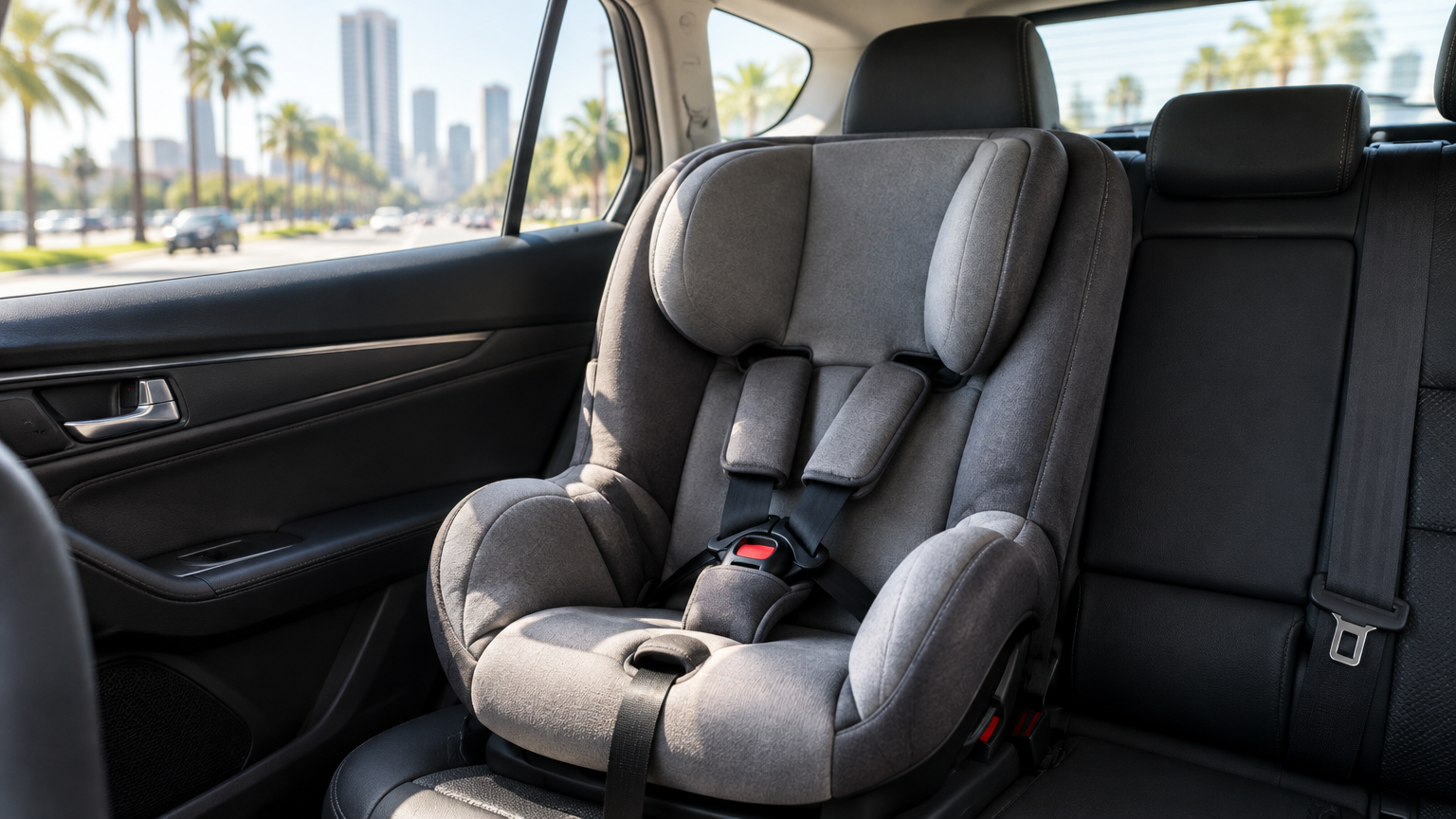
Drivers must provide a suitable child safety seat for any child aged four or under. Both newspapers report that the seat must:
- be fitted in the rear of the vehicle;
- suit the child’s weight and height; and
- meet approved UAE safety standards.
Two exceptions are written into the rules. If a vehicle has no rear seats, a child seat may be placed in the front, but only if it is rear-facing and the passenger airbag is switched off. And if a child has a medical condition that prevents them using a seat, the requirement does not apply, provided there is a certificate from a competent UAE medical authority and another person sits with the child in the back.
Neither report lists new fine amounts for child-seat offences, so motorists should watch for official guidance from the Ministry of Interior and local police closer to the start date.
E-scooter permits, delivery riders and pedestrians
The regulation also covers people who are not behind a steering wheel. Khaleej Times reports the following changes:
- E-scooters and similar devices: riders will need a permit before using one. Applicants must be at least 15, and permits will be valid for three years. Dubai’s existing RTA scheme currently sets a minimum age of 16, and it has not yet been explained how the federal and local rules will work together.
- Delivery riders: backpacks may not be used to carry orders, and no passenger may ride behind the rider on a delivery motorcycle. Professional permits will be valid for two years.
- Pedestrian crossings: drivers must slow down near marked crossings and stop for anyone who has already started crossing, allowing them to reach the other side.
- Residential streets: the maximum speed in internal residential areas stays at 40km/h where signposted.
Other changes for drivers
Learner permits will be valid for up to six months instead of three. Anyone whose licence has been expired for more than 10 years will have to pass theory and practical tests before it can be renewed. Overtaking is also banned in specific situations, including at junctions, roundabouts, bends, near pedestrian crossings and where lanes are separated by continuous lines.
Algulfnews.com covered the driving-hours and licensing parts of the regulation earlier this week: UAE sets nine-hour daily driving limit and new licence rules from 2027.
What to know
- Start date: January 1, 2027
- Front seat: over 10 years old or at least 145cm tall
- Under-fives: approved rear child seat required
- E-scooter permit: minimum age 15, valid three years
- Fines: not yet detailed in published reports
For families planning to buy or replace a car seat, the practical step now is to check that it carries an approved safety marking and fits the child’s current weight and height, and to keep younger children in the back.
Sources: Khaleej Times, Gulf News
